Publications
Armenia in 2026: What Is Next? 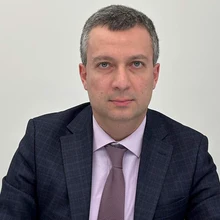 By Benyamin POGHOSYAN, PhD, Senior Research Fellow at the APRI Armenia By Benyamin POGHOSYAN, PhD, Senior Research Fellow at the APRI Armenia
Armenia’s pivotal 2026 looms: a year that will test fragile peace efforts with Azerbaijan and Turkey, redefine Yerevan’s ties with the EU and Russia, and unfold amid deepening political and societal polarization.
The year 2026 could be crucial for Armenia, significantly influencing both the foreign and domestic policy trajectory of the country. Externally, the main developments to monitor are the Armenia–Azerbaijan and Armenia–Turkey normalization processes. Will the August 2025 Washington Declaration bring the restoration of all regional communications – including the opening of the Armenia-Turkey border and the signature of an Armenia-Azerbaijan peace agreement – or will it meet the fate of previous, unsuccessful attempts to establish lasting peace and security in the South Caucasus? READ MORE
Publications
Leveraging Taiwan: India’s strategic counterbalance to China  By Shanthie Mariet D’SOUZA, PhD, founder & president, Mantraya Institute for Strategic Studies (MISS) By Shanthie Mariet D’SOUZA, PhD, founder & president, Mantraya Institute for Strategic Studies (MISS)
Record trade and closer ties with Taipei mark New Delhi’s shift from caution to assertiveness.
In 2024, for the first time ever, bilateral trade between India and Taiwan exceeded US$10 billion. And in the past six months alone, governments and businesses in the two countries have agreed on multipledeals that bring their semiconductor, tech, artificial intelligence, and industrial sectors even closer together, along with supply chains. These new trade partnerships support Taiwan’s “New Southbound Policy” and India’s “Act East” and “Make in India” policies, with Taiwan alone investing US$4.5 billion in India since February 2024. While the surge in Taiwanese investment in Indian companies is grounded in the economic dimension of the relationship, there is another dynamic taking place. Like most countries, New Delhi does not officially recognise Taipei. Yet its compliance with the “One China principle” – the condition set by Beijing that nations must diplomatically acknowledge there is only one Chinese government and must not establish official contacts with Taiwan – has become more nuanced. READ MORE
Publications
Türkiye’s Policy in the South Caucasus: Navigating Normalization Efforts Amid Ankara’s “Azerbaijan First” Policy By Benyamin POGHOSYAN, PhD, Senior Research Fellow at the APRI Armenia
The Second Nagorno-Karabakh War in 2020 and ensuing geopolitical developments revealed the paradoxes behind Türkiye’s motivations in the South Caucasus. This report examines the main directions of Türkiye’s foreign policy in the region, building on insights from desktop research, 18 interviews, and other convening opportunities.
Key findings:
- The importance of the South Caucasus for Türkiye is underestimated. The region has strong significance for Ankara from both a geopolitical and geoeconomic perspective.
- Türkiye’s policy in the South Caucasus is, and will likely remain, based on its strategic alliance with Azerbaijan and can be articulated as an “Azerbaijan first” policy.
- Azerbaijan–Türkiye ties consist of heavy interdependencies in many fields, from political to social and economic, rather than a “big brother/small brother” dynamic. If land access from Azerbaijan to Nakhijevan—and then directly to Türkiye—via Armenia’s Syunik region is established, Türkiye may lose any incentive to continue normalization and open borders with Armenia.
- Türkiye sees Russia as “an unavoidable evil” that will remain a constant factor in South Caucasus geopolitics, and Ankara aims to manage its relationship with Moscow, establish a Russia–Türkiye condominium, and substantially limit the presence and influence of the US, the EU, and NATO in the region. READ MORE
Publications
High Stakes in India’s Refusal to Send Former Bangladesh PM to Trial By Shanthie Mariet D’SOUZA, PhD, founder & president, Mantraya Institute for Strategic Studies (MISS)
A carefully worded extradition treaty means New Delhi can hedge its bets, but it should be prepared for blowback.
"This is quite a game, politics. There are no permanent enemies, and no permanent friends, only permanent interests.” On the face of it, this adage is being turned on its head by New Delhi, which has ignored Dhaka’s December 2024 request to extradite former Bangladesh prime minister Sheikh Hasina and former home minister Asaduzzaman Khan Kamal. However, it’s not just friendship with the former prime minister that could be shaping India’s current policy towards Dhaka. As bilateral relations have dived in recent months, New Delhi could be relying on Hasina to reverse-engineer Bangladeshi politics that have slipped out of India’s sphere of influence. That strategy, however, is fraught with risks. Not only might the outcome be counterproductive, but it also raises questions about policy towards its neighbourhood, where New Delhi has constantly struggled to find a friendly foothold despite its neighbourhood first policy. READ MORE
Publications
Modi Courts Putin with an Eye on Trump’s Disapproval By Shanthie Mariet D’SOUZA, PhD, founder & president, Mantraya Institute for Strategic Studies (MISS)
Strategic autonomy worked when Washington was indulgent. Now India must choose what matters more.
It may be no more than an annual ritual: the Indian Prime Minister and the Russian President meeting each other alternately in either country. However, the current geopolitical churn creates a special interest in Vladimir Putin’s impending visit to India, tentatively planned for the first week of December 2025, to attend the 23rd India-Russia Summit. He is expected to devote a large part of his meeting with Narendra Modi to finding ways to keep the strategic relationship alive amid New Delhi’s continuing attempts to arrive at a compromise trade deal with Donald Trump’s America. Unlike Putin’s India visit in 2021, which was a quieter affair, New Delhi is now laying out the trappings to greet the Russian President. Although the visit may not witness the grand optics mostly reserved for US leaders, a slew of preparatory visits by senior officials from either side are underway to make Putin’s official trip appear out of the ordinary. READ MORE
|
|




