Expanding Global Jihadi Footprint: Islamic State and al Qaeda in South Asia and West Africa[Over]  By Bibhu Prasad ROUTRAY, PhD, Director & Shanthie Mariet D’SOUZA, PhD, founder & president, Mantraya Institute for Strategic Studies (MISS) By Bibhu Prasad ROUTRAY, PhD, Director & Shanthie Mariet D’SOUZA, PhD, founder & president, Mantraya Institute for Strategic Studies (MISS)
As the war in Iran and Ukraine rages, together with China’s continued expansion, noticeably in the South China Sea but also in Myanmar/Burma, major global players are preoccupied to the extent that non-state extremist actors have virtually free rein to expand. The global terror groups Islamic State and al Qaeda sense a window of opportunity to consolidate in their current strongholds and push beyond. Much of this organisational expansion and accompanying violence is taking place in Asia and West Africa. However, if the wars drag on, limiting security responses of the major nations to the evolving threats, such violence can potentially spread to Europe and even the United States. READ MORE
Exporting Power: Türkiye’s Defence Industry and the Politics of Strategic Autonomy[Over]
 By Fuad SHAHBAZOV, Baku-based independent regional security and defence analyst By Fuad SHAHBAZOV, Baku-based independent regional security and defence analyst
Over the last decade, the development of Turkey’s defence industry has become a crucial aspect of its soft power diplomacy in both regional and global politics. The country has made significant efforts to invest heavily in the development of its indigenous defence industry, reducing its dependence on imports and becoming a leading defence exporter in global markets. The rapidly changing regional and global geopolitical landscape, particularly after the Arab uprisings, has prompted Ankara to expand the country’s defence industry and reduce its reliance on overseas arms procurement and international supply chains. Since the ruling AKP government came to power, the country’s indigenous defence industry has undergone a significant transformation, steadily becoming the twelfth-largest arms exporter, according to the Stockholm International Peace Research Institute (SIPRI). Given the regional instability marked by violent uprisings and sectarian conflicts, Türkiye’s pursuit of defence industry development can be understood as a primarily threat-driven strategy. This approach reflects an effort to enhance national defence capabilities and ensure strategic autonomy in response to both external security challenges and internal vulnerabilities. READ MORE
- February 25, 2026 04:07AM
TRIPP/Zangezur Corridor Must Serve both Peace and Connectivity[Over]
 By Vasif HUSEYNOV, PhD, Head of Department, AIR Center, Adjunct Lecturer, ADA and Khazar Universities, Baku By Vasif HUSEYNOV, PhD, Head of Department, AIR Center, Adjunct Lecturer, ADA and Khazar Universities, Baku
The Zangezur Corridor – recently rebranded as the Trump Route for International Peace and Prosperity (TRIPP) — has become one of the most discussed and debated infrastructure projects in Eurasia. Stretching 43 kilometres through Armenia’s Syunik Province, it promises to reconnect mainland Azerbaijan with its Nakhichevan exclave and, through Türkiye, to Europe. It is a project of logistics and trade — a corridor capable of shortening cargo transit from Asia to Europe from 18 days to 12 along the Middle Corridor, reducing dependency on maritime choke points, and creating new opportunities for growth across the South Caucasus. In practice, however, the TRIPP risks becoming a stage for geopolitical contestation unless regional actors ensure that its purpose remains economic, inclusive, and depoliticized. READ MORE
Taking up Maritime Security Challenges and Stakes : A European Governance Mechanism?[Over]
 By Jean-Marie L’HUISSIERE, independent consultant and expert on European maritime policies
While the European Union (EU) benefits today from a large regulatory acquis and from a vast experience in maritime operations and programmes, efforts must go on with regard to coordination and consistency to overcome sectoral divisions and increase efficiency. Taking up challenges and stakes in the maritime domain requires to implement concretely the integration principles and the comprehensive approach, by coordinating the use of both civilian and military resources and capabilities available to the EU. […] An initiative aiming at establishing an inter-institutional mechanism for maritime governance at strategic level opens prospects in this direction. READ MORE
Russia’s Exclusion from Joint Caspian Drills Shows Regional Shift[Over]
By Fuad SHAHBAZOV, Baku-based independent regional security and defence analyst
On October 25, Azerbaijan participated in the Nusret-2025 Invitation Exercise, a joint military drill held in the Gulf of Soros in Türkiye. The exercise aimed to strengthen cooperation between the Turkish Naval Forces and the naval forces of friendly and allied countries, such as Azerbaijan. This is the latest example of Azerbaijan’s partnership with Türkiye in strengthening its naval forces. The Caucasus region, particularly the Caspian littoral, is emerging as a focal point of geopolitical competition amid rising tensions between Russia and the West. The Caspian, often referred to as a “Russian lake” during the Soviet era, has presented new challenges to Russia’s regional dominance since 2022. Until the 2020s, Russia remained the most powerful naval power in the Caspian Sea, despite Kazakhstan, Azerbaijan, and Iran systematically enhancing their naval capabilities over the past three decades. Russia’s full-scale invasion of Ukraine in 2022, as well as regional conflicts and reordering, have exacerbated Moscow’s declining leverage and hegemony in the South Caucasus and Central Asia. READ MORE
Russia Tests NATO’s Eastern Defences[Over]
 By Yunis GURBANOV, PhD, Senior Advisor at the AIR Center, Baku By Yunis GURBANOV, PhD, Senior Advisor at the AIR Center, Baku
In September, countries in the North Atlantic Treaty Organization (NATO) reported several incidents involving airspace violations. On September 10, 19 drones crossed into Polish territory, prompting Warsaw to call for Article 4 consultations. In a separate episode on September 19, three Russian MiG-31 jets briefly entered Estonian airspace before being intercepted by NATO air policing units. NATO Secretary-General Mark Rutte described these developments as concerning and emphasized that the Alliance remains attentive to safeguarding its members’ security. These incidents reflect an increasingly complex security environment along NATO’s eastern flank. The combination of drone activity and jet overflights highlights the challenges of managing airspace security in an era of hybrid threats. At the same time, the use of unmarked drones, short-duration incursions, and deactivated transponders complicates attribution and leaves room for differing interpretations of intent. READ MORE
- November 13, 2025 19:41PM
The Acceleration of Putin’s Shadow War[Over]
By Fuad SHAHBAZOV, Baku-based independent regional security and defence analyst
Air incursions, military drills, and escalating hybrid warfare hint at a new and alarming level of Russian aggression. Is it just for show?
Russia and Belarus held joint military drills in September. But the biennial exercises were overshadowed by something that may be more ominous — an outbreak of drone and aerial incursions across Poland and the Nordic-Baltic states that illustrate NATO members’ vulnerability to disabling attacks on fragile systems like civil airports. Zapad-2025 is an established Kremlin method of baring its military teeth to its near-neighbours. The official reason for September’s large-scale exercises is to test the ability of the two countries to repel an enemy attack, retake lost territory and secure the borders of what they refer to as their “Union State”. They have often triggered alarm across the NATO alliance, particularly in the Baltic states and Poland, which have a deep historical and recent sensitivity to Kremlin aggression. READ MORE
West Can’t Help Ukraine Win the War — but it Could Help End it[Over]  By Elkhan NURIYEV, PhD, Senior Fellow at the Alexander von Humboldt Foundation in Berlin By Elkhan NURIYEV, PhD, Senior Fellow at the Alexander von Humboldt Foundation in Berlin
As the war in Ukraine drags on for yet another year, a hard truth is becoming even harder to ignore: Military victory may no longer be a realistic objective for Kyiv — no matter how many billions the West sends, or how many Russian soldiers die. This isn’t a popular outlook in Washington or Brussels, where the assumption persists that enough aid and resolve will eventually break Moscow. But despite Ukraine’s extraordinary resilience and the West’s deep pockets, that outcome is looking increasingly unlikely. Rather, the war is hardening into a grinding stalemate — one that threatens to exhaust Ukraine, fracture Western unity and empower the very regime it was meant to weaken. The question Western policymakers must now confront is not whether Ukraine deserves support, but whether the current strategy is helping it win, or simply helping it survive long enough to lose more slowly. READ MORE
Kazakhstan Aims to Modernize Military Through Multi-Vector Diplomacy[Over]
By Fuad Shahbazov, Baku-based independent regional security and defence analyst
Kazakhstan has recently been making steps to improve its defence capabilities. In April 2025, the Kazakh Ministry of Defence confirmed that a legislative framework was established to regulate the Defence Industry Development Fund, which was created in December 2023. The new defence fund aims to acquire and manufacture domestically crucial military hardware, such as artillery ammunition, weapons systems, and combat modules. For this purpose, the Kazakh government plans to allocate approximately $265 million from the state budget. Earlier, on March 3, Kazakh Defence Minister Ruslan Zhaksylykov announced the establishment of a new defence industry centre at the only tank repair plant in Central Asia in the Eastern city of Semey. Zhaksylykov proclaimed that the new hub aims to strengthen “Kazakhstan’s self-sufficiency in defence production” through “expanding the ability to both maintain and manufacture crucial military technologies locally”. As the regional order in Eurasia shifts amid Russia’s war against Ukraine, Kazakhstan is opting to rely on its armed forces, domestic military resources, and international security partnership formats to counter any potential threat. READ MORE
Strategic pathways toward a credible endgame for Ukraine [Over] By Elkhan NURIYEV, PhD, Senior Fellow at the Mathias Corvinus Collegium Foundation in Budapest and Senior Fellow at the Alexander von Humboldt Foundation in Berlin
Just over two months into U.S. President Donald Trump’s second term, new uncertainties have begun to reshape the West’s approach toward the war in Ukraine. As the conflict grinds through its third year, signs of strategic drift have emerged across Western capitals. With battlefield momentum stalled, political divisions deepening, and public fatigue rising, the West now faces a narrowing window to reassess its goals—or risk drifting toward a scenario of prolonged stalemate and fractured unity. While former president Joe Biden framed the war as a broader fight for democracy and pledged open–ended support to Kyiv, Trump’s foreign policy instincts emphasize burden sharing, cost efficiency, and transactional diplomacy. These principles are already shaping Washington’s posture. Military aid packages have slowed, public rhetoric has shifted toward ending the war “quickly,” and U.S. diplomatic overtures increasingly hint at conditional support rather than blank checks. READ MORE
A Long War of Attrition May Await Lebanon[Over]  By Yeghia TASHJIAN, Beirut-based regional analyst and researcher, columnist, "The Armenian Weekly” By Yeghia TASHJIAN, Beirut-based regional analyst and researcher, columnist, "The Armenian Weekly”
Over the past few weeks, security events have dramatically accelerated Israel’s aggression on Lebanon. On October 8, 2023, Hezbollah, a paramilitary political party in Lebanon (also known as the Islamic Resistance) backed by Iran, opened a front against Israel to assist Hamas in its conflict with Israel following its “al-Aqsa Storm” operation. The Lebanese front remained “managed” as Israel and Hezbollah engaged in limited clashes. This equation changed starting on September 17, 2024. Along with its fight against Hamas and the destruction of Gaza, Israel shifted its focus to Hezbollah and started bombing Lebanon, destroying the party’s infrastructure in southern Beirut, South Lebanon and Beqaa near the border with Syria.
READ MORE
- November 13, 2024 23:18PM
Strengthening the rights of citizens in the area of freedom of receiving and disseminating information in the New Uzbekistan[Over]  Karine Javakova,
Head of the Department of State and Legal Disciplines and Ensuring Human Rights of the Academy of the Ministry of Internal Affairs of the Republic of Uzbekistan, Doctor of Philosophy, Professor
Uzbekistan has created a solid legal framework to ensure freedom of speech and information, as well as the development of the media, improvement of the legal basis for the activities and protection of the professional rights of journalists. Considering that the liberalization of the information sphere and its development are priority tasks in the construction of the New Uzbekistan, after the constitutional reform, the articles devoted to these rights were significantly expanded. Thus, Article 33 of the Constitution of the Republic of Uzbekistan notes that everyone has the right to freedom of thought, speech and belief. Everyone has the right to seek, receive and disseminate any information. The state creates conditions for ensuring access to the global information network Internet. Restrictions on the right to search for, receive and disseminate information are allowed only in accordance with the law and only to the extent necessary to protect the constitutional order, public health, public morality, the rights and freedoms of others, ensure public safety and public order, and prevent the disclosure of state secrets or other secrets protected by law. READ MORE
Military Supplies to Armenia Escalate Tensions in South Caucasus[Over]  By Vasif HUSEYNOV, PhD, Head of Department, AIR Center, Adjunct Lecturer, ADA and Khazar Universities, Baku By Vasif HUSEYNOV, PhD, Head of Department, AIR Center, Adjunct Lecturer, ADA and Khazar Universities, Baku
On July 31, US Assistant Secretary of State for European and Eurasian Affairs James O’Brien reaffirmed Washington’s plans to establish a land trade route through Azerbaijan and Armenia. He stated that this route aims to offer Central Asian countries an alternative and reduce their reliance on Russia and China for access to global markets. In addition to his earlier remarks, O’Brien pointed out that part of this strategy is aimed to “create conditions” for Armenia to “distance itself from Russia”. According to him, Armenia is “almost completely dependent” on Russia for its economy and energy. Therefore, the United States supports Prime Minister Nikol Pashinyan’s bold steps in his diversification efforts. Armenia’s re-posturing is representative of a geopolitical shift occurring throughout the wider region as the three states of the South Caucasus move further away from Russian influence.
READ MORE
- September 13, 2024 14:14PM
A New and Technological Approach to Elections Begins[Over] The Central Election Commission held a meeting and a series of events today, July 26th. The primary agenda item was the preparation and high-level accomplishment of the upcoming elections for the Legislative Chamber of the Oliy Majlis and the Councils of People's Deputies in full compliance with the Constitution and laws.
According to Article 128 of the Constitution of the Republic of Uzbekistan, elections for the Legislative Chamber of the Oliy Majlis and the Councils of People's Deputies are scheduled to take place on the first Sunday of the third ten-day period of October in the year their term expires. Considering that the term of the deputies of the Legislative Chamber of the Oliy Majlis and the Councils of People's Deputies ends in 2024, the elections will be held on October 27th of this year, and the election campaign will begin on July 26th, as decided by the Central Election Commission. READ MORE
United States Encourages Armenia and Azerbaijan to Sign Peace Treaty ‘Without Delay’[Over] By Vasif HUSEYNOV, PhD, Head of Department, AIR Center, Adjunct Lecturer, ADA and Khazar Universities, Baku
On June 20, during a phone call with Azerbaijani President Ilham Aliyev, US Secretary of State Antony Blinken called upon the Armenian and Azerbaijani governments to conclude a peace agreement “without delay” (US State Department, June 20). He stressed Washington’s willingness to support the peace process “in any way useful to the parties.” During his recent trip to the South Caucasus in late June, US Deputy Secretary of State James O’Brien reiterated these messages to the respective governments of Azerbaijan and Armenia. The United States views peace between the two countries in a larger geopolitical perspective, characterizing it as vital to reducing wider regional dependency on Washington’s foes.
READ MORE
President Aliyev does not intend to sign a peace agreement with Armenia[Over]  By Benyamin POGHOSYAN, PhD, Chairman, Center for Political and Economic Strategic Studies By Benyamin POGHOSYAN, PhD, Chairman, Center for Political and Economic Strategic Studies
As war in Ukraine rages and the confrontation between Russia and the West continues unabated, a growing number of experts are speaking of the beginning of Cold War 2.0, pitting the West against Russia, China, Iran, and North Korea, the so-called “Axis of upheaval.” As with the original Cold War, the new one covers many areas of the globe, including Asia-Pacific, Africa, and the Middle East. The former Soviet Union remains the heart of this confrontation, and the South Caucasus is no exception. Strategically located between Russia, Turkey, and Iran, for the 25 years after the collapse of the Soviet Union the region was mainly the scene of competition between Russia and Turkey, with the first in the leading role. The last four years have brought significant changes in equilibrium. Azerbaijan transformed the status quo in the Nagorno-Karabakh conflict by defeating Armenia in the 2020 Nagorno-Karabakh War with the direct military involvement of Turkey.
READ MORE
Russian withdrawal from Karabakh allows Azerbaijan to strengthen its ties with its Turkic "family"[Over] By Vasif HUSEYNOV, PhD, Head of Department, AIR Center, Adjunct Lecturer, ADA and Khazar Universities, Baku
The geopolitics of the South Caucasus is as unpredictable as ever. Even as recently as the beginning of April, few, if any, would have imagined that Russia may withdraw its peacekeeping contingent from the Karabakh region of Azerbaijan anytime soon. Many observers were even sceptical about the possibility of their withdrawal in November 2025 – the date which was stipulated in the November 2020 trilateral statement as the potential but not fixed date for the ending of the peacekeeping mission of Russia. This skepticism was grounded in the understanding that for Russia, Karabakh holds paramount importance in the broader context of the South Caucasus.
READ MORE
Reflections on the Karabakh and Ukraine Wars[Over]  By Alan WHITEHORN, Professor Emeritus in Political Science, The Royal Military College of Canada By Alan WHITEHORN, Professor Emeritus in Political Science, The Royal Military College of Canada
As we contemplate our current era of ongoing pandemics and wars, it is useful to utilize a comparative framework. In a geopolitical strategic analysis of the 2020 Karabakh war and that of the ongoing 2022-2023 war in Ukraine, we have witnessed the continuing importance of the technological revolution in warfare. Newspaper headlines around the world have proclaimed the pivotal use of drones and satellite-based intelligence for targeting in both cases. In the 2020 war between Azerbaijan and Armenia over Nagorno-Karabakh and its surrounding territories, the extensive and critical use of Turkish and Israeli-made drones by Azerbaijan led to a swift and dramatic change in the military and geopolitical landscape in the South Caucasus. The widespread impact of drones was somewhat of a surprise to the Armenian armed forces. READ MORE
Ensuring women's rights is an integral part of the State gender policy in Uzbekistan[Over] Mahinora Mirkhamidova, associate professor of the department International law and Public law disciplines of the University of World Economy and Diplomacy
Today over two-thirds of the world's countries are participants in the UN Convention on the Elimination of All Forms of Discrimination Against Women (CEDAW) adopted in 1979. Ensuring women's rights is one of the 17 Sustainable Development Goals, goal 5 specifically aims at “Achieving gender equality and empowering all women and girls.” The issues of ensuring women's rights are reflected in the constitutions of almost all countries, entrenched in their legislation, and hold a significant place in national development plans and strategies.
READ MORE
Proprietary rights will be guaranteed in Uzbekistan[Over]  Avazbek Kholbekov, expert of the Development Strategy Center Avazbek Kholbekov, expert of the Development Strategy Center
Over the past five years in Uzbekistan, a number of laws have been adopted in our country to ensure the priority of private property and strengthen its legal protection.
Most importantly, based on the principle of "From Action Strategy to Development Strategy" there was adopted the "Development Strategy of New Uzbekistan for 2022-2026", as a logical continuation of Action Strategy. In the document, turning the principles of justice and the rule of law into the most basic and necessary condition for development in the country was defined as one of the most important directions. Several necessary objectives were envisaged for this.
READ MORE
The UN General Assembly unanimously adopted a resolution initiated by Uzbekistan on environmental challenges in Central Asia[Over] 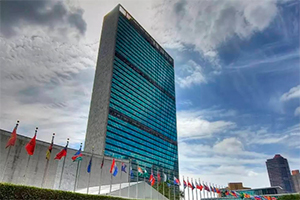 Qodir Djuraev, MP, Legislative Chamber of the Oliy Majlis of the Republic of Uzbekistan Qodir Djuraev, MP, Legislative Chamber of the Oliy Majlis of the Republic of Uzbekistan
The UN General Assembly unanimously adopted the resolution on "Central Asia in the face of environmental challenges: strengthening regional solidarity for the sake of sustainable development and prosperity".
The resolution initiated and proposed by Uzbekistan and unanimously adopted by the UN General Assembly highlights the pressing environmental challenges faced in Central Asia. This region, known for its diverse ecosystems and natural resources, has been grappling with various environmental issues that require immediate attention and joint collaborative efforts. The resolution serves as a significant step towards addressing these challenges and fostering sustainable development in the region.
READ MORE
Armenia and Azerbaijan Address Concerns Over Territorial Integrity[Over] By Vasif HUSEYNOV, PhD, Head of Department, AIR Center, Adjunct Lecturer, ADA and Khazar Universities, Baku
On January 19, Armenian Prime Minister Nikol Pashinyan called for a new constitution in a meeting with senior officials from the Armenian Ministry of Justice. Pashinyan asserted that Armenia needs “a new constitution, not constitutional changes,” adding that the new foundational document would make the country “more competitive and viable in the new geopolitical and regional environment” (Azatutyun.am, January 19). He highlighted that the new constitution would maintain the present parliamentary system and underscored “external security” and “internationally recognized sovereign territory” as the main issues to be addressed. Mutual respect for one another’s territorial integrity remains a sticking point in peace negotiations between Armenia and Azerbaijan. If Yerevan proceeds with Pashinyan’s proposal, the new constitution will eliminate certain hurdles to signing a peace treaty with Baku.
READ MORE
Gender equality in the civil service of Uzbekistan[Over]  Farangiz Avazbekova, Chief inspector of the Agency for the Development of Public Service under the President of the Republic of Uzbekistan; Doctor of Philosophy (PhD) in Law Farangiz Avazbekova, Chief inspector of the Agency for the Development of Public Service under the President of the Republic of Uzbekistan; Doctor of Philosophy (PhD) in Law
The social and political activity of women and their participation in public administration bodies in the process of making important decisions are crucial for the development of the country. Sociological research has shown that women’s high efficiency, rapid and persistent decision-making, responsiveness to job completion, and prompt provision of executive discipline allow them to perform their duties effectively in the civil service.
READ MORE
What Next in Armenia – Azerbaijan Negotiations[Over]  By Benyamin POGHOSYAN, PhD, Chairman, Center for Political and Economic Strategic Studies By Benyamin POGHOSYAN, PhD, Chairman, Center for Political and Economic Strategic Studies
In the late months of 2022 and 2023 there were intensive discussions about the possible signature of the Armenia – Azerbaijan peace agreement. Both international mediators and facilitators, as well as representatives of Armenia and Azerbaijan were making statements that a peace agreement signature is within reach. As we enter 2024, discussions are underway about the potential signature of the Armenia – Azerbaijan agreement in 2024. The December 7, 2023, bilateral statement on the release of Prisoners of War and Armenia’s support of the Azerbaijani bid to host the COP29 in Baku gave more impetus to these hopes. Some believe that the military takeover of Nagorno Karabakh by Azerbaijan in September 2023 made this perspective more realistic, especially as the Armenian government agreed not to include anything on Nagorno Karabakh in the peace agreement.
READ MORE
Armenia and Azerbaijan Conclude the Year With Hopeful Prospects for Peace[Over] By Vasif HUSEYNOV, PhD, Head of Department, AIR Center, Adjunct Lecturer, ADA and Khazar Universities, Baku
On December 13, Armenia and Azerbaijan exchanged prisoners that each side had detained at different times since the end of the Second Karabakh War in November 2020. This historic exchange was made possible thanks to a significant breakthrough between the two countries on December 7. Baku and Yerevan issued a joint statement announcing a list of confidence-building measures to normalize relations and reach a peace agreement. Azerbaijan agreed to release 32 Armenian servicemen as part of the agreement, and Armenia reciprocated by releasing two Azerbaijani soldiers. While a number of unresolved issues remain, the recent success in bilateral consultations has given new hope for a comprehensive peace agreement between the two sides.
READ MORE
How the Hamas-Israel War Impacts the South Caucasus[Over]
By Fuad SHAHBAZOV, Baku-based independent regional security and defence analyst
The war between Hamas and Israel war has triggered strong anti-Israel sentiments in the region and heightened fears of a broader conflict engulfing actors such as Egypt, Iran, Jordan, Lebanon, and Turkey. Worried that the conflict in Gaza could escalate into a regional confrontation, the US has dispatched two aircraft carrier strike groups within range, including additional troops and military advisors.
But alongside tough rhetoric, the violence in Gaza has renewed apparent pragmatism by important regional states such as Iran and Turkey. Turkish President Recep Tayyip Erdogan has openly slammed Israel's bombings of the Palestinian coastal enclave. On the other hand, Ankara has avoided issuing direct threats against Tel Aviv and, in an apparent unusual move, allegedly distanced itself from Hamas in the aftermath of the Palestinian movement’s surprise attack on Israel last month.
READ MORE
All-Encompassing Solutions are Necessary for Sustainable Peace between Armenia and Azerbaijan[Over] By Vasif HUSEYNOV, PhD, Head of Department, AIR Center, Adjunct Lecturer, ADA and Khazar Universities, Baku
On 28 September, the separatist regime illegally created by Armenia in the territories of Azerbaijan in early 1990s, and which presented itself as the “Nagorno-Karabakh Republic”, declared its dissolution by the end of 2023. Azerbaijan has quickly restored its sovereignty over the area that remained under the joint control of the separatists and Russia’s peacekeeping contingent following the 44-day war in 2020. This has been undoubtedly a major development not only for Azerbaijan but also for the entire South Caucasus. Many people both in the region and beyond agree that Baku and Yerevan are now much closer to a peace treaty as the crux of their decades-long conflict no longer exists.
It is important that the Armenian government shares this view and realizes the present opportunities for a real breakthrough. For instance, the speaker of the Armenian parliament Alen Simonian told Armenian public television on September 25 that “We are very close and have a historic opportunity to sign a peace agreement”. “Endless war is not beneficial for anyone”, he asserted.
READ MORE
Azerbaijan Moves to Disarm Karabakh Separatists (Part Three)[Over] By Vasif HUSEYNOV, PhD, Head of Department, AIR Center, Adjunct Lecturer, ADA and Khazar Universities, Baku
On September 28, the leader of the separatist regime in Karabakh signed an order to dissolve all “state” agencies and organizations by the end of 2023. This was accompanied by a mass exodus of the Armenian population from the region. According to Armenian sources, more than 100,000 Armenians have left Karabakh as of October 1. The Yerevan office of the United Nations High Commissioner for Refugees (UNHCR) said those fleeing Karabakh have not reported maltreatment. “Nobody has shared instances of being harassed,” said Kavita Belani, the UNHCR representative in Armenia at a recent news conference. It has also been reported that some Armenians have decided not to the leave the region.
READ MORE
Azerbaijan Moves to Disarm Karabakh Separatists (Part Two)[Over] By Vasif HUSEYNOV, PhD, Head of Department, AIR Center, Adjunct Lecturer, ADA and Khazar Universities, Baku
On September 20, Azerbaijan called for a ceasefire in the operation against armed detachments of the separatist regime in Karabakh. In a televised address to the nation, President Ilham Aliyev stated that Baku’s conditions were accepted by the separatist entity. He announced that the “representatives of the Armenian community living in Karabakh, who refused to meet our representatives several months ago, are ready to meet in the city of Yevlakh. Azerbaijan has disclosed that 192 servicemen were killed and more than 500 wounded during the 24-hour “anti-terrorist operation”. The Armenian side has reported at least 200 people killed and more than 400 wounded.
In preventing further escalation, the Armenian government chose not to militarily intervene in the clashes on September 19 and 20. Armenian Prime Minister Nikol Pashinyan characterized possible involvement as a threat to his country. He stated, “Armenia is not involved in military operations. I want to mention once again that Armenia does not have an army in Nagorno-Karabakh”.
READ MORE
What Next in Nagorno Karabakh[Over] By Benyamin POGHOSYAN, PhD, Chairman, Center for Political and Economic Strategic Studies
On September 19, Azerbaijan launched a large-scale offensive against the self-declared Nagorno Karabakh Republic with only one goal: to finish with that republic. The Azerbaijani attack was not a surprise to anyone. At least since the beginning of 2023, Azerbaijan has stated clearly and loudly that Baku will not tolerate the status quo that emerged after the 2020 Nagorno Karabakh war and will do everything possible to destroy the Nagorno Karabakh Republic. Azerbaijan was also clear that it would reach its goal quickly. Since the beginning of September 2023, as Azerbaijan started to concentrate troops along the line of contact, it was clear the military offensive would take place very soon. Armenia knew that Russia knew that, the EU and the US knew that, and Nagorno Karabakh authorities knew that. What were the positions of the sides regarding the upcoming offensive of Azerbaijan?
READ MORE
What does ISIS’s revival mean for the South Caucasus?[Over]  By Yeghia TASHJIAN, Beirut-based regional analyst and researcher, columnist, "The Armenian Weekly” By Yeghia TASHJIAN, Beirut-based regional analyst and researcher, columnist, "The Armenian Weekly”
The socio-economic crisis was one of the causes of the disintegration of centralized governments in Syria and Iraq in 2011 and the emergence of radical militants in rural areas. These militants were motivated by anger towards the urban elite, who for decades neglected rural areas. As civil wars and political instability hit Syria and Iraq, many young rural people were recruited by these groups, who were financed by regional countries or non-state actors. In 2013, the Islamic State of Iraq and Syria (ISIS) was founded with the aim to establish an Islamic kingdom (caliphate) in the region. […] After the dissolution of ISIS in late 2019, the movement went underground, yet today it is taking advantage of the financial crisis in Syria and making a comeback.
READ MORE
- September 25, 2023 22:50PM
Armenia and Azerbaijan on the Brink of Renewed Conflict[Over] By Vasif HUSEYNOV, PhD, Head of Department, AIR Center, Adjunct Lecturer, ADA and Khazar Universities, Baku
On September 9, Armenian Prime Minister Nikol Pashinyan spoke on the phone with the leaders of France, Iran, Georgia and Germany, as well as US Secretary of State Antony Blinken. In a manner that resembled his outreach to various world leaders at the beginning of the Second Karabakh War (September 7–November 10, 2020), the Armenian premier warned against intensifying tensions in the region and stated his readiness for immediate talks with Azerbaijani President Ilham Aliyev without preconditions. Pashinyan’s words came on the heels of several setbacks that threaten to derail Armenian-Azerbaijani peace negotiations and may lead to another military conflict.
Both sides accuse each other of a military build-up along their shared border in preparation for an offensive. According to the Azerbaijani Foreign Ministry, a military threat also emanates from the continued presence of Armenian troops in Karabakh, despite Yerevan’s earlier pledge to withdraw them by September 2022.
READ MORE
- September 25, 2023 22:47PM
Incidents along Armenia-Azerbaijan Border Show Urgent Need for an Incident Prevention Mechanism[Over] By Benyamin POGHOSYAN, PhD, Chairman, Center for Political and Economic Strategic Studies
As the sides are coming closer to the signature of a peace agreement, steps should be taken to solve the issues along the Armenia – Azerbaijan state border and the line of contact. The population of the self–proclaimed Nagorno Karabakh Republic and Armenians and Azerbaijanis living along the state border have the inalienable right to live in a secure environment while external actors are moving forward with their geopolitical ambitions. In this context, a concrete measure to ease tensions can be the establishment of an incident prevention and response mechanism.
The restart of intensive Armenia – Azerbaijan negotiations in May 2023 gave hope that an Armenia – Azerbaijan peace agreement is within reach. Meetings in Washington, Brussels, Moscow, and Chisinau seem to have paved the way for a deal by the end of 2023. Officials from both countries started to sound more optimistic regarding the prospects of peace and stability in the South Caucasus. The Armenian and Azerbaijani foreign ministers will have another round of talks in Washington in the next days, and the President of the European Council Michel will host Prime Minister Pashinyan and President Aliyev in Brussels on 21 July.
READ MORE
Ukraine's Counter-offensive and Possible De-occupation of the Country[Over]  By Nika CHITADZE, PhD, Director of the Center for International Studies, Tbilisi By Nika CHITADZE, PhD, Director of the Center for International Studies, Tbilisi
As expected, Ukraine's counteroffensive against the Russian occupation forces has already begun, although it has not yet entered the decisive phase. It should be noted that the past 5 months were particularly difficult for Ukrainian soldiers - the period when Ukraine began to save forces to prepare for a large-scale counteroffensive. In recent months, Ukraine has withdrawn most of its combat-ready units from the front line, and thousands of Ukrainian soldiers have gone abroad for training. The newly formed and refreshed brigades were left intact by the military-political leadership of Ukraine and did not involve them in heavy winter battles. All this happened against the background of the winter campaign launched by Russia - the attention of the international media was mainly directed to the battle of Bakhmut, but the Russian army was attacking in 6 other directions during the same period. Outnumbered, the Ukrainian army once again exceeded expectations and ran an overall successful defensive campaign.
READ MORE
What Would Bring to Kremlin the Deployment of Tactical Nuclear Weapons in Belarus?[Over] By Nika CHITADZE, PhD, Director of the Center for International Studies, Tbilisi
As it is known, Russian President Vladimir Putin announced that Moscow and Minsk agreed to deploy tactical nuclear weapons on the territory of Belarus. The construction of a special warehouse is already underway and will be completed by July 1 of this year. Therefore, it can be said that Putin's blackmailing strategy has entered the next acute phase, and it is theoretically possible that such steps will sooner or later push the world toward a nuclear confrontation. It should be noted that after the dissemination of information about the placement of nuclear weapons in Belarus, the US Department of Defence issued an emergency statement. It says that "the Pentagon sees no indication that Russia is preparing to use nuclear weapons." On the other hand, as Vladimir Putin told the Russian government media, ten Su-25 aircraft capable of carrying tactical nuclear weapons are already stationed on the territory of Belarus. In addition, according to him, Russia has given Belarus the "Iskander" missile system, which can also launch missiles equipped with a nuclear warhead.
READ MORE
Is Azerbaijan’s New Attack against the Artsakh Defense Army Imminent?[Over] By Benyamin POGHOSYAN, PhD, Chairman, Center for Political and Economic Strategic Studies
May 2023 will be remembered as the month of intensive negotiations between Armenia and Azerbaijan. It started from the four-day summit in Washington, where the two ministers of foreign affairs with their teams were engaged in face-to-face interactions to discuss the text of the Armenia-Azerbaijan peace agreement. Ten days later, Armenian and Azerbaijani leaders met in Brussels, revitalizing the Brussels format, which had been stalled in September 2022. As a result of the Brussels summit, the sides reiterated the mutual recognition of territorial integrity based on the Alma-Ata declaration. For the first time, they agreed to use exact numbers when describing each other’s territories. This step dispersed fears in Azerbaijan that despite signing the Prague statement in October 2022 and recognizing Azerbaijani territorial integrity based on the Alma-Ata declaration, Armenia may still avoid recognizing Artsakh (Nagorno Karabakh) as part of Azerbaijan, arguing that Artsakh was not part of Azerbaijan on December 21, 1991, when the Alma-Ata declaration was signed. A few days later, the Armenian Prime Minister confirmed that Armenia recognizes Artsakh as part of Azerbaijan during his speech at the summit of the Council of Europe.
READ MORE
Pushing Armenia to make further concessions will spoil any chance for peace[Over] By Benyamin POGHOSYAN, PhD, Chairman, Center for Political and Economic Strategic Studies
After a break of several months Armenia and Azerbaijan have now resumed their engagement in peace negotiations in earnest. After a face-to-face meeting between leaders in Munich in February, the Armenian and Azerbaijani ministers of foreign affairs went to Washington in early May 2023 to take part in the most intensive round of negotiations ever held since the Spring 2001 Key West summit between Presidents Heydar Aliyev and Robert Kocharyan. The ministers achieved progress, opening the path for the 14 May Brussels summit involving Prime Minister Pashinyan, President Aliyev, and President of the European Union Council Charles Michel. On 19 May, the Armenian and Azerbaijani foreign ministers met in Moscow, and a trilateral Aliyev - Pashinyan - Putin summit was scheduled for 25 May.
READ MORE
Azerbaijani-Iranian Tensions Disrupt the South Caucasus[Over]
By Fuad SHAHBAZOV, Baku-based independent regional security and defence analyst
On March 30, Azerbaijan officially inaugurated its first embassy in Tel Aviv, Israel, after avoiding the move for three decades. Although the decision highlighted the importance of Azerbaijani-Israeli relations, it quickly became a catalyst behind the renewed war of words between Iran and Azerbaijan. Since 2021, diplomatic relations between Tehran and Baku have steadily become embittered. Iran is primarily concerned with the decline of its influence in the South Caucasus, which has suffered since the end of the Second Karabakh War in 2020. As such, in an attempt by Tehran to flex its muscles and intimidate Azerbaijan, the Islamic Revolutionary Guard Corps conducted large-scale military drills on the border with Azerbaijan in October 2022. Unlike previous years, the exercises provoked an uneasy reaction within Azerbaijan and triggered anti-Iranian sentiments throughout the country. READ MORE
Armenia needs to better explain what it means by an international presence in Nagorno-Karabakh[Over] By Benyamin POGHOSYAN, PhD, Chairman, Center for Political and Economic Strategic Studies
As Armenia – Azerbaijan negotiations entered a more active phase after a months-long limbo with marathon discussions in Washington, an upcoming trilateral meeting at the level of foreign ministers in Moscow, and a possible Pashinyan – Aliyev summit in Chisinau on 1 June 2023, the key contested issue remains Armenia's demand for a long-term international presence in Nagorno Karabakh and the establishment of an international mechanism for Azerbaijan – Nagorno Karabakh negotiations.
In his 5 May 2023, interview with Radio Liberty, Armenian Prime Minister Pashinyan stated that the rights and security of Nagorno Karabakh Armenians remained the main issue, where the sides still had divergent views. The concept of "rights and security of Nagorno Karabakh Armenians" came into centre stage in early 2022, as the Armenian government dropped its demand for autonomy for Nagorno Karabakh within Azerbaijan. Since Spring 2022, Armenia has avoided the terms of status and self-determination in its rhetoric on Nagorno Karabakh, instead emphasizing the necessity to protect rights and provide security for Nagorno Karabakh Armenians.
READ MORE
The Armenian Government Needs to Communicate Better to the Public what EUMA Is About[Over] By Benyamin POGHOSYAN, PhD, Chairman, Center for Political and Economic Strategic Studies
Efficient strategic communication has become necessary in the South Caucasus as the governments of the region and outside regional and global powers vie for influence in the current highly complex geopolitical realities. One of the priorities for the Armenian government is to explain clearly to public opinion what the recently deployed EU Monitoring Mission is and is not about. Otherwise, the same disappointment that emerged towards Russia earlier will surely appear as regards the European Union also.
The ups and downs in the Armenia – Azerbaijan negotiations process after the end of the 2020 Nagorno Karabakh war, the launch of the Russia – Ukraine war, and the complete rupture of Russia – West relations added complexity to the geopolitical realities of the South Caucasus. Too many actors have contradicting interests in region – Russia, the US, the EU, Iran, Turkey, and Israel.
READ MORE
The History and Evolution of Iran’s National Drone Program[Over]
By Fuad SHAHBAZOV, Baku-based independent regional security and defence analyst
Russia’s invasion of Ukraine launched in early 2022 has fundamentally changed the international security architecture that had existed for many years, but it has also caused global political and economic cataclysms. Although Russian forces made significant gains thanks to heavy artillery fire, including missile strikes on cities all over Ukraine in the first weeks of combat, Ukrainian defenders quickly rebuffed attempts by consolidating its military power, exercising diplomatic connections, and launching counterattacks at Russian positions. The failures of continuous artillery and missile strikes in the following months prompted Russia to make some changes in its military tactics. As a result, Russia was forced to seek help from its traditional allies China and Iran through unofficial channels. Although China has refrained from overtly providing military support to Russia in order not to further complicate relations with Western countries, particularly with the United States, Iran began supplying locally produced long-range attack (suicide) drones to Russia. READ MORE
Munich Conference Casts Optimistic Light on Azerbaijani-Armenian Peace Process[Over]
By Fuad SHAHBAZOV, Baku-based independent regional security and defence analyst
On February 19, Azerbaijani President Ilham Aliyev and Armenian Prime Minister Nikol Pashinyan attended the discussion panel regarding the South Caucasus at the Munich Security Conference. Afterward, they held a face-to-face meeting on the side-lines of the conference with the mediation of United States Secretary of State Anthony Blinken. Ultimately, the parties focused on the points at the top of their respective agendas, and as a result, they failed to reach a significant agreement on many key issues, including the status of the Lachin road and future development of the Zangezur Corridor. Aliyev revealed in a later interview that he had proposed to the Armenian side the establishment of bilateral checkpoints at both ends of the Zangezur Corridor and along the Lachin road. Since the end of the Second Karabakh War in 2020, Azerbaijan has long sought the establishment of this desired corridor through Armenia’s Syunik province to connect the country with its Nakhchivan exclave, albeit unsuccessfully. Thus, debates over the Zangezur project, among other issues, have led to a stalemate in peace negotiations, with regional actors, such as Iran, strictly standing against the project and supporting Armenia in its opposition. READ MORE
Diversification of Armenian Security and Defence Policy and the Role of India[Over] By Benyamin POGHOSYAN, PhD, Chairman, Center for Political and Economic Strategic Studies
The 2020 Nagorno Karabakh war has significantly changed the balance of power in the South Caucasus, increasing the role and influence of Turkey. The direct involvement of Turkey in the war and the lack of action by Russia to prevent this NATO member state from challenging the Russian zone of influence in the post-Soviet space crushed the basics of the Armenian foreign and security policy. Since the end of the first Nagorno Karabakh war in 1994, Armenian military doctrine has been based on the core belief that Russia will not allow direct Turkish involvement in a new war against Armenia. Thus, Armenia prepared itself for the war with Azerbaijan while outsourcing to Russia the deterrence of Turkey. Meanwhile, this mindset also resulted in a Russia-focused defence and security policy. Armenia was buying weapons mainly from Russia, almost all Armenian officers were studying in Russian military universities, and the structure and operating mode of the Armenian army was solely based on the Russian model. Armenia developed limited defence cooperation with other nations, including the US, Greece, and Poland, and signed its first Individual Partnership Action Plan with NATO in 2005. However, these sporadic interactions did not change the basics of Russia-focused foreign and military policy. READ MORE
Armenia and Azerbaijan Prepare to Make Peace[Over]
  By Ahmad ALILI, Director, Caucasus Policy Analysis Centre, Baku By Ahmad ALILI, Director, Caucasus Policy Analysis Centre, Baku
Benyamin POGHOSYAN, PhD, Chairman, Center for Political and Economic Strategic Studies, Yerevan
On 31 August 2022, the leaders of Armenia and Azerbaijan, meeting in Brussels under the auspices of European Council president Charles Michel, agreed to authorise their foreign ministers to start immediate negotiations on a peace treaty. Instead, in less than two weeks, the two sides found themselves negotiating yet another ceasefire.
Armenia and Azerbaijan are slowly emerging from a long period of conflict. Over three and a half decades, tens of thousands died in fighting; hundreds of thousands of people were displaced; tens of thousands of landmines and other unexploded ordnance contaminated huge tracts of territory, and war and enmity became the standard narrative with both Armenians and Azerbaijanis. The 1st Karabakh War in the early 1990s resulted in massive loss of territory by Azerbaijan; the 2nd Karabakh War in autumn 2020 changed the reality on the ground for the second time, nearly, but not completely, restoring the status quo ante.
READ MORE
What to Expect From the Azerbaijani–Armenian Peace Process in 2023[Over]
By Fuad SHAHBAZOV, Baku-based independent regional security and defence analyst
The end of 2022 marked another round of confrontation between Azerbaijan and Armenia in the Karabakh region with the involvement of Russian peacekeeping forces. The standoff began in early December, when the Russian peacekeeping contingent in the separatist Karabakh region denied access to Azerbaijani officials from the Ministry of Economy, Ministry of Ecology and Natural Resources and the state-owned mining company AzerGold CJSC from carrying out on-site inspections of the Gizilbulag gold deposits and the Demirli copper-molybdenum deposits to evaluate potential risks to the environment. While Azerbaijani state officials were deprived of free movement inside the separatist portion of Karabakh by the peacekeeping mission, it fuelled skepticism in Azerbaijani and Armenian societies regarding Russia’s role in the process. READ MORE
|
|




 Archive