
Azerbaijan’s energy diplomacy pivots to the Balkans
 By Fuad SHAHBAZOV, Baku-based independent regional security and defence analyst By Fuad SHAHBAZOV, Baku-based independent regional security and defence analyst
Azerbaijan has adjusted its foreign policy agenda to target the Balkan region that is more vulnerable to the energy crisis than the states of Central and Western Europe.
Energy has long been the core element of Azerbaijan's pragmatic foreign policy, and recently it gained more impetus as European nations sought additional energy suppliers to replace Russian fossil fuel exports. Although the EU’s leading member countries are able to compensate for energy shortages by using energy reserves, employing alternative energy sources and importing additional gas volumes from alternative suppliers, the less developed Balkan states are struggling to adapt to the energy deficit. Azerbaijan has adjusted its foreign policy agenda to target the Balkan region that is more vulnerable to the energy crisis than the states of Central and Western Europe. READ MORE
- EGF Editor |
Published on EGF: 26.05.2023
| External Relations
-
Geopolitical Choices of Armenia amidst the Transformation of Post-Cold War Global Order  By Benyamin POGHOSYAN, PhD, Chairman, Center for Political and Economic Strategic Studies By Benyamin POGHOSYAN, PhD, Chairman, Center for Political and Economic Strategic Studies
The end of the Cold War and the collapse of the Soviet Union have ushered in hopes of humanity's happy and harmonious future. The ideas such as "End of history" (Fukuyama, 1992) became very popular both within academic circles and policymakers. There was a widespread belief that the entire planet would live under liberal democracy, and interstate conflicts will become bad memories from history. The last decade of the 20thcentury seemed to confirm those hopes. The EU and NATO enlargement, market reforms informer socialist states, cooperative relations between Russia and the West, and the growing US –China economic cooperation have seemingly justified hopes for establishing the world united under the banner of liberal democracy. READ MORE
- EGF Editor |
Published on EGF: 27.04.2023
| External Relations
-
Azerbaijan’s Efforts to Digitalize the Middle Corridor  By Vusal GULIYEV, Visiting Research Fellow at the Asian Studies Center of Boğaziçi University By Vusal GULIYEV, Visiting Research Fellow at the Asian Studies Center of Boğaziçi University
Located at a key geopolitical and geo-economic point in the Silk Road region, Azerbaijan has been a main initiator in the development of technologically advanced and economically viable trans-border logistics and transit services. This is largely due to Baku’s embrace of a wide spectrum of digitalization and innovation initiatives within the broad-based connectivity framework of the Middle Corridor Initiative (MCI) and other similar such projects. This IDD analytical policy brief will examine various aspects of this important topic as it relates to MCI.
Seizing new opportunities in the digital era whilst developing better measures to boost the digital economy and trade with embedded innovation and emerging technologies has become one of Azerbaijan’s top priorities in the past few years. In the wake of significant government-backed digital transformation efforts, special attention is now being placed on enhancing the variety of logistics services on offer, building cutting-edge infrastructure, and upgrading domestic communication systems.
READ MORE
- EGF Editor |
Published on EGF: 15.04.2023
| External Relations
-
The Political Future of the Armenian Community in a Fractured Lebanon 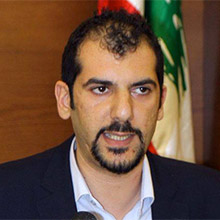 By Yeghia TASHJIAN, Beirut-based regional analyst and researcher, columnist, "The Armenian Weekly” By Yeghia TASHJIAN, Beirut-based regional analyst and researcher, columnist, "The Armenian Weekly”
Armenians in Lebanon are a deeply institutionalized and politicized community. Given its transnational nature, the community is affected by international, regional, and local developments. For this reason, the political parties and the community leadership analyse local events and position themselves in the Lebanese political space based on local, regional, and sometimes pan-Armenian calculations or interests. Hence the community, like other transnational ethno-religious groups, absorbs from its surroundings and reacts accordingly to preserve itself from security threats. […] This policy brief will also raise a few recommendations regarding new strategies and the need to adopt a vision for the future of the community amid the wave of uncertainties surrounding Lebanon.
READ MORE
- EGF Editor |
Published on EGF: 24.03.2023
| External Relations
-
From Syria to Nagorno-Karabakh: Assessing Russo-Turkish ‘Co-opetition’ By Yeghia TASHJIAN, Beirut-based regional analyst and researcher, columnist, "The Armenian Weekly”
On a diplomatic level, Turkey tried to launch “Astana style” diplomatic measures to address Nagorno-Karabakh. However, given the fact that the conflict was taking place in the post-Soviet space, Russia failed to see much incentive in engaging in a bilateral track with Turkey in the form of a new “Astana style” process where Turkey and Russia were going to be equal partners, addressing a conflict in Russia’s “backyard”.
The year 2022 witnessed intensified dialogues between top Syrian and Turkish officials. These kicked off with an August meeting in Damascus between Ali Mamlouk, the Head of the National Security Bureau of the Ba’ath Party and a Special Security Advisor to Syrian President Bashar al-Assad, and Hakan Fidan, the Head of Turkiye’s National Intelligence Organization (MIT). They concluded with a tripartite December meeting in Moscow, where Russian Defence Minister Sergei Shoigu hosted his Syrian and Turkish colleagues Ali Mahmoud Abbas and Hulusi Akar (remarkably, Ali Mamlouk and Hakan Fidan were also present). Those meetings prompted world media and political experts to speculate about an “unthinkable” Syrian-Turkish rapprochement becoming “thinkable”.
READ MORE
- EGF Editor |
Published on EGF: 15.03.2023
| External Relations
-
Lachin Remains an Obstacle for the Resumption of Armenia-Azerbaijan Negotiations By Benyamin POGHOSYAN, PhD, Chairman, Center for Political and Economic Strategic Studies
For the last weeks Armenia-Azerbaijan negotiations on a peaceful normalisation of relations appeared stalled. The stand-off with Azerbaijani activists on the Lachin Corridor continues to hinder progress. The US initiative to organize a Pashinyan – Aliyev meeting at the latest Munich Security Conference was "a step in the right direction". It gave a new breath of life to the negotiation process, and efforts are underway to revive the Brussels format and organize the fifth Pashinyan – Aliyev meeting in Brussels with the participation of the President of the European Council, Charles Michel.
After the brief momentum in Armenia – Azerbaijan negotiations in late September - early October 2022, the peace process seemed to stall. Assessing what went wrong after the 6 October 2022 Prague meeting is challenging. However, the Sochi summit held on 31 October and the meeting between foreign ministers held in Washington on 7 November did not add optimism to the future of the negotiation process. […]
Nevertheless, Armenia and Azerbaijan continued to work on the draft of the peace treaty, exchanging suggestions and ideas, and Yerevan sent its version of the final document to Azerbaijan and the OSCE Minsk Group co-chair states in mid-February. READ MORE
- EGF Editor |
Published on EGF: 03.03.2023
| External Relations
-
Will Earthquake Diplomacy Change Armenia-Turkey Relations? By Benyamin POGHOSYAN, PhD, Chairman, Center for Political and Economic Strategic Studies
The devastating earthquakes of 7.8 and 7.5 magnitudes struck southern Turkey on February 6, 2023. As of February 12, the death toll passed 30,000, while the number of wounded reached almost 100,000. More than 12,000 buildings were destroyed, and large-scale rescue operations are underway. Besides the immense human tragedy, the earthquake will have domestic and foreign policy implications for Turkey. The country faces crucial presidential and parliamentary elections scheduled for May 14. After the earthquake, discussions started about possibly postponing the elections, given the scale of destruction.
Turkey’s authorities have declared a three-month emergency in provinces affected by the earthquake. Many wonder about the possibility of pursuing an election campaign in the current circumstances. According to Turkey’s constitution, elections should occur by June 18, 2023. Only the start of a war gives authorities a legal option to postpone elections for one year. However, some experts argue that the government may apply to the Constitutional court asking for a one-year postponement claiming that the current emergency equals the launch of military activities. READ MORE
- EGF Editor |
Published on EGF: 16.02.2023
| External Relations
-
The Closure of the Lachin Corridor Is in No One's Interest By Benyamin POGHOSYAN, PhD, Chairman, Center for Political and Economic Strategic Studies
Azerbaijan has closed the Lachin corridor since December 12, 2022. There are different interpretations of why Azerbaijan did it, and why Baku continues the blockade despite calls from the international community to change its course. Azerbaijan, Armenia, Russia, and the West, in one way or another, all suffer from the blockade. Ultimately, it is up to the Azerbaijani leadership to decide to re-open the road.
Azerbaijan has closed the Lachin corridor since December 12, 2022. Azerbaijani official rhetoric rejects the very existence of a blockade, sometimes claiming that the road is open for humanitarian cargo, and sometimes saying that it was the Russian troops that closed the corridor. The official line from Azerbaijan is the narrative that those blocking the corridor are "independent eco-activists exercising their civil rights to protest." However, the situation is apparent to anyone with a basic understanding of the Nagorno Karabakh conflict – Azerbaijan imposed a blockade on the self-proclaimed Nagorno Karabakh Republic. READ MORE
- EGF Editor |
Published on EGF: 09.02.2023
| External Relations
-
Armenia - India Relations: Time is Right to Develop a Strategic Partnership By Benyamin POGHOSYAN, PhD, Chairman, Center for Political and Economic Strategic Studies
The defeat in the 2020 Nagorno Karabakh war shocked Armenia and Armenians all around the world. It ruined many perceptions deeply entrenched in political elites, expert and academic communities, and broader society: including that the Armenian army was the strongest in the South Caucasus, that Russia would not allow Turkey's involvement in Azerbaijan's war against Armenia, and that the West would not allow authoritarian Azerbaijan and Turkey to attack democratic Armenia. All these assumptions were crushed within 44 days, leaving Armenia facing a much harsher geopolitical reality. Despite this terrible outcome, many in Armenia believed that the November 10, 2020, trilateral statement would foment a new status quo. READ MORE
- EGF Editor |
Published on EGF: 20.01.2023
| External Relations
-
Beyond the Blocking of the Lachin Corridor By Yeghia TASHJIAN, Beirut-based regional analyst and researcher, columnist, "The Armenian Weekly”
On December 12, under the pretext of environmentalism, dozens of Azerbaijani state-backed “eco-activists” blocked the only land corridor in the Stepanakert-Shushi section connecting Armenia to Nagorno-Karabakh. As anticipated, the “environmental” slogans were soon politicized, and political demands were raised by enforcing a blockade. A humanitarian disaster was created for the 120,000 Armenians living in Nagorno-Karabakh. The real question is why Azerbaijan went for such a provocation and at what risk? Hence, in this article, I will shed light on the current crisis based on my meetings with Azerbaijani experts (keeping their identities anonymous) on the sidelines of several international conferences and online interviews I have conducted to analyze the Azerbaijani perspective and highlight the threats, arguing that the current humanitarian crisis is much deeper than the conflict in Nagorno-Karabakh, and it is related with the “battle of corridors” and beyond. READ MORE
- EGF Editor |
Published on EGF: 11.01.2023
| External Relations
-
|
|




