
After Samarkand Summit, the OTS Charts a More Independent Course
 By Fuad SHAHBAZOV, Baku-based independent regional security and defence analyst By Fuad SHAHBAZOV, Baku-based independent regional security and defence analyst
On November 11, a summit of the leaders of the Organization of Turkic States (OTS) convened in Samarkand, Uzbekistan. This major gathering came amid the OTS’s re-emerging significance as a key regional organization and a critical platform for rapprochement between the Central Asia and Caucasus regions. The official Samarkand Declaration, which was signed as a final accord by the attendees, paves the way for a comprehensive partnership format among the OTS member states. The Samarkand meeting represented the major political gathering for the Turkic nations in 2022, and it will further facilitate dialogue and regional interconnectivity between the OTS member states—independent of Russian and Western influence. READ MORE
- EGF Editor |
Published on EGF: 19.11.2022
| External Relations
-
Harmonising the Different Formats in Armenia-Azerbaijan Negotiations  By Benyamin POGHOSYAN, PhD, Chairman, Center for Political and Economic Strategic Studies By Benyamin POGHOSYAN, PhD, Chairman, Center for Political and Economic Strategic Studies
Over the last year multiple formats have emerged in Armenia-Azerbaijan negotiations, and three main external players: Russia, the EU and the US are involved in the mediation process. This may lead to some confusion. Big power rivalry may also negatively impact the process. Some co-ordinating mechanism is necessary, and a format, at least involving Russia and the EU, could also help to combine their efforts.
While the South Caucasus marked the second anniversary of the 2020 Nagorno Karabakh war, negotiations to sign a peace agreement between Armenia – Azerbaijan have become increasingly complex. If during the first year after the war, it was Russia that almost exclusively controlled the process, now we have many actors with contradicting interests and visions. The EU entered the game first, organizing four summits between Armenian and Azerbaijani leaders in the period of December 2021 – August 2022, simultaneously launching a new format of negotiations between the Secretary of the Armenian security council and top foreign policy aide to President Aliyev. Russia was watching the growing EU involvement in the process, messaging its concerns about the EU's desire to take the initiative from the Kremlin. READ MORE
- EGF Editor |
Published on EGF: 19.11.2022
| External Relations
-
Iranian Perceptions over the South Caucasus 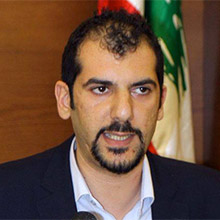 By Yeghia TASHJIAN, Beirut-based regional analyst and researcher, columnist, "The Armenian Weekly” By Yeghia TASHJIAN, Beirut-based regional analyst and researcher, columnist, "The Armenian Weekly”
A survey was recently conducted by the Tehran International Studies and Research Institute (TISRI) to study international security priorities and Iran’s foreign policy. The survey was conducted among 384 academic scholars in different Iranian universities (Tehran, Allameh Tabataba’i, Tabriz, Guilan, Shiraz and Razi of Kermanshah) and among researchers and experts in the Caucasus region. The survey resulted in certain proposals calling for an Iranian foreign policy shift toward the South Caucasus, identifying geopolitical risks and providing suggestions on how Iran can help in stabilizing the region. According to the study, it seems Iranian scholars, experts and analysts are concerned about the security and geopolitical risks in the post-2020 Nagorno-Karabakh war regional system in the South Caucasus. Here are the concluding results of this study. READ MORE
- EGF Editor |
Published on EGF: 29.10.2022
| External Relations
-
Baku-Tbilisi-Kars Railway: An Example of “Matching Model Relations”  By Nuray Alekberli, Researcher, Strategic Studies Consulting Company, Baku By Nuray Alekberli, Researcher, Strategic Studies Consulting Company, Baku
In August 2022, Azerbaijan, Turkey and Georgia have signed an "Agreement amongst three countries on preliminary information exchange for the facilitation of transit customs procedures within the framework of the Baku-Tbilisi-Kars (BTK) railway project" (az.trend.az, 19 August). This agreement aimed at simplifying customs procedures and accelerating border crossing procedures within the framework of the BTK railway project through organizing an electronic exchange of initial information about goods (report.az, 18 August 2022). Therefore, somehow it plays the role of a new breath from a technical point of view to remove obstacles and speed up trade and economic relations between Asian markets and Europe. READ MORE.
- EGF Editor |
Published on EGF: 29.10.2022
| External Relations
-
Armenia–India Relations: From Politics to Arms Trade By Yeghia TASHJIAN, Beirut-based regional analyst and researcher, columnist, "The Armenian Weekly”
During my academic visit to New Delhi in February 2020, I met with Indian politicians and scholars and discussed opportunities for upgrading Armenian-Indian relations. While back then the idea of arms trade was still immature, I raised the issue of defence cooperation between the two countries. Through honest discussions about the Armenian cause, I came to a conclusion, which I summarized in a November 2020 article for the Armenian Weekly. Despite today’s tumultuous climate in Armenia, it’s reassuring to learn that this 2020 recommendation has materialized, and bilateral ties are taking military and strategic dimensions. READ MORE
- EGF Editor |
Published on EGF: 12.10.2022
| External Relations
-
Is Pashinyan-Erdogan Meeting Enough to Stimulate the Armenia-Turkey Normalisation? By Benyamin POGHOSYAN, PhD, Chairman, Center for Political and Economic Strategic Studies
The first face to face meeting between Armenian prime minister, Nikol Pashinyan, and Turkish President, Recip Tayip Erdogan, took place in Prague on 6 October, on the margins of the summit of the European Political Community. Whilst in the summer there was hope of an early breakthrough in the Armenia-Turkey normalisation, decisions agreed by the special envoys of the two countries have not been implemented. May this latest meeting stimulate normalization, or further work in the process of building confidence and trust is required?
The first week of October 2022 was marked by intensive diplomacy around the geopolitics of the South Caucasus. The September 13-14, 2022, Azerbaijani aggression against Armenia threw the region back to the brink of a new large-scale war. It seemed that months-long Armenia – Azerbaijan negotiations facilitated by the European Council President Charles Michel were fruitless. However, despite bleak predictions, a new wave of diplomatic activity was launched immediately after the ceasefire was reached on September 14. READ MORE
- EGF Editor |
Published on EGF: 12.10.2022
| External Relations
-
Beware of Americans Bearing Gifts By Benyamin POGHOSYAN, PhD, Chairman, Center for Political and Economic Strategic Studies
The visit of Nancy Pelosi to Armenia created quite a lot of hype, since some saw in it the prospects for national salvation. But the visit's "democracy vs authoritarianism agenda" is risky for Armenia. Armenia should send clear signals to Russia and Iran that it has no intention to join the “democracy vs. authoritarianism fight” and will never allow anyone to use its territory for anti-Iranian or anti-Russian activities.
On September 17, 2022, Nancy Pelosi, the US House of Representatives speaker, arrived in Armenia for a three–day visit. She was the highest-ranking US official to visit Armenia since the country got its independence in 1991. The visit was agreed upon weeks, if not months in advance, but it took place only a few days after Azerbaijan had launched a new aggression against Armenia on September 13, 2022. The ceasefire was reached in late September 14 through the active mediation efforts of Russia, the US, and other external players. However, these hostilities overshadowed the visit. READ MORE
- EGF Editor |
Published on EGF: 27.09.2022
| External Relations
-
The Samarkand SCO Summit As A Platform For Dialogue And Fostering Mutual Trust  By Faridun Sattarov, PhD, DSc, University of World Economy and Diplomacy, Uzbekistan By Faridun Sattarov, PhD, DSc, University of World Economy and Diplomacy, Uzbekistan
On September 15-16 of this year, 14 heads of state are expected to attend the summit of the Shanghai Cooperation Organization (SCO), which will be held in Samarkand, Uzbekistan. This event will be the first face-to-face meeting of SCO leaders since 2019 and will conclude Uzbekistan’s presidency of the organization.
In addition to the leaders of the SCO member states, which include Russia, China, India, Pakistan, Uzbekistan, Kazakhstan, Kyrgyzstan, and Tajikistan, the summit will host the presidents of Iran, Belarus, and Mongolia as observers, as well as the heads of Turkey, Armenia, Azerbaijan, and Turkmenistan as invited guests.
READ MORE
- EGF Editor |
Published on EGF: 14.09.2022
| External Relations
-
The SCO Samarkand Summit: Dialogue and Cooperation in an Interconnected World By Shavkat Mirziyoyev, President of the Republic of Uzbekistan
Uzbekistan’s chairmanship in the Shanghai Cooperation Organization (SCO) has fallen on a dynamic period, fraught with various events and trends – the period of the «historical rift», when one era comes to an end and another begins – thus far unpredictable and unknown.
The modern system of international cooperation, based on the universal principles and norms, begins to falter. One of the main reasons for this is a deep crisis of trust at the global level, which, in turn, provokes a geopolitical confrontation and the risk of reviving the bloc thinking stereotypes. This process of mutual alienation complicates the return of the world economy to its former course of development and the restoration of global supply chains.
READ MORE
- EGF Editor |
Published on EGF: 12.09.2022
| External Relations
-
Role of Shanghai Cooperation Organisation Goes beyond Managing Russia-China Relations in Central Asia By Benyamin POGHOSYAN, PhD, Chairman, Center for Political and Economic Strategic Studies
As the world comes closer to multi-polarity, the role of such organizations as SCO will grow further. Russia and China will seek to use them as a counterbalance to western dominated international political and economic organizations, such as G7, the EU, the World Bank and IMF. In the present context of emerging great power competition, the SCO started to be viewed less as a tool to manage Russia – China relations in Central Asia, or counter terrorist threats from Afghanistan, and more as a significant grouping of non-western powers in the emerging multipolar world.
The war in Ukraine has given a new impetus to the discussions about the transformation of the global order. Experts, academicians, and politicians have been debating the potential counter-weights of the emerging post-cold war order since the global financial crisis of 2008. There were different opinions about what the new world order could be like. Among the options discussed were a new bipolar world dominated by the US-China rivalry, a multipolar world where key players – the US, China, Russia, India, EU, and perhaps others – will be in a constant fight for influence and prestige, or complete chaos with no rules and no dominant players, opening the prospect of returning humankind back to a geopolitical jungle. READ MORE
- EGF Editor |
Published on EGF: 09.09.2022
| External Relations
-
|
|




