
The Groundwork of Economic Reforms in 2024. On the situation in the economy and the tasks set 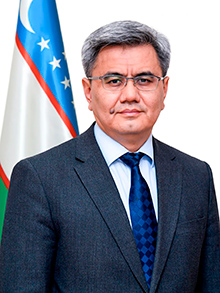 Obid Khakimov, director of the Center for Economic Research and Reforms under the Administration of the Republic of Uzbekistan
The dynamic growth of the population of Uzbekistan requires at least high outstripping economic growth rates in order to adequately meet the growing needs and improve the standard of living of people. But this requires new, more balanced and verified approaches to ensure timely achievement of the set goals.
And these new approaches to economic policy were clearly manifested in the decisions taken at the important meetings held at the beginning of the year under the chairmanship of the President of Uzbekistan Shavkat Mirziyoyev on the situation in the economy and the tasks assigned to the economic divisions for 2024.
READ MORE
- EGF Editor |
Published on EGF: 16.02.2024
| Markets
-
Uzbekistan is creating its own model for combating corruption  Qodir Djuraev, MP, Legislative Chamber of Oliy Majlis (national parliament) of the Republic of Uzbekistan
One of the most crucial issues in the rapidly changing world is undoubtedly corruption. The human history suggests that this phenomenon brought even the most powerful nations to the brink of collapse.
Corruption is a perilous misfortune with negative impact on the entire human race, on foundation of any state and society, economic development; it undermines rule of law and sharply weakens public confidence in government, hinders advancement of democratic institutions.
Unfortunately, this problem has not been alien Uzbekistan. Until very recently, the latter had been known as one of those countries with highest perceptions of corruption.
READ MORE
- EGF Editor |
Published on EGF: 09.02.2024
| Security
-
What Does Azerbaijan Want?  By Benyamin POGHOSYAN, PhD, Chairman, Center for Political and Economic Strategic Studies By Benyamin POGHOSYAN, PhD, Chairman, Center for Political and Economic Strategic Studies
After the military takeover of Nagorno Karabakh by Azerbaijan in September 2023 and the forced displacement of Armenians, there were some hopes in Armenia and abroad that an Armenia – Azerbaijan peace agreement was within reach. These hopes were based on the assumption that Azerbaijan received everything it could dream of just a few years ago.
After September 2023, Azerbaijan controlled the entire Nagorno-Karabakh, with only a handful of Armenians remaining there. The Armenian government accepted that reality with no intention to challenge it, while the international community did nothing tangible to punish Azerbaijan or create conditions to bring Armenians back. President Ilham Aliyev proved to everyone that he was not a “golden boy” who became president just because he was the son of a prominent leader – Heydar Aliyev – and lacked basic governance skills. He succeeded where his father failed, taking control over Nagorno Karabakh and raising Azerbaijani flags in Shushi and Stepanakert.
READ MORE
- EGF Editor |
Published on EGF: 06.02.2024
| External Relations
-
Will an Armenia-Azerbaijan peace agreement be indefinitely delayed?  By Vasif HUSEYNOV, PhD, Head of Department, AIR Center, Adjunct Lecturer, ADA and Khazar Universities, Baku By Vasif HUSEYNOV, PhD, Head of Department, AIR Center, Adjunct Lecturer, ADA and Khazar Universities, Baku
2023 ended with positive notes for the Armenia-Azerbaijan peace process, but the new year has so far failed to maintain the momentum. Despite a successful prisoner exchange, and Armenia’s endorsement of Azerbaijan’s COP29 candidacy, recent statements from the respective governments have presented a mixed picture. While the Azerbaijani side has not indicated any setbacks in the ongoing talks yet, the Armenian government has criticized the recent statements by the Azerbaijani leader as unconstructive for the peace process.
Complicating matters further, disagreements have intensified regarding the possible regulations along the Zangezur corridor. The latest developments highlight a disparity in the visions of Russia, Armenia, and Azerbaijan for this corridor. Unfortunately, these developments suggest that the obstacles in the Armenia-Azerbaijan peace treaty talks may be more fundamental, potentially leading to indefinite delays in the process.
READ MORE
- EGF Editor |
Published on EGF: 06.02.2024
| Security
-
Is Aliyev sincere in his peace plans? 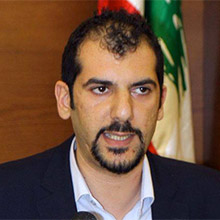 By Yeghia TASHJIAN, Beirut-based regional analyst and researcher, columnist, "The Armenian Weekly” By Yeghia TASHJIAN, Beirut-based regional analyst and researcher, columnist, "The Armenian Weekly”
On January 10, 2024, Azerbaijan’s President Ilham Aliyev gave a 2.5-hour interview with local TV channels. In his interview, Aliyev not only repeated false remarks and justified the ethnic cleansing of the Armenians of Artsakh but also threatened Armenia. When it comes to delimiting and demarcating the Armenia-Azerbaijan border, he rejected the old Soviet maps proposed by Armenia, arguing, “In the 20th century, the lands of Azerbaijan were given to Armenia in parts. One day after the establishment of the Azerbaijan People’s Republic in 1918, the ancient Azerbaijani city of Erevan was handed over to Armenia. After the Sovietization in April 1920, in November, the Soviet government took the bigger part of Western Zangezur from Azerbaijan and handed it over to Armenia. By May 1969, Azerbaijani lands were given to Armenia in parts, and from an area of about 100,000 square kilometres, it dropped to 86,600 square kilometres.”
READ MORE
- EGF Editor |
Published on EGF: 06.02.2024
| External Relations
-
Assessment of poverty indicators in the Republic of Uzbekistan by the end of 2023 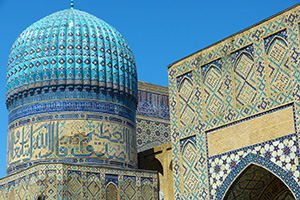 The CERR jointly with the Statistics Agency, assessed the level of monetary poverty in Uzbekistan. By the end of 2023, poverty in the country decreased by 3.1 percentage points. The experts explained how the poverty profile has changed and in which regions the incomes of the population have shown the greatest growth.
According to the results of the assessment of the Statistics Agency under the President of Uzbekistan, by the end of 2023, the poverty level in Uzbekistan has decreased to 11.0%.
READ MORE
- EGF Editor |
Published on EGF: 06.02.2024
| Security
-
Armenia and Azerbaijan Address Concerns Over Territorial Integrity By Vasif HUSEYNOV, PhD, Head of Department, AIR Center, Adjunct Lecturer, ADA and Khazar Universities, Baku
On January 19, Armenian Prime Minister Nikol Pashinyan called for a new constitution in a meeting with senior officials from the Armenian Ministry of Justice. Pashinyan asserted that Armenia needs “a new constitution, not constitutional changes,” adding that the new foundational document would make the country “more competitive and viable in the new geopolitical and regional environment” (Azatutyun.am, January 19). He highlighted that the new constitution would maintain the present parliamentary system and underscored “external security” and “internationally recognized sovereign territory” as the main issues to be addressed. Mutual respect for one another’s territorial integrity remains a sticking point in peace negotiations between Armenia and Azerbaijan. If Yerevan proceeds with Pashinyan’s proposal, the new constitution will eliminate certain hurdles to signing a peace treaty with Baku.
READ MORE
- EGF Editor |
Published on EGF: 30.01.2024
| Security
-
The Emerging Azerbaijan-Gulf Partnership in Energy
 By Fuad Shahbazov, Baku-based independent regional security and defence analyst By Fuad Shahbazov, Baku-based independent regional security and defence analyst
On January 8, Mohammad bin Zayed Al-Nahyan (MBZ), the leader of the United Arab Emirates (UAE), paid an official visit to Azerbaijan upon the invitation of his counterpart, President Ilham Aliyev. While MBZ’s visit to Baku signaled an era of deepening economic and energy ties between Azerbaijan and the UAE, it also reflected significant progress made in recent years. Indeed, the bilateral relationship has seen a raft of new projects and investments, particularly in the renewable energy sector. Notably, according to 2022 data, the Gulf countries are now among Azerbaijan’s top investment partners, though reciprocal investment remains low, compared to Azerbaijan’s other partners. READ MORE
- EGF Editor |
Published on EGF: 30.01.2024
| Markets
-
Baku wants an agreement with Armenia without mediators By Vasif HUSEYNOV, PhD, Head of Department, AIR Center, Adjunct Lecturer, ADA and Khazar Universities, Baku
On January 8, US Senior Adviser on Caucasus Negotiations Louis Bono visited Yerevan, engaging in discussions with local officials regarding the Armenia-Azerbaijan peace process. The Armenian side reported that one of the issues discussed during this visit was the organization of a meeting of the Armenian and Azerbaijani foreign ministers in Washington. Unlike his previous visits to the region, this trip omitted a visit to Baku, suggesting that it either wasn’t planned, which is unlikely, or that the Azerbaijani side was not open to receiving him. Recent developments between Baku and Yerevan, along with the evolving dynamics of mediator involvement, indicate that Azerbaijan has grown more cautious and sceptical about the role of third parties in the Armenia-Azerbaijan process. As a result, Azerbaijan has advocated for bilateral meetings between the two countries. Baku’s position is primarily related with the potential geopolitical fallout of the upcoming peace deal with Yerevan.
READ MORE
- EGF Editor |
Published on EGF: 23.01.2024
| Security
-
What Next in Armenia – Azerbaijan Negotiations By Benyamin POGHOSYAN, PhD, Chairman, Center for Political and Economic Strategic Studies
In the late months of 2022 and 2023 there were intensive discussions about the possible signature of the Armenia – Azerbaijan peace agreement. Both international mediators and facilitators, as well as representatives of Armenia and Azerbaijan were making statements that a peace agreement signature is within reach. As we enter 2024, discussions are underway about the potential signature of the Armenia – Azerbaijan agreement in 2024. The December 7, 2023, bilateral statement on the release of Prisoners of War and Armenia’s support of the Azerbaijani bid to host the COP29 in Baku gave more impetus to these hopes. Some believe that the military takeover of Nagorno Karabakh by Azerbaijan in September 2023 made this perspective more realistic, especially as the Armenian government agreed not to include anything on Nagorno Karabakh in the peace agreement.
READ MORE
- EGF Editor |
Published on EGF: 23.01.2024
| Security
-
|
|




