
Armenia’s Reformers Struggle On  By Armen Grigoryan, Vice-president, Yerevan-based Centre for Policy Studies
After last year’s war, hopes that the 2018 revolution will fulfil its promise are fading – but it’s not too late for change.
“A stellar performance in one year is no guarantee of future success,” declared The Economist after Armenia held free and fair elections three years ago. The qualified praise was not without cause. It was always likely that Armenia’s attempts at democratic consolidation would be difficult, particularly because of the need for some unpopular reforms. Prior to the December 2018 parliamentary elections, observers noted that civic demobilisation – the influx of non-profit sector professionals to the government and their ensuing unwillingness to criticise it – could potentially undermine political pluralism, enable re-emergent authoritarianism, or foster the rise of right-wing populism. READ MORE
- EGF Editor |
Published on EGF: 05.05.2021
| External Relations
-
The EU Will Not Act as a Counterweight to Russia in Either Armenia or NKR  By Benyamin Poghosyan, PhD, Chairman, Center for Political and Economic Strategic Studies
The EU is neither willing nor capable of countering Russia or Turkey in Armenia and Azerbaijan and will not make efforts to decrease Russian influence in Armenia and the unrecognised Nagorno Karabakh Republic.
EU-Armenia relations entered a new phase in 2009 when the EU launched its Eastern Partnership Initiative. Armenia successfully negotiated an Association Agreement with the EU and was going to sign it in autumn 2013. The growing tensions between Russia and the West forced Armenia to cancel the signature, not to ruin relations with its strategic ally. Armenia and the EU started a new round of negotiations in late 2014, culminating with the signature of the Comprehensive and Enhanced Partnership Agreement (CEPA) in November 2017. READ MORE
- EGF Editor |
Published on EGF: 05.05.2021
| External Relations
-
The Realistic Policy of Armenia towards Nagorno-Karabakh By Benyamin Poghosyan, PhD, Chairman, Center for Political and Economic Strategic Studies
The 2020 Karabakh war has dramatically changed the geopolitical status quo in the South Caucasus. Discussions have been underway in Armenia and the Armenian Diaspora about the reasons for the catastrophe and those responsible. Most probably, military defeat will be a key topic during the upcoming June 2021 snap parliamentary elections. The thorough analyses of what happened before, during, and after the war are mandatory tasks to be fulfilled. However, the key for Armenia now to elaborate a new policy towards the Karabakh conflict, taking into account the war results. The most significant issue here is to develop a realistic policy based on accurate calculations, Armenia’s resources, and the interests of external players; otherwise, Armenia may face another catastrophe. READ MORE
- EGF Editor |
Published on EGF: 28.04.2021
| External Relations
-
Russian Goals in the Armenian Snap Parliamentary Elections By Benyamin Poghosyan, PhD, Chairman, Center for Political and Economic Strategic Studies
Armenia is actively preparing for the 20 June 2021 snap parliamentary elections. Political parties are making their final calculations regarding the format of their participation. The main battle will probably occur between the incumbent prime minister, Nikol Pashinyan, and the second president of Armenia, Robert Kocharyan. The latter has already confirmed that he will lead an alliance of two or three parties. The Armenian Revolutionary Federation, the “Motherland” party, established by the former director of the National Security Service, Artur Vanetsyan, and the new “Rebirth Armenia” party established by the former governor of the Syunik region, Vahe Hakobyan, which unites several mayors from the Syunik, may create an electoral bloc under the leadership of Robert Kocharyan. READ MORE
- EGF Editor |
Published on EGF: 14.04.2021
| External Relations
-
A Vote Largely Motivated by Hate in Armenia’s June ‘21 Elections By Benyamin Poghosyan, PhD, Chairman, Center for Political and Economic Strategic Studies
Former president Robert Kocharyan has emerged as the strongest challenger to prime minister Nikol Pashinyan in Armenian’s forthcoming parliamentary elections. However, most voters are simply motivated by their hate of one or the other.
Armenia is looking forward to the snap parliamentary elections scheduled for June 20, 2021. According to the preliminary agreement between the ruling "My step" faction and the two parliamentary opposition parties, prime minister Nikol Pashinyan will resign at the end of April, beginning of May; Parliament will not elect a new prime minister twice; and will thereafter be automatically dissolved as provided for by the Armenian constitution. READ MORE
- EGF Editor |
Published on EGF: 07.04.2021
| External Relations
-
What’s Next in Armenia – Russia Relations By Benyamin Poghosyan, PhD, Chairman, Center for Political and Economic Strategic Studies
Relations with Russia were always a cornerstone for Armenian foreign policy. Since Armenia has regained its independence in 1991, Russia has been its essential political and military ally. Several reasons were behind such a choice – geopolitics, history, significant Armenian community in Russia. The Russian military base and border troops have been deployed in Armenia, and Yerevan joined Collective Security Treaty Organization and Eurasian Economic Union. Meanwhile, in the last 10-15 years, a discourse about Armenia’s dangerous overdependence on Russia was prevalent in Armenian and Western experts’ circles. Many perceived Armenia as a client state of Russia and called for changes. READ MORE
- EGF Editor |
Published on EGF: 03.03.2021
| External Relations
-
Establishing Joint Armenia–China Peacekeeping Training Center in Armenia By Benyamin Poghosyan, PhD, Chairman, Center for Political and Economic Strategic Studies
Peacekeeping operations are one of the key domains of international relations. They play a paramount role in securing stability and fostering international cooperation. Currently, fourteen peacekeeping operations around the globe are led by the UN Department of Peace operations. Several other international organizations are involved in peacekeeping missions, but the UN is the ultimate authority in this sphere. READ MORE
- EGF Editor |
Published on EGF: 14.07.2020
| External Relations
-
Presidential Elections in Karabakh: Background and Implications By Benyamin Poghosyan, PhD, Chairman, Center for Political and Economic Strategic Studies
On March 31, 2020 presidential and parliamentary elections were held in unrecognized Nagorno Karabakh Republic. Five parties entered the Parliament, while President was elected during the second round, on April 14. The winner of the Presidential campaign was Arayik Harutyunyan, who received 49 percent of votes during the first round and 88 percent during the second round. However, his main contender Masis Mayilyan de facto boycotted second round asking his supporters not to participate in the elections due to the COVID19 outbreak. READ MORE
- EGF Editor |
Published on EGF: 22.04.2020
| External Relations
-
Covid-19 Is an Important Test for Azerbaijani Unity 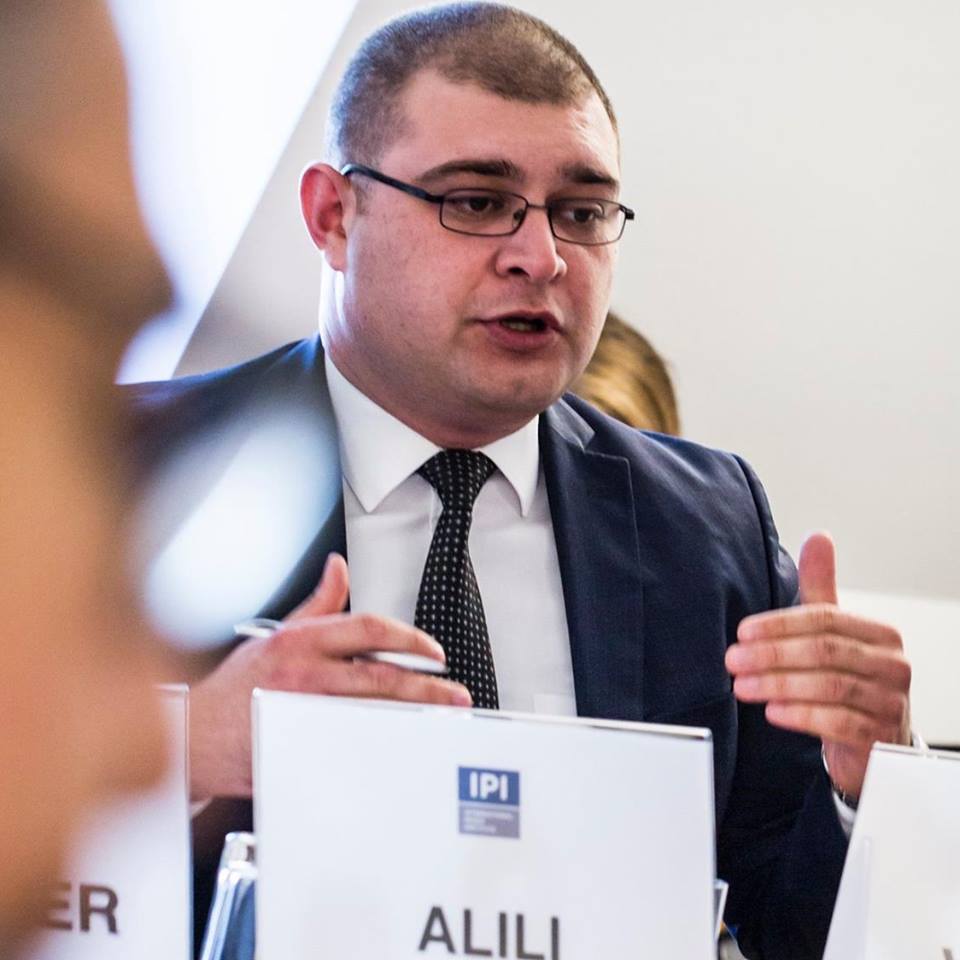 By Ahmad Alili, Head of Research, Caucasus Policy Analysis Center, Baku
The COVID-19 pandemic has created interesting qualitative and quantitative changes at the top of Azerbaijan's public agenda. Following the snap parliamentary elections in February, the newly elected Parliament, which includes a number of new faces, is tasked to address the challenges the country is facing. In a speech at the opening of the Parliament, President Aliyev sent clear messages to the public servants, political parties and youth. READ MORE
- EGF Editor |
Published on EGF: 15.04.2020
| External Relations
-
Why Strong Armenia is Beneficial for both Russia and the US By Benyamin Poghosyan, PhD, Executive Director, Political Science Association of Armenia
The South Caucasus always has quite complicated geopolitics. Russia, the US, the EU, Iran, Turkey, and China all have interests here. Armenia, Azerbaijan, and Georgia have different domestic political structures and cultures. Besides that, their national security threat perception and foreign policy goals do not coincide with each other. The protracted conflicts in Nagorno Karabakh, Abkhazia, and South Ossetia make the regional geopolitics even more complicated. All actors involved in the South Caucasus seek to exploit these conflicts to pursue their national interests; meanwhile, conflicting parties themselves have an absolutely different understanding on how these conflicts may be resolved. READ MORE
- EGF Editor |
Published on EGF: 04.12.2019
| External Relations
-




