
Azerbaijan’s energy diplomacy pivots to the Balkans
 By Fuad SHAHBAZOV, Baku-based independent regional security and defence analyst By Fuad SHAHBAZOV, Baku-based independent regional security and defence analyst
Azerbaijan has adjusted its foreign policy agenda to target the Balkan region that is more vulnerable to the energy crisis than the states of Central and Western Europe.
Energy has long been the core element of Azerbaijan's pragmatic foreign policy, and recently it gained more impetus as European nations sought additional energy suppliers to replace Russian fossil fuel exports. Although the EU’s leading member countries are able to compensate for energy shortages by using energy reserves, employing alternative energy sources and importing additional gas volumes from alternative suppliers, the less developed Balkan states are struggling to adapt to the energy deficit. Azerbaijan has adjusted its foreign policy agenda to target the Balkan region that is more vulnerable to the energy crisis than the states of Central and Western Europe. READ MORE
- EGF Editor |
Published on EGF: 26.05.2023
| External Relations
-
The Armenian Government Needs to Communicate Better to the Public what EUMA Is About  By Benyamin POGHOSYAN, PhD, Chairman, Center for Political and Economic Strategic Studies By Benyamin POGHOSYAN, PhD, Chairman, Center for Political and Economic Strategic Studies
Efficient strategic communication has become necessary in the South Caucasus as the governments of the region and outside regional and global powers vie for influence in the current highly complex geopolitical realities. One of the priorities for the Armenian government is to explain clearly to public opinion what the recently deployed EU Monitoring Mission is and is not about. Otherwise, the same disappointment that emerged towards Russia earlier will surely appear as regards the European Union also.
The ups and downs in the Armenia – Azerbaijan negotiations process after the end of the 2020 Nagorno Karabakh war, the launch of the Russia – Ukraine war, and the complete rupture of Russia – West relations added complexity to the geopolitical realities of the South Caucasus. Too many actors have contradicting interests in region – Russia, the US, the EU, Iran, Turkey, and Israel.
READ MORE
- EGF Editor |
Published on EGF: 06.05.2023
| Security
-
Geopolitical Choices of Armenia amidst the Transformation of Post-Cold War Global Order By Benyamin POGHOSYAN, PhD, Chairman, Center for Political and Economic Strategic Studies
The end of the Cold War and the collapse of the Soviet Union have ushered in hopes of humanity's happy and harmonious future. The ideas such as "End of history" (Fukuyama, 1992) became very popular both within academic circles and policymakers. There was a widespread belief that the entire planet would live under liberal democracy, and interstate conflicts will become bad memories from history. The last decade of the 20thcentury seemed to confirm those hopes. The EU and NATO enlargement, market reforms informer socialist states, cooperative relations between Russia and the West, and the growing US –China economic cooperation have seemingly justified hopes for establishing the world united under the banner of liberal democracy. READ MORE
- EGF Editor |
Published on EGF: 27.04.2023
| External Relations
-
Azerbaijani-Iranian Tensions Disrupt the South Caucasus
By Fuad SHAHBAZOV, Baku-based independent regional security and defence analyst
On March 30, Azerbaijan officially inaugurated its first embassy in Tel Aviv, Israel, after avoiding the move for three decades. Although the decision highlighted the importance of Azerbaijani-Israeli relations, it quickly became a catalyst behind the renewed war of words between Iran and Azerbaijan. Since 2021, diplomatic relations between Tehran and Baku have steadily become embittered. Iran is primarily concerned with the decline of its influence in the South Caucasus, which has suffered since the end of the Second Karabakh War in 2020. As such, in an attempt by Tehran to flex its muscles and intimidate Azerbaijan, the Islamic Revolutionary Guard Corps conducted large-scale military drills on the border with Azerbaijan in October 2022. Unlike previous years, the exercises provoked an uneasy reaction within Azerbaijan and triggered anti-Iranian sentiments throughout the country. READ MORE
- EGF Editor |
Published on EGF: 27.04.2023
| Security
-
Is War between Iran and Azerbaijan Out of the Question?
By Fuad SHAHBAZOV, Baku-based independent regional security and defence analyst
Tensions between Azerbaijan and Iran have grown rather raw recently in the wake of Baku’s inauguration of its first-ever embassy in Israel. Of course, diplomatic relations between the neighbours have steadily become more and more inflamed and embittered for several years now, with Iran concerned at the declining influence in the South Caucasus it has suffered since the second Karabakh war between Azerbaijan, urged on by Turkey, and Armenia in late 2020. And with a normalisation of diplomatic ties between Tehran and Baku unlikely in the near future, the big question remains unanswered: Is it possible that the tensions could escalate into a large-scale regional conflict?
The war of words between the two countries was aggravated in October 2022 when Iran's Islamic Revolutionary Guard Corps (IRGC) conducted large-scale military drills on its border with Azerbaijan. Baku opted to refrain from responding to the exercises with comments that might antagonise Tehran. However, the situation became even more explosive when, in late January, an Iranian citizen armed with a rifle burst into the Azerbaijani embassy in Tehran and killed the building’s security chief and injured two of his colleagues. READ MORE
- EGF Editor |
Published on EGF: 15.04.2023
| Security
-
Azerbaijan’s Efforts to Digitalize the Middle Corridor  By Vusal GULIYEV, Visiting Research Fellow at the Asian Studies Center of Boğaziçi University By Vusal GULIYEV, Visiting Research Fellow at the Asian Studies Center of Boğaziçi University
Located at a key geopolitical and geo-economic point in the Silk Road region, Azerbaijan has been a main initiator in the development of technologically advanced and economically viable trans-border logistics and transit services. This is largely due to Baku’s embrace of a wide spectrum of digitalization and innovation initiatives within the broad-based connectivity framework of the Middle Corridor Initiative (MCI) and other similar such projects. This IDD analytical policy brief will examine various aspects of this important topic as it relates to MCI.
Seizing new opportunities in the digital era whilst developing better measures to boost the digital economy and trade with embedded innovation and emerging technologies has become one of Azerbaijan’s top priorities in the past few years. In the wake of significant government-backed digital transformation efforts, special attention is now being placed on enhancing the variety of logistics services on offer, building cutting-edge infrastructure, and upgrading domestic communication systems.
READ MORE
- EGF Editor |
Published on EGF: 15.04.2023
| External Relations
-
Protection of Life, Liberty, and Property at the Core of Constitutional Reforms in Uzbekistan  Prof. dr. Faridun Sattarov, Department of Political Science, University of World Economy and Diplomacy Prof. dr. Faridun Sattarov, Department of Political Science, University of World Economy and Diplomacy
Today, the Constitution of the Republic of Uzbekistan is in the process of being transformed into a truly people’s document based on the principle of “human – society – state.” This is evidenced by the involvement of ordinary citizens, non-governmental organizations, representatives of business and professional circles, the scientific and expert community in the development of the new Constitution. More than 220,000 proposals were made during the nationwide discussion, which shows the exceptional importance of this political process.
A useful rule of thumb of constitutional law is the inadmissibility of a gap between the constitutional principles of the development of legal consciousness and social practice. The changing situation in the world demonstrates, first of all, that many tendencies of the past years are subject to serious revision and transformation today. Therefore, national constitutional development should address the effects global processes may have on the legal structure of the state.
READ MORE
- EGF Editor |
Published on EGF: 12.04.2023
-
The Political Future of the Armenian Community in a Fractured Lebanon 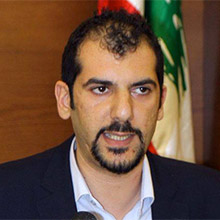 By Yeghia TASHJIAN, Beirut-based regional analyst and researcher, columnist, "The Armenian Weekly” By Yeghia TASHJIAN, Beirut-based regional analyst and researcher, columnist, "The Armenian Weekly”
Armenians in Lebanon are a deeply institutionalized and politicized community. Given its transnational nature, the community is affected by international, regional, and local developments. For this reason, the political parties and the community leadership analyse local events and position themselves in the Lebanese political space based on local, regional, and sometimes pan-Armenian calculations or interests. Hence the community, like other transnational ethno-religious groups, absorbs from its surroundings and reacts accordingly to preserve itself from security threats. […] This policy brief will also raise a few recommendations regarding new strategies and the need to adopt a vision for the future of the community amid the wave of uncertainties surrounding Lebanon.
READ MORE
- EGF Editor |
Published on EGF: 24.03.2023
| External Relations
-
From Syria to Nagorno-Karabakh: Assessing Russo-Turkish ‘Co-opetition’ By Yeghia TASHJIAN, Beirut-based regional analyst and researcher, columnist, "The Armenian Weekly”
On a diplomatic level, Turkey tried to launch “Astana style” diplomatic measures to address Nagorno-Karabakh. However, given the fact that the conflict was taking place in the post-Soviet space, Russia failed to see much incentive in engaging in a bilateral track with Turkey in the form of a new “Astana style” process where Turkey and Russia were going to be equal partners, addressing a conflict in Russia’s “backyard”.
The year 2022 witnessed intensified dialogues between top Syrian and Turkish officials. These kicked off with an August meeting in Damascus between Ali Mamlouk, the Head of the National Security Bureau of the Ba’ath Party and a Special Security Advisor to Syrian President Bashar al-Assad, and Hakan Fidan, the Head of Turkiye’s National Intelligence Organization (MIT). They concluded with a tripartite December meeting in Moscow, where Russian Defence Minister Sergei Shoigu hosted his Syrian and Turkish colleagues Ali Mahmoud Abbas and Hulusi Akar (remarkably, Ali Mamlouk and Hakan Fidan were also present). Those meetings prompted world media and political experts to speculate about an “unthinkable” Syrian-Turkish rapprochement becoming “thinkable”.
READ MORE
- EGF Editor |
Published on EGF: 15.03.2023
| External Relations
-
From Mumbai to Varna via Armenia: The New India-Europe Route By Benyamin POGHOSYAN, PhD, Chairman, Center for Political and Economic Strategic Studies
The war in Ukraine has disrupted global supply chains, creating significant complications for transit routes crossing the Russia-Europe border. The world economy, still reeling from COVID-19, found itself in another crisis. Yet, even before the pandemic and the war in Ukraine, the primary sea transit routes connecting Southeast Asia with Europe, like the Suez Canal, were congested due to the growing cargo volumes. As one of the rising stars of the global economy, India was looking forward to establishing alternative routes to reach Europe. In 2000, India, Iran and Russia signed an agreement to launch the International North-South Transport Corridor (INSTC) to connect India with Europe via Iran and Russia. Three main routes were identified to connect India with Russia: via Iran and Azerbaijan, via Iran and the Caspian Sea and via Iran-Turkmenistan-Kazakhstan. According to the initial plan, the cargo should enter northern Europe from Russia, creating an India-Europe route that circumvents the Suez Canal. READ MORE
- EGF Editor |
Published on EGF: 10.03.2023
| Markets
-
|
|




