
North Africa after the Arab Spring 
(842 Kb)
Political Outlook for Morocco, Algeria, Tunisia, Libya and Egypt
Key points:
- Morocco’s monarchy seems to have survived the wind of change blowing on Arab countries last year and is
currently trying to hold on to its power by allowing reforms that partly reduce its absolute authority.
- The adoption of a new constitution and the victory of moderate and nationalist Islamic parties are signs that
mark Morocco’s gradual progress towards the demands of protesters who have taken the streets last year.
- However, civil society is not yet a primary actor in Moroccan politics and a widespread sense of communalism
is still missing.
- Tensions are still present in Morocco, due to the unresponsiveness of the central government regarding the
high levels of unemployment, structural corruption and deficiencies in welfare and health systems.
- Morocco has been praised by the international community for its counter-terrorism efforts, although major
security risks stem from the unresolved situation of West Sahara. High unemployment and persisting poverty,
however, continue to ensure fertile grounds for terrorist recruiters.
- New economic deals with the EU are expected to have a positive impact on the Moroccan economy, which is
of great interest for foreign direct investors.
READ MORE
- EGF Editorial |
Published on EGF: 08.05.2012
| External Relations
-
Muslim Brotherhood set to dominate Egypt's Parliament
 In a recent interview for "The Voice of Russia", EGF Expert on Radical Islamic Movements, Mikhail Roshchin, explained the political dynamics emerging between Islamist and secular political parties in Egypt following recent parliamentary elections. His key message for all stakeholders engaged in the formation of new governance institutions in Egypt was that the Muslim Brotherhood, which now forms the largest political bloc in Egypt's new parliament, is more likely to broker political deals with secular parties rather than develop any sense of "ideological alliances" with other, more radical, Islamist factions. This will most likely remove the concerns over "new shades of green" emerging in the ensuing Egyptian political landscape and lead to further fragmentation of the political environment in advance of the country's looming presidential elections, which are currently scheduled for June 2012. Click HERE for the entire interview.
![Egypt_M[1].Roshchin.jpg](/upload/medialibrary/a04/egypt_mf1m.roshchin.jpg "Egypt_M[1].Roshchin.jpg")
- M. Roshchin |
Published on EGF: 16.02.2012
| External Relations
-
EGF Turkey File (90 Kb)
Insights into Turkish Domestic and International Politics during December 2011
Key Points:
- The TSK mistakenly bombs unarmed Kurdish smugglers near the Iraqi border, adding yet another incident
that sets back Turkish-Kurdish relations and possibly fueling further violence.
- Military, economic and political ties are severed between France and NATO ally Turkey following the National
Assembly’s vote to move an Armenian genocide bill forward.
- Turkey’s Central Bank sells off over $1 billion in dollars to combat rising inflation, though by month’s end the rate had surpassed 10%.
- Azerbaijan and Turkey agree to a new gas transport and supply deal for the Shah Deniz field, upsetting some
in Brussels who feel the new pipeline could undermine the time consuming progress for NABUCCO. READ MORE
- EGF Editorial |
Published on EGF: 21.01.2012
| External Relations
-
EGF Turkey File (97 Kb)
Following the earthquake on October 23, 2011, a second powerful tremor struck eastern Turkey on November 9, killing 40 people including a Japanese rescue worker and two Turkish journalists who were covering the aftermath of the October quake.
The strong quake came on top of a severe cold snap that left much of the province of Van covered in snow, as refugees in the stricken city of Ecris continued to live out of tents. READ MORE
- EGF Editorial |
Published on EGF: 30.12.2011
| External Relations
-
The Shanghai Cooperation Organisation: The Tashkent Summit Generates More Questions than Answers (275 Kb)

EGF Editorial
On June 11-12 2010 the member countries of the Shanghai Cooperation Organisation (SCO) held their annual Summit in Tashkent, Uzbekistan, under the auspices of the (rotational) Uzbek presidency. The previous SCO Summit was held in 2009 in Yekaterinburg, Russia, where the agenda of the member states was dominated by the search for the right exit strategies out of the global economic-financial crisis, particularly those that would serve to minimise its nefarious consequences upon SCO members. In Tashkent, the agenda of SCO member country leaders was dominated by the following issues:
• Enhancement of regional stability and security
• Coordination of the intergovernmental struggle with international terrorism, extremism and separatism
• Contemporary problems relating to the above, including ongoing crisis in Afghanistan (a regional thorn for all of the SCO members) and the fallout of the political-security crisis in Kyrgyzstan
• Coordination of national and intergovernmental efforts to counter organised crime and narco-trafficking. READ MORE
- EGF Editorial |
Published on EGF: 29.08.2010
| External Relations
-
EGF Forum View: Considering Greece as an Alternative Energy Corridor (99 Kb)
August 2010
Marco Pantelakis
EGF Eurasia Energy Analyst
Greece Vs Turkey
Over the last decade, two energy rings have been forming in the Balkan/Caspian oil and gas pipeline/energy supply route context, first in Turkey and then in Greece. As a result, both countries have been elevated to the role of strategic energy corridor territories, linking the energy-rich Caspian region with Europe. Both Turkey and Greece exhibit vast potential in connecting Caspian supply sources with Western markets, both independently of one another as well as in unison. Taking this into account, the EU and the US in particular have endorsed policies which have privileged Turkey as the main interconnector between Europe and the Caspian in the scramble for European energy security. However, Ankara’s current geopolitical reorientation towards Russia (with whom it has developed a pragmatic, yet strong energy partnership) and the Middle East, along with the several security-political shortcomings that undermine the stability of the Turkish energy grid, might lead toward a rethinking of Western energy policy toward the alternative, emergent Greek (energy) ring. READ MORE
- Marco Pantelakis |
Published on EGF: 29.08.2010
| External Relations
-
The Tanks of August 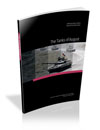
The publication of this collection of essays coincides with the second anniversary of the armed conflict between Russia and Georgia on August 8-12, 2009.
The first essay looks into the transformation of the Georgian armed forces under President Mikhail Saakashvili and details Tbilisi’s key preparations for the war.
- The Centre for Analysis of Strategies and Technologies |
Published on EGF: 16.08.2010
| Energy
-
Russian Geopolitical Power in the Black and Caspian Seas Region: Implications for Turkey and the World (164 Kb)
Exerting influence in the wider Black and Caspian Seas region is becoming a crucial element in Russia’s current geopolitical strategy. Energy and security are two of Moscow’s primary concerns relating to the region. Turkey, the EU, and the United States, as well as international energy companies will have to be aware of the operational instruments which Moscow has been deploying as part of its geopolitical strategy in the region, which include:
1) inserting itself into the domestic political affairs of its post-Soviet neighbors;
2) simultaneously acting as a crisis mediator/peacekeeper and fostering regional tension to provoke further crisis;
3) behaving as the regional “strong man” in the name of protecting Russian minorities;
4) strengthening energy ties with other former-Soviet Republics in the region; and
5) striking bilateral commercial deals with select Western corporate partners and governments. The deployment of such instruments will ensure that Moscow’s approach to regional geopolitics will remain purposefully unpredictable and full of intrigue, and will invariably continue to take other regional actors by surprise. READ MORE
- Marat Terterov, John Van Pool, Sergiy Nagornyy |
Published on EGF: 04.08.2010
| External Relations
-
The Russian–Iranian Relations after the UNSC (144 Kb)
- Russia is deceiving the West in its support for the latest round of UNSC sanctions against Iran.
- Russia continues to expand cooperation with Iran on its nuclear programme and agreements over sophisticated arms deliveries despite its moves to support sanctions.
- Russia may have an interest in expanding its political and economic cooperation with the West, but the likelihood of strategic cooperation with Iran remains stronger in the medium term.
- Russian President Medvedev’s announcement in mid-July that “Iran is close to developing nuclear weapons” occurring in parallel to Russia continuing to provide for Iran’s nuclear and military capabilities is a reflection of the pragmatic realism with which the current “diplomatic charades” involving Russia, Iran and the West should be understood.
- Marat Terterov and Marco C. Pantelakis |
Published on EGF: 04.08.2010
| External Relations
-




