
New Southern Gas Corridor Project Will Intensify the Regional Pipeline Race
 By Fuad Shahbazov, Baku-based independent regional security and defence analyst
On May 29, Azerbaijan’s President Ilham Aliyev officially inaugurated the first phase of the long-awaited flagship project Southern Gas Corridor (SGC), through which Caspian natural gas from the Shah-Deniz II field will be transported to Europe. The new project consists of several pipeline networks that pass through Georgia and Turkey (via the Trans-Anatolian Pipeline, TANAP) and further through Greece, Albania and Italy (via the Trans-Adriatic Pipeline, TAP). As Shah Deniz Stage 2 is implemented, gas production will increase from 9 to 25 billion cubic meters (bcm) per year. READ MORE
- EGF Editor |
Published on EGF: 03.07.2018
| Energy
-
Armenia is pushing hard to overcome isolation  By Benyamin Poghosyan, PhD, Executive Director, Political Science Association of Armenia
Long term economic development may play a key role in defining the balance of power between Armenia and Azerbaijan.
Last month has seen Armenia engaging in high level contacts with Iran and Turkmenistan. Armenian President Serzh Sargsyan participated in Iranian President Rouhani's inauguration. During a bilateral meeting between the two presidents perspectives for developing Armenian - Iranian relations were discussed including the possibility to expand the cooperation in the energy sphere. READ MORE
The Tanks of August 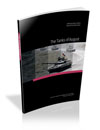
The publication of this collection of essays coincides with the second anniversary of the armed conflict between Russia and Georgia on August 8-12, 2009.
The first essay looks into the transformation of the Georgian armed forces under President Mikhail Saakashvili and details Tbilisi’s key preparations for the war.
- The Centre for Analysis of Strategies and Technologies |
Published on EGF: 16.08.2010
| Energy
-
The EU-Russia Energy Partnership: Russia's Arctic Uncertainty 
(154 Kb)

Summary of Panel II: Russia’s Arctic Uncertainty
The discussion in the second panel of the online session, which focused on the future of upstream energy exploration projects in the Russian Arctic, brought out the following messages for European policy makers and was supported by the ensuing extended commentary. READ MORE
- EGF Editorial |
Published on EGF: 21.05.2010
| Energy
-
The EU-Russia Energy Partnership: The Future of the Energy Charter (..and the Debate over the Third Package) (162 Kb)
Summary of Panel I: The Future of the Energy Charter and the Debate over the Third Package
The energy trade between Russia and the countries of the European Union (EU) is of fundamental significance for the energy security of each party. Despite the close proximity of the EU-Russia energy relationship, however, the legal and political basis underpinning this relationship, particularly with regards to the gas trade, has proven itself inadequate in guaranteeing the energy security of both parties. Russia's recent announcement of its intention "of not becoming a member" of the Energy Charter Treaty, and new proposal for global energy security has created further uncertainty. While it is hoped that a new government in Kiev will lead to an improvement of Russian relations with Ukraine, Ukraine's national gas transportation operator remains in a difficult financial position and another gas crisis embroiling Ukraine, Russia and the EU, whilst hardly imminent, cannot be entirely ruled out.
- EGF Editorial |
Published on EGF: 21.05.2010
| Energy
-
Changing EU Energy Legislation: Practical Scenarios for Strengthening the EU-Russia Energy Partnership (162 Kb)
Energy Roundtable Summary Document
The EU-Russia energy roundtable discussion held at the Institute of World Economy and International Relations (IMEMO) on February 26, 2010, brought together a significant number of well known experts and policy makers engaged in the EU-Russia energy relationship in order to assess some of the challenges which presently exist in this sphere. Some of these challenges are summarised below. The objectives of the seminar organisers were to create an environment in which experts and policy makers could openly and candidly discuss the challenges standing before the EU-Russia energy relationship. The roundtable was also attended by a large number of participants from academia, government, energy companies and the diplomatic community.
- EGF Editorial |
Published on EGF: 17.05.2010
| Energy
-
Geopolitical Challenges: Prospects and Scenarios 2010 - Summary Document (158 Kb)
At the end of December 1999, as the world prepared to usher in a new Millennium, in Europe and other parts of the planet, there was widespread concern that the so called “Millennium Bug” would strike, causing unforeseen disruption and havoc. Ten years on, in December of last year, for many in Europe, the Millennium Bug was just a shade in the memory as a far more ominous concern was pressing home – the prospect of another gas crisis. Although the fact that the Russia-Ukraine gas dispute of January 2009 – and its knock-on effect of leaving much of Europe without natural gas in the peak of winter – did not repeat itself during the record cold European temperatures of January this year, the very fact that European attention has become so focused on this theme demonstrates how geopolitical developments in the European hinterlands have come to impact the day-to-day livelihood of all Europeans
- EGF Editorial |
Published on EGF: 16.03.2010
| Energy
-
Caspian Security Briefing: Azerbaijan (69 Kb)
The former-Soviet Republic of Azerbaijan has attracted a notable degree of attention amongst the international investor community due to the impressive potential of its hydrocarbons sector. The country’s vast (and still largely untapped) oil and gas fields, located in the strategically important Caspian Sea basin, provide the source for major energy transport arteries such as the Baku-Tbilisi-Ceyhan (BTC) oil pipeline. Future energy transport projects of strategic relevance to the European Union...
- EGF Editorial |
Published on EGF: 19.02.2010
| Energy
-
TURKMENISTAN: GAS UNDER PRESSURE (201 Kb)
In October 2008, an audit by the British company Gaffney, Cline and Associates - GCA propelled Turkmenistan to the rank of the world’s second largest gas producer. This revelation confirmed the assertions of Saparmurad Niazov, the grotesque Turkmenbashy – Father of all the Turkmens – who, from 1985 until his death in December 2006, reigned over his country without sharing power. Less than a year later, two publications which appeared this past September, sow confusion among international energy experts and raise many questions. These two papers, one – an article written by Arkady Dubnov for the Russian newspaper Vremya Novosteï and the other – a report by the German NGO, the Eurasian Transition Group (ETG), - cast doubt on the estimations made public in October 2008.
Arkady Dubnov relies on information gleaned from Russian officials, while it is a Turkmen source behind the ETG pieced. In summation, they lead us to understand that the Turkmen authorities misled the managers of GCA by providing them with manipulated and falsified data. Disinformation or truth? At present, it is difficult to say. Nonetheless, one cannot really avoid wondering about a certain number of questions surrounding this polemic over resources, real or supposed, of Turkmenistan. This constitutes a new episode in the struggle in which the great powers are engaging for control and exploitation of the formidable energy resources of Central Asia.
- Lieutenant Colonel |
Published on EGF: 21.12.2009
| Energy
-
Question to Expert |
Comment
European energy and transport - Trends to 2030: update 2007 (3 Mb)
The Baseline scenario finalised in November 2007 gives an update of the previous trend scenarios, such as the “Trends to 2030” published in 2003 and its 2005 update. The new Baseline scenario takes into account the high energy import price environment of recent years, sustained economic growth and new policies and measures implemented in the Member-States.
- EC & DG TREN |
Published on EGF: 01.12.2009
| Energy
-




