
Why is Baku Waging a “War of Words” against Tehran? 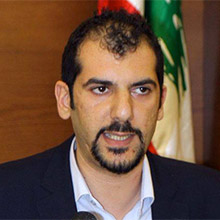 By Yeghia TASHJIAN, Beirut-based regional analyst and researcher, columnist, "The Armenian Weekly” By Yeghia TASHJIAN, Beirut-based regional analyst and researcher, columnist, "The Armenian Weekly”
During a meeting with Russian President Vladimir Putin and Turkish President Recep Tayyip Erdogan in Tehran on July 19, the Iranian Supreme Leader Ali Khamenei warned against blocking the Armenian-Iranian border, stating, “If there is an effort to block the border between Iran and Armenia, the Islamic Republic will oppose it because this border has been a communication route for thousands of years.” After this warning, Turkish and Azerbaijani media started paying more attention to Iranian officials and launched a “war of words.” In response to media provocations and threats toward Armenia launched by Azerbaijan, Iran facilitated the appointment of a Consulate General in Syunik to redraw its “red lines” in the South Caucasus. READ MORE
- EGF Editor |
Published on EGF: 09.09.2022
| External Relations
-
Central Asians Are Expanding Strategic Relations with Azerbaijan 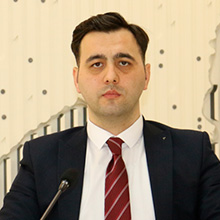 By Ayaz MUSEYIBOV, Adjunct lecturer at Azerbaijan Technical University
In the wake of the recent global geopolitical challenges including the war in Europe, instability in Afghanistan, and many other rapid global changes, Central Asian countries diversify and expand their economic, strategic, and political relations. As Azerbaijan is emerging as a new energy and logistic hub in Euro-Asian value chains, economic relations with Azerbaijan are crucial in regional logistics and energy spheres. Therefore, on April 20th and June 21st, 2022, Kyrgyzstan and Uzbekistan signed the declarations of strategic partnerships with Azerbaijan, respectively. Thereafter, Kazakhstan and Turkmenistan signed cooperation documents with Azerbaijan covering various directions. READ MORE
- EGF Editor |
Published on EGF: 02.09.2022
| External Relations
-
Restoration of Military Balance between Armenia and Azerbaijan  By Benyamin POGHOSYAN, PhD, Chairman, Center for Political and Economic Strategic Studies By Benyamin POGHOSYAN, PhD, Chairman, Center for Political and Economic Strategic Studies
Almost every war, short or long, ends at the negotiation table. There are exceptions to this rule, like World War II, which ended with the capitulation of Nazi Germany and Japan. However, the capitulation of one side is an unlikely scenario for the Nagorno Karabakh conflict. Azerbaijan suffered significant defeat during the first Karabakh war in the early 1990s but did not sign the capitulation. Armenia faced almost the same fate in 2020, and while Azerbaijan and some experts in Armenia argue that the November 10, 2020, trilateral statement was a capitulation for Armenia, there was no formal capitulation. Since the end of the 2020 Karabakh war, Armenia and Azerbaijan have been negotiating to reach a long-lasting solution. Russia, and since mid-2021, the EU have acted as primary mediators, organizing several high-level summits and hectic behind-the-scenes actions to facilitate the process. READ MORE
- EGF Editor |
Published on EGF: 02.09.2022
| Security
-
Realism Should Be the Basis for the Armenia-Turkey Normalisation By Benyamin POGHOSYAN, PhD, Chairman, Center for Political and Economic Strategic Studies
There should be realistic expectations of what can result from ongoing discussions on the normalisation of relations between Armenia and Turkey. Given the current situation in the South Caucasus, the region is far away from peace, and no one should have hopes that Armenia – Turkey normalization will solve conflicts and bring an era of peace to the region. However, in the current situation, even a contribution to regional stability is too significant an opportunity to miss.
The 2020 Karabakh war has significantly changed the geopolitics of the South Caucasus and triggered new processes. Turkey’s war involvement seemed to worsen further Armenia – Turkey relations. The Armenian government imposed a ban on imports from Turkey from January 2021 due to Turkey's open and evident promotion and support for the Azerbaijani war effort. However, after the early parliamentary elections in Armenia held in June 2021, Armenian officials started to speak about the necessity to normalize relations with Turkey. These discussions ended with the assignment of a special representatives to start negotiations, and the first meeting took place on January 14, 2022. READ MORE
- EGF Editor |
Published on EGF: 21.07.2022
| External Relations
-
Do Armenia and Azerbaijan Move to Peace? By Benyamin POGHOSYAN, PhD, Chairman, Center for Political and Economic Strategic Studies
In recent months, some positive momentum was registered in Armenia-Azerbaijan talks. The sides established national commissions on border delimitation and demarcation, and after a six-months break, the trilateral Armenia-Russia-Azerbaijan commission on restoration of communication resumed its work. According to Russian sources, later confirmed by the Armenian deputy prime minister, the sides achieved significant progress in the negotiations, almost reaching an agreement on the route of the highway, which will connect Azerbaijan with Nakhichevan via the Syunik region of Armenia, as well as on modalities of border and customs control. The agreement to open the Armenia-Turkey land border for the crossing of third country citizens and launch direct air cargo trade between the two countries, achieved during the July 1 meeting of Armenia and Turkey representatives, seemed to add a more positive environment in the South Caucasus geopolitics. READ MORE
- EGF Editor |
Published on EGF: 14.07.2022
| Security
-
Azerbaijan’s Latest Steps Toward Becoming a Regional Digital Hub
By Ayaz MUSEYIBOV, Head of Department, Center for Analysis and Communication of Economic Reforms of the Republic of Azerbaijan
After implementing a number of trans-Eurasian energy and logistics mega-projects, such as the Baku–Tbilisi–Ceyhan oil pipeline, Southern Gas Corridor and Trans-Caspian International Transportation Route, Azerbaijan has also strategically committed itself to policies designed to turn the South Caucasus country into a regional digital hub. This initiative has already secured buy in from several countries and major companies in the IT space. Notably, this past April, Italy’s largest internet service provider and one of the world’s leading operators, Sparkle, and Azerbaijan’s top wholesale telecommunications operator, AzerTelecom, signed a memorandum of understanding on cooperation within the framework of the Digital Silk Way project (not to be confused with China’s Digital Silk Road), aimed at creating a digital telecommunications corridor connecting Europe and Asia via Azerbaijan. READ MORE
- EGF Editor |
Published on EGF: 01.07.2022
| Markets
-
Scenarios for the Future of Nagorno Karabakh By Benyamin POGHOSYAN, PhD, Chairman, Center for Political and Economic Strategic Studies
In late May 2022, Armenia and Azerbaijan established national commissions for border delimitation and demarcation. The two countries are close to signing a deal on the restoration of communications and will soon launch negotiations on elaborating a bilateral agreement. Currently, experts and societies wonder what these developments mean for the future of the self-proclaimed Nagorno Karabakh Republic. Discussions are underway, and different ideas have been put forward. Some Azerbaijani experts started to circulate the possibility of autonomy for Nagorno Karabakh, hinting that Azerbaijan may change its post-2020 war rhetoric, denying the existence of Nagorno Karabakh and claiming that the issue of status was thrown into the dustbin of history. There is a lack of details on what this autonomy could be. READ MORE
- EGF Editor |
Published on EGF: 16.06.2022
| Security
-
Will Azerbaijan become a NATO pawn against Russia in South Caucasus? By Yeghia TASHJIAN, Beirut-based regional analyst and researcher, columnist, "The Armenian Weekly”
Despite Azerbaijani President Ilham Aliyev’s adherence to the ideology of pan-Turkism, the former-Soviet republic has long managed to successfully balance its relations between Russia, Turkey, and the west. However, the ‘frozen conflict’ with Armenia over disputed Nagorno-Karabakh territory, and the on-going conflict in Ukraine, have recently tested the limits of this balancing act. In January 2022, as Russia’s military build-up on Ukraine’s border was in full swing, Aliyev visited his counterpart Volodymyr Zelensky in Kyiv and reaffirmed Baku’s support for Ukraine’s territorial integrity. Then, the following month – just two days before Russia announced its ‘special military operation’ in Ukraine – Aliyev was in Moscow signing a treaty of alliance with Russian President Vladimir Putin. READ MORE
- EGF Editor |
Published on EGF: 16.06.2022
| External Relations
-
Peacekeeping in Karabakh Can Learn from the UNOMIG Experience By Benyamin POGHOSYAN, PhD, Chairman, Center for Political and Economic Strategic Studies
As Armenia and Azerbaijan come closer to launching bilateral negotiations over the normalisation of relations, many issues wait for a solution. Currently, the hottest debates are underway regarding the future status of Nagorno Karabakh and the legal modalities of the transit for Armenian and Azerbaijani goods passing each other territories. The war in Ukraine and the complete collapse of Russia – West relations added geopolitical components to the equilibrium. Do we have EU – Russia competition over the mediation process? Are there any disagreements between Brussels and Moscow on promoting lasting peace and stability in the South Caucasus? All these issues are worthy of being discussed and debated. READ MORE
- EGF Editor |
Published on EGF: 09.06.2022
| Security
-
Pashinyan and Aliyev Meet in Brussels Again: What Next By Benyamin POGHOSYAN, PhD, Chairman, Center for Political and Economic Strategic Studies
On May 22, 2022, Armenian Prime Minister Pashinyan and Azerbaijani President Aliyev met in Brussels. The meeting was facilitated by the President of the European Council Charles Michel. For many observers, the May 22 trilateral meeting created a feeling of déjà vu. The same leaders were in Brussels less than two months ago. On April 6, 2022, Michel organized another meeting between Armenian and Azerbaijani leaders with the same sequence and results. Michel met separately with two leaders, then they held hours-long trilateral discussions, and late in the night, he published a statement summarizing the results. On April 6, participants discussed the same issues as on May 22 – the restoration of communications, the start of the border delimitation and demarcation process, and the launch of negotiations to sign a bilateral Armenia-Azerbaijan treaty. READ MORE
- EGF Editor |
Published on EGF: 01.06.2022
| Security
-
|
|




