
Azerbaijan’s Latest Steps Toward Becoming a Regional Digital Hub 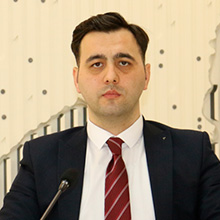 By Ayaz MUSEYIBOV, Head of Department, Center for Analysis and Communication of Economic Reforms of the Republic of Azerbaijan
After implementing a number of trans-Eurasian energy and logistics mega-projects, such as the Baku–Tbilisi–Ceyhan oil pipeline, Southern Gas Corridor and Trans-Caspian International Transportation Route, Azerbaijan has also strategically committed itself to policies designed to turn the South Caucasus country into a regional digital hub. This initiative has already secured buy in from several countries and major companies in the IT space. Notably, this past April, Italy’s largest internet service provider and one of the world’s leading operators, Sparkle, and Azerbaijan’s top wholesale telecommunications operator, AzerTelecom, signed a memorandum of understanding on cooperation within the framework of the Digital Silk Way project (not to be confused with China’s Digital Silk Road), aimed at creating a digital telecommunications corridor connecting Europe and Asia via Azerbaijan. READ MORE
- EGF Editor |
Published on EGF: 01.07.2022
| Markets
-
The Rising Strategic Role of Azerbaijan in Euro-Asian Economic Relations
By Ayaz MUSEYIBOV, Head of Department, Center for Analysis and Communication of Economic Reforms of the Republic of Azerbaijan
Currently, energy and trade routes security is one of the major considerations at the global level. In the wake of the recent global events, the importance of energy resources is more likely to become a dominant matter which the global economy tremendously needs.
Energy supply to Europe, particularly to South and South-Eastern Europe, depends on only one source. However, the European Commission is accelerating the economic diversification processes beginning with the gas routes in order to reduce the economic dependency. Hence, the EU has already held various talks with energy players such as Egypt, Qatar, the United States, South Korea, Nigeria, and Azerbaijan to increase natural gas supplies in the case of a gas crisis. READ MORE
- EGF Editor |
Published on EGF: 06.04.2022
| Markets
-
The Strategy of Actions: A Guideline for Uzbek Reforms 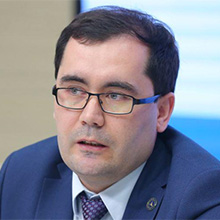 By Eldor TULYAKOV, Executive Director, Development Strategy Centre
Furkat YUNUSOV, Head of Department, Development Strategy Centre
Four years ago, Uzbekistan launched reforms critical to the development of its economic sphere. Based on the Strategy of Actions, the document responsible for outlining the priorities for the country’s growth for the period of 2017-2021, as a metric we have arrived at initial finding, with several indicators demonstrating progress, most notably the areas of public administration, social and civic institutions, mass-media, economic advances, among others. The past four years have evidenced precise results and demonstrated more advanced methods to take these priority areas forward. READ MORE
- EGF Editor |
Published on EGF: 22.09.2021
| Markets
-
Will Armenia Withstand the Global Economic Turmoil?  By Benyamin Poghosyan, PhD, Chairman, Center for Political and Economic Strategic Studies
The world economy has been in troubled waters since late 2018. The US – China trade war rattled the markets and triggered the significant changes in global supply chains. Many industrial giants were actively discussing the dislocation of production facilities from China to South East Asia nations such as Vietnam and Cambodia seeking to decrease the negative impact of the trade war.[…] However, the novel Coronavirus (COVID – 19) outbreak, which started in Chinese Wuhan city, has launched its seemingly unstoppable march around the globe since late January 2020. READ MORE
- EGF Editor |
Published on EGF: 26.03.2020
| Markets
-
Armenia caught in a peculiar transit trap By Benyamin Poghosyan, PhD, Executive Director, Political Science Association of Armenia
The South Caucasus is facing an infrastructure development boom. However, Armenia is in stark isolation, with no major project passing through the country.
The launch of new transit routes and transport infrastructure are key topics widely discussed within the context of the geopolitics of the South Caucasus. Since the late 1990s several new pipelines, highways and railroads have been constructed traversing the region. Given the re-emergence of Russia as a key player in the post-Soviet space, since President Putin's ascendance to power in 2000, new transport corridors and large infrastructure projects have become factors in the wider competition between Russia and western countries. READ MORE
- EGF Editor |
Published on EGF: 19.02.2018
| Markets
-
New transport corridors in Eurasia leave Armenia with a dilemma  By Benyamin Poghosyan, PhD, Executive Director, Political Science Association of Armenia
Armenia should take additional steps to overcome its regional isolation and boost its economic cooperation with the outside world, otherwise in the long-term it would be more and more difficult for it to counter Azerbaijani and Turkish pressure.
On October 30, 2017 an opening ceremony for the newly constructed Baku - Tbilisi - Kars railway link was held in Baku. The Presidents of Azerbaijan and Turkey, as well as the Prime Ministers of Georgia, Kazakhstan and Uzbekistan, and representatives of Kyrgyzstan and Turkmenistan, participated in the ceremony. The BTK was hailed as one of the shortest routes connecting Asia with Europe, with clear eye for it to be included in China's "One Belt - One Road" project. READ MORE
- EGF Editor |
Published on EGF: 08.11.2017
| Markets
-
Post-Revolution Tunisia: Still Waiting for Economic Recovery  by Naim Ameur
Expert on political transition in Tunisia and the Maghreb
One year after the Jasmine Revolution of January 14, 2011, Tunisia has successfully advanced in its democratic transition and political reform process. The election of the National Constituent Assembly (NCA) held on October 23, 2011 was well organised, and for the first time in history, it was fair. Al-Nahdha (which means “renaissance” in Arabic), a moderate Islamic party, won 41 per cent of the NCA seats. READ MORE
- Naim Ameur |
Published on EGF: 08.03.2012
| Markets
-
The Tanks of August 
The publication of this collection of essays coincides with the second anniversary of the armed conflict between Russia and Georgia on August 8-12, 2009.
The first essay looks into the transformation of the Georgian armed forces under President Mikhail Saakashvili and details Tbilisi’s key preparations for the war.
- The Centre for Analysis of Strategies and Technologies |
Published on EGF: 16.08.2010
| Energy
-
The EU-Russia Energy Partnership: Russia's Arctic Uncertainty 
(154 Kb)

Summary of Panel II: Russia’s Arctic Uncertainty
The discussion in the second panel of the online session, which focused on the future of upstream energy exploration projects in the Russian Arctic, brought out the following messages for European policy makers and was supported by the ensuing extended commentary. READ MORE
- EGF Editorial |
Published on EGF: 21.05.2010
| Energy
-
The EU-Russia Energy Partnership: The Future of the Energy Charter (..and the Debate over the Third Package) (162 Kb)
Summary of Panel I: The Future of the Energy Charter and the Debate over the Third Package
The energy trade between Russia and the countries of the European Union (EU) is of fundamental significance for the energy security of each party. Despite the close proximity of the EU-Russia energy relationship, however, the legal and political basis underpinning this relationship, particularly with regards to the gas trade, has proven itself inadequate in guaranteeing the energy security of both parties. Russia's recent announcement of its intention "of not becoming a member" of the Energy Charter Treaty, and new proposal for global energy security has created further uncertainty. While it is hoped that a new government in Kiev will lead to an improvement of Russian relations with Ukraine, Ukraine's national gas transportation operator remains in a difficult financial position and another gas crisis embroiling Ukraine, Russia and the EU, whilst hardly imminent, cannot be entirely ruled out.
- EGF Editorial |
Published on EGF: 21.05.2010
| Energy
-




