
Gender equality in the civil service of Uzbekistan 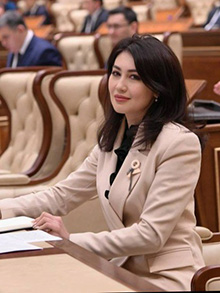 Farangiz Avazbekova, Chief inspector of the Agency for the Development of Public Service under the President of the Republic of Uzbekistan; Doctor of Philosophy (PhD) in Law Farangiz Avazbekova, Chief inspector of the Agency for the Development of Public Service under the President of the Republic of Uzbekistan; Doctor of Philosophy (PhD) in Law
The social and political activity of women and their participation in public administration bodies in the process of making important decisions are crucial for the development of the country. Sociological research has shown that women’s high efficiency, rapid and persistent decision-making, responsiveness to job completion, and prompt provision of executive discipline allow them to perform their duties effectively in the civil service.
READ MORE
- EGF Editor |
Published on EGF: 18.12.2023
| Security
-
How the Hamas-Israel War Impacts the South Caucasus
 By Fuad SHAHBAZOV, Baku-based independent regional security and defence analyst By Fuad SHAHBAZOV, Baku-based independent regional security and defence analyst
The war between Hamas and Israel war has triggered strong anti-Israel sentiments in the region and heightened fears of a broader conflict engulfing actors such as Egypt, Iran, Jordan, Lebanon, and Turkey. Worried that the conflict in Gaza could escalate into a regional confrontation, the US has dispatched two aircraft carrier strike groups within range, including additional troops and military advisors.
But alongside tough rhetoric, the violence in Gaza has renewed apparent pragmatism by important regional states such as Iran and Turkey. Turkish President Recep Tayyip Erdogan has openly slammed Israel's bombings of the Palestinian coastal enclave. On the other hand, Ankara has avoided issuing direct threats against Tel Aviv and, in an apparent unusual move, allegedly distanced itself from Hamas in the aftermath of the Palestinian movement’s surprise attack on Israel last month.
READ MORE
- EGF Editor |
Published on EGF: 28.11.2023
| Security
-
Azerbaijan’s New “Shopping List”  By Benyamin POGHOSYAN, PhD, Chairman, Center for Political and Economic Strategic Studies By Benyamin POGHOSYAN, PhD, Chairman, Center for Political and Economic Strategic Studies
Since the launch of the first Artsakh (Nagorno-Karabakh) war in the 1990s, the region’s status has been at the core of the conflict. This issue was the primary focus of negotiations and different settlement options put forward by the OSCE Minsk Group—package solution, phased approach, Common State, Key West, Kazan document, Lavrov plan—which all tried to find a mutually acceptable solution for the status of Artsakh. At the end of the day, Azerbaijan decided to solve this issue by military force. Azerbaijan probably came to this decision in the early 2000s, hoping it could get more by deploying military force than by any negotiated solutions. Azerbaijan was cautiously waiting for the geopolitical window of opportunity, which appeared in 2020 as a combination of the COVID-19 pandemic, elections in the U.S. and growing misperceptions of Armenia-Russia relations after the 2018 Velvet Revolution.
READ MORE
- EGF Editor |
Published on EGF: 04.11.2023
| Security
-
All-Encompassing Solutions are Necessary for Sustainable Peace between Armenia and Azerbaijan  By Vasif HUSEYNOV, PhD, Head of Department, AIR Center, Adjunct Lecturer, ADA and Khazar Universities, Baku By Vasif HUSEYNOV, PhD, Head of Department, AIR Center, Adjunct Lecturer, ADA and Khazar Universities, Baku
On 28 September, the separatist regime illegally created by Armenia in the territories of Azerbaijan in early 1990s, and which presented itself as the “Nagorno-Karabakh Republic”, declared its dissolution by the end of 2023. Azerbaijan has quickly restored its sovereignty over the area that remained under the joint control of the separatists and Russia’s peacekeeping contingent following the 44-day war in 2020. This has been undoubtedly a major development not only for Azerbaijan but also for the entire South Caucasus. Many people both in the region and beyond agree that Baku and Yerevan are now much closer to a peace treaty as the crux of their decades-long conflict no longer exists.
It is important that the Armenian government shares this view and realizes the present opportunities for a real breakthrough. For instance, the speaker of the Armenian parliament Alen Simonian told Armenian public television on September 25 that “We are very close and have a historic opportunity to sign a peace agreement”. “Endless war is not beneficial for anyone”, he asserted.
READ MORE
- EGF Editor |
Published on EGF: 19.10.2023
| Security
-
Azerbaijan Moves to Disarm Karabakh Separatists (Part Two) By Vasif HUSEYNOV, PhD, Head of Department, AIR Center, Adjunct Lecturer, ADA and Khazar Universities, Baku
On September 20, Azerbaijan called for a ceasefire in the operation against armed detachments of the separatist regime in Karabakh. In a televised address to the nation, President Ilham Aliyev stated that Baku’s conditions were accepted by the separatist entity. He announced that the “representatives of the Armenian community living in Karabakh, who refused to meet our representatives several months ago, are ready to meet in the city of Yevlakh. Azerbaijan has disclosed that 192 servicemen were killed and more than 500 wounded during the 24-hour “anti-terrorist operation”. The Armenian side has reported at least 200 people killed and more than 400 wounded.
In preventing further escalation, the Armenian government chose not to militarily intervene in the clashes on September 19 and 20. Armenian Prime Minister Nikol Pashinyan characterized possible involvement as a threat to his country. He stated, “Armenia is not involved in military operations. I want to mention once again that Armenia does not have an army in Nagorno-Karabakh”.
READ MORE
- EGF Editor |
Published on EGF: 04.10.2023
| Security
-
What Next in Nagorno Karabakh By Benyamin POGHOSYAN, PhD, Chairman, Center for Political and Economic Strategic Studies
On September 19, Azerbaijan launched a large-scale offensive against the self-declared Nagorno Karabakh Republic with only one goal: to finish with that republic. The Azerbaijani attack was not a surprise to anyone. At least since the beginning of 2023, Azerbaijan has stated clearly and loudly that Baku will not tolerate the status quo that emerged after the 2020 Nagorno Karabakh war and will do everything possible to destroy the Nagorno Karabakh Republic. Azerbaijan was also clear that it would reach its goal quickly. Since the beginning of September 2023, as Azerbaijan started to concentrate troops along the line of contact, it was clear the military offensive would take place very soon. Armenia knew that Russia knew that, the EU and the US knew that, and Nagorno Karabakh authorities knew that. What were the positions of the sides regarding the upcoming offensive of Azerbaijan?
READ MORE
- EGF Editor |
Published on EGF: 25.09.2023
| Security
-
Azerbaijan Moves to Disarm Karabakh Separatists (Part One) By Vasif HUSEYNOV, PhD, Head of Department, AIR Center, Adjunct Lecturer, ADA and Khazar Universities, Baku
On September 19, the Azerbaijani Defence Ministry announced it had launched an “anti-terrorist” operation against “illegal formations” in Karabakh. This move came after four Azerbaijani soldiers and two civilians were killed by land mines in the region. Armenian Prime Minister Nikol Pashinyan condemned the “full-scale aggression” and denounced Russian peacekeepers for “failing to do their jobs’.
The recent fighting comes as tensions had been mounting over Baku’s efforts to fully integrate Karabakh back into Azerbaijan. This measure had been stipulated in the tripartite agreement signed by Azerbaijan, Armenia and Russia following the end of the Second Karabakh War in November 2020. Russian peacekeepers were stationed in the region to facilitate implementation of the measure; yet, they have done little since to constructively manage the process.
READ MORE
- EGF Editor |
Published on EGF: 25.09.2023
| Security
-
The Geopolitical Background of the Moscow-Yerevan Rift and Russia’s Future in the Region  By Yeghia TASHJIAN, Beirut-based regional analyst and researcher, columnist, "The Armenian Weekly” By Yeghia TASHJIAN, Beirut-based regional analyst and researcher, columnist, "The Armenian Weekly”
Recent geopolitical developments in the South Caucasus have once again appeared in the headlines of media and analytical centers. Experts have been questioning whether Russia is distancing itself from the region. Armenian regional experts and officials have been questioning Russia’s motives in the region, considering developments in Artsakh and the latest Azerbaijani escalation. Russia is navigating the narrow complexities of the post-2020 Artsakh War regional architecture, asserting itself as the main power broker in the region (i.e. brokering the 2020 trilateral ceasefire agreement, arranging humanitarian aid to Artsakh via the Berdzor Corridor and Aghdam, and possibly a new deal in the coming days) through compromise or political flexibility. This flexibility has caused friction in Moscow-Yerevan relations.
Many in Russia, including high officials, are suspicious of Armenian Prime Minister Nikol Pashinyan’s motives towards their country. The Armenian leader has speculated that Russia seems to be leaving the region. However, Russia still views the region as “blizhnee zarubezhe” (its “near abroad”) or its “lebensraum” (its “vital space”). From Russia’s perspective, if it leaves the South Caucasus, its only route to the Middle East would be cut off, Iran and Turkey would clash for power, and the North Caucasus would become vulnerable to instability.
READ MORE
- EGF Editor |
Published on EGF: 25.09.2023
| Security
-
Armenia and Azerbaijan on the Brink of Renewed Conflict By Vasif HUSEYNOV, PhD, Head of Department, AIR Center, Adjunct Lecturer, ADA and Khazar Universities, Baku
On September 9, Armenian Prime Minister Nikol Pashinyan spoke on the phone with the leaders of France, Iran, Georgia and Germany, as well as US Secretary of State Antony Blinken. In a manner that resembled his outreach to various world leaders at the beginning of the Second Karabakh War (September 7–November 10, 2020), the Armenian premier warned against intensifying tensions in the region and stated his readiness for immediate talks with Azerbaijani President Ilham Aliyev without preconditions. Pashinyan’s words came on the heels of several setbacks that threaten to derail Armenian-Azerbaijani peace negotiations and may lead to another military conflict.
Both sides accuse each other of a military build-up along their shared border in preparation for an offensive. According to the Azerbaijani Foreign Ministry, a military threat also emanates from the continued presence of Armenian troops in Karabakh, despite Yerevan’s earlier pledge to withdraw them by September 2022.
READ MORE
- EGF Editor |
Published on EGF: 15.09.2023
| Security
-
Avoiding another War in Karabakh By Benyamin POGHOSYAN, PhD, Chairman, Center for Political and Economic Strategic Studies
It seems that talks over the future of Nagorno Karabakh have reached an impasse. Azerbaijan claims there will be no Nagorno Karabakh inside Azerbaijan, and Armenians should live as ordinary Azerbaijani citizens. At the same time, those who do not want to accept this option should leave. Armenians of Nagorno Karabakh categorically reject this option, meanwhile stating that they will not leave their homeland. […] Currently, it is challenging to offer an option that may more or less satisfy both Azerbaijan and NKR. However, one thing is clear: new large-scale war in Nagorno Karabakh will make long-term peace and stability in the South Caucasus a pipe dream. Thus, all actors interested in a stable region should message Azerbaijan that a new war against Nagorno Karabakh is not the best option to move forward. Otherwise, the region will plunge into another decade of instability, destruction, and human suffering.
READ MORE
- EGF Editor |
Published on EGF: 13.09.2023
| Security
-
|
|




