
Parliamentary Procedures in Service of Democracy  By G.R. Malikova, Doctor of Legal Sciences, Professor at The Academy of the General Prosecutor’s Office of the Republic of Uzbekistan
The rule of law is ensured in a democratic society through a fair, impartial and effective administration of justice. This type of administration of justice requires independent and impartial judges and prosecutors who ensure the preservation of individual rights and freedoms as well as the maintenance of public order. Regardless of how different prosecutors’ systems are in different countries, they all have one element in common. Prosecutors must make decisions independently and carry out their responsibilities free of outside pressure or intervention, while adhering to the principles of separation of powers and accountability. As the President of the Republic of Uzbekistan Sh. Mirziyoyev rightly noted: “Our people can endure any difficulties, but they will not tolerate injustice”. In this regard, the essence of the mission for prosecutors is to ensure social justice and the rule of law.
READ MORE
- EGF Editor |
Published on EGF: 04.11.2021
| Security
-
The Volunteer Movement By Embassy of the Republic of Uzbekistan in the Kingdom of Belgium
Today, the volunteer movement is an integral part of the social sphere, which provides gratuitous assistance to people in difficult life situations. Uzbekistan is at the stage of active reforms. Large-scale transformations open new opportunities for solving actual socio-economic, socio-political, cultural, and humanitarian problems. One of the priority directions of development of Uzbekistan, in addition to improving state and social construction, ensuring the rule of law, and reforming the judicial and legal system, developing and liberalizing the economy, ensuring security, interethnic harmony and religious tolerance, implementing a balanced, mutually beneficial and constructive foreign policy, is the development of the social sphere.
READ MORE
- EGF Editor |
Published on EGF: 25.10.2021
| Security
-
Strengthening the Legal Status of the Ombudsman for Children By Doniyor Turaev, Deputy Director of the Legislation and Parliamentary Research Institute under the Oliy Majlis of the Republic of Uzbekistan
Currently, systematic work is under way in Uzbekistan to implement the provisions of the Convention on the Rights of the Children, the legal and institutional framework for protecting the rights and interests of children is improving. As the international experience shows, today, more than twenty countries have a specialized and independent institution – the Ombudsman for Children. The first office of Ombudsman for Children was established in Norway in 1981. By the beginning of the 21st century, many countries had significantly intensified their work to protect the rights of the child and create some special authorized institutions in this area, and this was due to the need to better ensure the implementation of obligations under the Convention on the Rights of the Child.
READ MORE
- EGF Editor |
Published on EGF: 25.10.2021
| Security
-
Delimitation, Demarcation and Cartographic Manipulation in the Wake of the 44 Days War 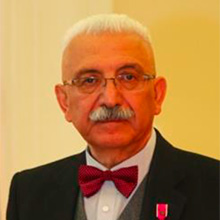 By Hayk KOTANJIAN, Lieutenant General (Ret.), D.Sc., Professor of Political Science of the RA, RF, USA (state studies-strategic security studies), Full Member of the Academy of Military Sciences of the RF
In the wake of the 44-day war in 2020, an unprecedented escalation of the process of delimitation and demarcation of the Armenian-Azerbaijani borders has been launched. This was done contrary to the principles and procedure for border delimitation and demarcation recommended by the OSCE Secretariat. The unparalleled pressure on the Armenian population from Karabakh was accompanied by subsequent attempts to undermine the settlement process under the auspices of the OSCE Minsk Group co-chairmanship. Among the arguments substantiating claims to include Nagorno-Karabakh in Azerbaijan, Baku authorities refer to the Azerbaijani-language toponymy, which allegedly has a long history. READ MORE
- EGF Editor |
Published on EGF: 13.10.2021
| Security
-
What's behind the Fresh Tensions between Iran and Azerbaijan?
 By Fuad Shahbazov, Baku-based independent regional security and defence analyst
In the period immediately after the 44-day Karabakh war, Baku-Tehran relations remained on the level of pragmatic co-operation, until the new conservative political establishment ascended to power in Iran. Since then, Tehran’s rhetoric against Azerbaijan has shifted from that of “partnership” to open threats that explicitly neglect the partnership atmosphere. Relations between Baku and Tehran have always been unstable, particularly at the beginning of the 2000s. However, they rekindled when both countries became engaged in regional infrastructure and transit projects. READ MORE
- EGF Editor |
Published on EGF: 13.10.2021
| Security
-
Assessing Armenians’ Geopolitical Situation  By Alan Whitehorn, Professor Emeritus in Political Science, The Royal Military College of Canada
Armenia is at yet another critical time. The war losses were substantial and impacted greatly. Violent Azerbaijani-Armenian border incidents continue, with property damage, military personnel injuries and deaths. The risks ahead are significant. Accordingly, it is crucial to assess the geopolitical situation that confronts Armenia, commencing first with key problems and challenges and then exploring some opportunities.
Amongst the pressing issues is the fact that demographically Armenia has far less manpower than Azerbaijan, even if women were conscripted too. Armenia’s population has been declining significantly due to outmigration and this pattern has been accelerating after the recent Karabakh war and various phases of the Covid pandemic. An army historically based on conscription needs to address its critical declining population base. READ MORE
- EGF Editor |
Published on EGF: 11.08.2021
| Security
-
Border Incident Forces Armenians to Rethink Relationship with Russia  By Benyamin Poghosyan, PhD, Chairman, Center for Political and Economic Strategic Studies
The Azerbaijani military incursion into Armenian territory may have significant geopolitical implications. The muted reaction of the CSTO and Russia triggered another wave of anti-Russian sentiments in Armenia.
On 12 May 2021, news coming from the Syunik region shocked Armenian society. Several hundred Azerbaijani soldiers had crossed the Armenian border and penetrated up to 3.5 km into Armenian territory near the "Black Lake". The Armenian government did not confirm this immediately, however, late in the evening on the same day, Armenia’s Security Council convened in an extraordinary session, and the prime minister declared that Azerbaijani Armed forces had entered Armenian territory. READ MORE
- EGF Editor |
Published on EGF: 29.05.2021
| Security
-
Azerbaijan-Armenia Border Dispute – Could the Conflict Re-escalate?  By Fuad Shahbazov, Baku-based independent regional security and defence analyst
Half a year after the Russian-brokered ceasefire agreement was signed between Azerbaijan and Armenia ending the 44-day war in Karabakh, peace in the complex region is not on the horizon. A new stage of discontent and harsh statements came last week after Azerbaijani Armed Forces reportedly crossed the border with Armenia in the Syunik province and advanced around 3 kilometres by Sev Lake. Yerevan dubbed this action as an explicit provocation and an attempt to occupy Armenian territory, whereas Baku denied the accusations, stating that Azerbaijani border guards established a military control point at the heights around the lake without advancing into Armenian territories. READ MORE
- EGF Editor |
Published on EGF: 21.05.2021
| Security
-
The Karabakh War: The Lessons of Defeat in the Cyberspace  By Lieutenant-General (Ret.) Hayk S. Kotanjian, PhD, Professor Strategic Security Studies
Reflecting on the lessons of the military aggression of Turkey and Azerbaijan against the Nagorno-Karabakh Republic and the Republic of Armenia, strategic analysts of the security institutions and processes continue to monitor the dynamics of the peace-war around Karabakh in the context of the world order transformation. Russian President Vladimir Putin at the session of the Russian Security Council of March 26, 2021, emphasizing the exceptional role of cybersecurity, pointed out the strategic priority of the development of the cyberspace resources management system. In general, this coincides with the assessments of the special significance of this security sector, voiced recently by the US President Joe Biden and Chinese President Xi Jinping. READ MORE
- EGF Editor |
Published on EGF: 07.04.2021
| Security
-
Are We Seeing a New National Strategy on Human Rights Emerging in Uzbekistan under President Mirziyoyev? Embassy of the Republic of Uzbekistan in the Kingdom of Belgium
On June 22, 2020, the President of the Republic of Uzbekistan, Shavkat Mirziyoyev, signed a Decree on Approval of the National Strategy of the Republic of Uzbekistan on Human Rights. Much has been said about Uzbekistan’s efforts to reform and modernize multiple aspects of society and economy since Mirziyoyev became president in 2016. Human rights are a core area of national reform, in this respect. It should be noted from the outset that discussions around this subject in Uzbekistan during the early years of the country’s independence have not always focused on the most celebrated factors.
READ MORE
- EGF Editor |
Published on EGF: 07.04.2021
| Security
-




