
Armenia must avoid becoming entangled in the ‘Russia vs West, democracy vs authoritarianism’ dilemma  By Benyamin POGHOSYAN, PhD, Chairman, Center for Political and Economic Strategic Studies By Benyamin POGHOSYAN, PhD, Chairman, Center for Political and Economic Strategic Studies
The year 2023 marked a challenging period for Armenian-Russian relations, likely the most strenuous since Armenia gained independence. Following the 2020 Karabakh war and Azerbaijan’s incursions into Armenia’s sovereign territory, the relationship between Armenia and Russia has experienced a notable decline. Armenia openly expresses dissatisfaction with Russia’s and the CSTO’s positions, contending that Russia has not fulfilled its alliance obligations. Simultaneously, Russia harbours suspicions about Armenia’s efforts to foster relations with the European Union and the United States, perceiving a gradual geopolitical distancing.
READ MORE
- EGF Editor |
Published on EGF: 10.01.2024
| External Relations
-
Strengthening Uzbekistan's international political and economic positions in the context of chairing the Turkic States Organization 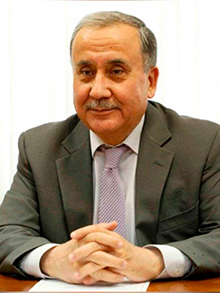 Alisher Kadirov, Head of the Department of the Institute of Strategic and Regional Studies of the Republic of Uzbekistan Alisher Kadirov, Head of the Department of the Institute of Strategic and Regional Studies of the Republic of Uzbekistan
In November of this year, Uzbekistan's chairmanship in the Turkic States Organization (OTS) concluded. It was marked by significant achievements that played a substantial role in strengthening the country's international political and economic positions. Throughout its chairmanship, Uzbekistan actively promoted initiatives aimed at enhancing Turkic cooperation, developing trade and economic ties, and expanding mutually beneficial relations with member countries of the organization.
READ MORE
- EGF Editor |
Published on EGF: 28.12.2023
| External Relations
-
Why It Is Important to Diversify Armenia’s Foreign Policy By Benyamin POGHOSYAN, PhD, Chairman, Center for Political and Economic Strategic Studies
In recent years, perhaps the most discussed topic by international scholars, experts and politicians is the gradual transformation of the post-Cold War unipolar world order. There are different opinions about the process of transformation, the timing, and the main elements of this newly emerging world order. However, almost everyone agrees on one issue: the unipolar world is gradually becoming history, and before the final formation of the new world order, the next decade will be characterized by instability, conflicts, and economic shocks. Climate change and the ever-increasing role of digital technologies, including artificial intelligence, are additional factors of instability that make it even more difficult to assess, predict and formulate policies based on geopolitical developments in the coming years.
READ MORE
- EGF Editor |
Published on EGF: 20.12.2023
| External Relations
-
Armenia between Russia and the West By Benyamin POGHOSYAN, PhD, Chairman, Center for Political and Economic Strategic Studies
The war in Ukraine has significantly impacted the geopolitics of the former Soviet space. As Russia – West relations have hit the lowest point since the end of the Cold War, or perhaps even since the Caribbean nuclear crisis of 1962, the newly independent states face tough choices in their foreign policy. Can they find a balance between Russia and the West, and if not, should they choose Russia or the West? It seemed that this conundrum should not apply to Armenia. The country is a member of all Russian-led organizations in the post-Soviet space – Collective Security Treaty Organization, Eurasian Economic Union, and Armenia hosts a Russian military base and Russian border troops. Thus, many may argue that Armenia has already chosen to be with Russia, and the war in Ukraine would complicate Armenian efforts to develop relations with the West, which Yerevan has done quite successfully in the last three decades.
READ MORE
- EGF Editor |
Published on EGF: 05.12.2023
| External Relations
-
The Choice in the South Caucasus Should Not Be Either Or 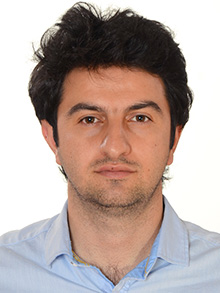 By Vasif HUSEYNOV, PhD, Head of Department, AIR Center, Adjunct Lecturer, ADA and Khazar Universities, Baku By Vasif HUSEYNOV, PhD, Head of Department, AIR Center, Adjunct Lecturer, ADA and Khazar Universities, Baku
On 15 November, during a hearing before the United States Congressional Committee on Foreign Affairs regarding the future of Karabakh, James O’Brien, Assistant Secretary of State for European and Eurasian Affairs, made a statement that stirred significant concern in Azerbaijan. While addressing the Armenia-Azerbaijan disputes and developments in the South Caucasus, he asserted, “A future that is built around the access of Russia and Iran as the main participants in the security of the region, the South Caucasus, is unstable and undesirable including both for the governments of Azerbaijan and Armenia. They have the opportunity to make a different decision now”. This statement comes in the wake of a series of developments indicating a shift towards a new security order in the South Caucasus.
READ MORE
- EGF Editor |
Published on EGF: 28.11.2023
| External Relations
-
Location, Location, Location! Or Maybe Not! By Benyamin POGHOSYAN, PhD, Chairman, Center for Political and Economic Strategic Studies
It may appear that the primary obstacle to the signature of a peace treaty between Armenia and Azerbaijan is the different views of the sides on where to resume and finalize the process. Armenia wants to do that in Western platforms, while Azerbaijan wants to return to the Russian platform, use the 3+2 format, or have direct negotiations without any mediators. In reality, the roots of the current situation are more profound than simple geopolitical choices of venue.”
The military takeover of the self–proclaimed Nagorno Karabakh Republic by Azerbaijan has raised hopes that it may facilitate the signature of the peace agreement between Armenia and Azerbaijan. The logic behind this thinking was clear – the future of Nagorno Karabakh, and the fate of the Armenians living were the primary obstacles on the road toward peace. As all Armenians were forced to leave the region, and NKR de facto president Samvel Shahramanyan signed a decree about the dissolution of the republic by the end of 2023, it seemed that the stage was set for quick signature of the Armenia – Azerbaijan peace treaty, and then a push forward in the Armenia – Turkey normalization process.
READ MORE
- EGF Editor |
Published on EGF: 28.11.2023
| External Relations
-
EU-Azerbaijan Relations Are Important for Both Sides By Vasif HUSEYNOV, PhD, Head of Department, AIR Center, Adjunct Lecturer, ADA and Khazar Universities, Baku
EU-Azerbaijan relations are important for both sides, and the Brussels format of the Armenia-Azerbaijani peace talks, are likewise important to reach negotiated solutions over the remaining unresolved questions between Baku and Yerevan. The reactivation of the Brussels format and the revitalization of the constructive role of the EU in the South Caucasus should happen sooner rather than later. A balanced approach by the EU and its leading member states vis-à-vis the countries of the region is of utmost necessity towards this end.
On 25 October, Toivo Klaar, the EU Special Representative for the South Caucasus, announced that the scheduled meeting between Armenian Prime Minister Nikol Pashinyan and Azerbaijani President Ilham Aliyev with the mediation of the European Council President Charles Michel in Brussels [known as the Brussels format of the Armenia-Azerbaijan peace talks] had been postponed due to scheduling problems. Previously, another EU-brokered summit between these two leaders from the South Caucasus, originally planned to take place on the sidelines of the European Political Community gathering on 5 October, was cancelled by the Azerbaijani side.
READ MORE
- EGF Editor |
Published on EGF: 13.11.2023
| External Relations
-
The efficiency of organization of measures to ensure public safety based on the principle of “Serving human interests” 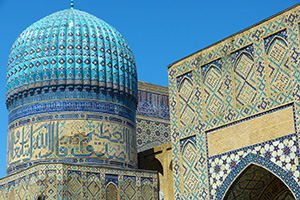 Umidjon Qodirov,
Independent researcher of the Academy of the MIA of the Republic of Uzbekistan, cand.of law sciences, associate professor Umidjon Qodirov,
Independent researcher of the Academy of the MIA of the Republic of Uzbekistan, cand.of law sciences, associate professor
Special attention is being paid to ensuring a peaceful and tranquil life of the population and to forming a culture of law-abidingness and public safety as part of the large-scale reforms implemented in our country. In particular, completely new mechanisms and procedures for organizing work in the direction of public safety on the basis of the principle of “Serving the interests of the people” are introduced, and mutual purposeful cooperation of state bodies with public structures is established.
READ MORE
- EGF Editor |
Published on EGF: 06.11.2023
| External Relations
-
Azerbaijan Advocates for Regional Solutions to Regional Problems in the South Caucasus By Vasif HUSEYNOV, PhD, Head of Department, AIR Center, Adjunct Lecturer, ADA and Khazar Universities, Baku
On October 4, Azerbaijani President Ilham Aliyev cancelled a meeting with Armenian Prime Minister Nikol Pashinyan, European Council President Charles Michel, French President Emmanuel Macron, and German Chancellor Olaf Scholz that was meant to take place at the European Political Community summit in Granada, Spain, on October 5. The Granada summit was a long-awaited occasion in the context of the Armenian-Azerbaijani peace talks, particularly against the backdrop of the collapse of the separatist regime in Azerbaijan’s Karabakh region. Baku has instead voiced its support for more regionally centric negotiating formats for solving disputes in the South Caucasus.
READ MORE
- EGF Editor |
Published on EGF: 04.11.2023
| External Relations
-
Instead of Dissolving, Artsakh Should Have a Government in Exile 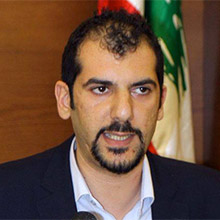 By Yeghia TASHJIAN, Beirut-based regional analyst and researcher, columnist, "The Armenian Weekly” By Yeghia TASHJIAN, Beirut-based regional analyst and researcher, columnist, "The Armenian Weekly”
On September 28, 2023, Artsakh President Samvel Shahramanyan issued a decree announcing that, in the wake of Azerbaijan’s assault on Artsakh, the authorities of Artsakh agreed to dissolve their government by the end of the year and be fully integrated into Azerbaijan.
The decree aimed: to dissolve all state institutions and organizations under their departmental subordination until January 1, 2024, and the Republic of Nagorno-Karabakh (Artsakh) shall cease to exist; the population of Nagorno-Karabakh, including those outside the Republic, after the entry into force of this decree, shall familiarize themselves with the conditions of reintegration presented by the Republic of Azerbaijan in order to make an independent and individual decision on the possibility of staying in Nagorno-Karabakh.
This was perceived as the end of the Artsakh dream. However, this announcement came under the threat of force and ethnic cleansing, placing its legality in question. Moreover, most of the political and military leaders of Artsakh have been arrested by Azerbaijan, amid the passive stance of the Russian peacekeepers and the Armenian government.
READ MORE
- EGF Editor |
Published on EGF: 04.11.2023
| External Relations
-
|
|




