Stalemate Persists in the Armenia-Azerbaijan Peace Process
 By Vasif HUSEYNOV, PhD, Head of Department, AIR Center, Adjunct Lecturer, ADA and Khazar Universities, Baku By Vasif HUSEYNOV, PhD, Head of Department, AIR Center, Adjunct Lecturer, ADA and Khazar Universities, Baku
Armenia and Azerbaijan remain at an impasse in their ongoing peace process, facing the conditions of withdrawing international lawsuits and agreeing on a ban against third-party military forces along their border. Armenia’s constitutional claims over Karabakh and the dissolution of the OSCE Minsk Group remain sensitive topics. Azerbaijan insists on amending Armenia’s constitution to eliminate future territorial disputes, while Armenia faces legal and political hurdles in making such changes. Disagreements over reopening transportation links further hinder the peace process. Azerbaijan demands an “unimpeded” land passage to its Nakhchivan exclave via Armenia’s Meghri region, while Armenia insists on controlled transit. This unresolved dispute continues to block progress toward a final agreement. READ MORE
The Eurasian Economic Union: A View from Armenia
 By Benyamin POGHOSYAN, PhD, ISPI Senior Associate Research Fellow
Armenia signed an agreement to join the Eurasian Economic Union (EAEU) in May 2014 after halting the process of signing an Association Agreement with the European Union. Many observers noted that Armenia’s then-President Serzh Sargsyan reversed his foreign policy following a meeting with Russia’s president in September 2013 in a U-turn. This decision paved the way for Armenia’s EAEU membership and halted the negotiation of an agreement that would have included, inter alia, a free-trade agreement with the EU. The reversal was likely made under Russian pressure and was influenced by geopolitical and geo-economic considerations. Armenia, supporting the self-proclaimed Nagorno-Karabakh Republic in its conflict with Azerbaijan, saw its alliance with Russia as a crucial deterrent against hostile neighbours, including Azerbaijan, which had significantly increased its military spending.
READ MORE
Germany’s Perceptions of Turkey’s Policy in the South Caucasus

 By Daria ISACHENKO, PhD, Associate Researcher, SWP Berlin/ CATS
Franziska SMOLNIK, PhD, Senior Fellow, SWP Berlin
Turkey is a NATO ally, an EU membership candidate, and a confident geopolitical actor. The latter aspect is uppermost in Berlin’s assessment of Ankara’s policy in the South Caucasus, where Turkey’s growing influence is recognised. If they are to make the most of the potential for cooperation, Ankara, and Berlin each need to acknowledge the other’s foreign policy framework and find ways to reconcile Turkey’s autonomous line with Germany’s EU-oriented and often normative approach.
The current state of Turkish foreign policy towards the South Caucasus rather resembles the situation in the Balkans, where “Ankara pursues a parallel, as opposed to an adversarial, strategy to that of the West”. Given that the South Caucasus does not involve sensitive issues such as those that characterise Ankara’s and Berlin’s bilateral relations, nor flashpoints in the Middle East and the Eastern Mediterranean where their positions clearly diverge, it should theoretically be possible for Ankara and Berlin to start exploring areas of cooperation. If that is to happen, a middle ground will need to be found between Turkey’s autonomous action and Germany’s EU-embedded approach. Moreover, Berlin – and Brussels – will have to determine more clearly how to reconcile normative and geopolitical interests.
READ MORE
Organization of Turkic States Advances Eurasian Trade Connectivity  By Vusal GULIYEV, Policy Advisor at the Center of Analysis of International Relations and Head of Shanghai Office at AZEGLOB Consulting Group By Vusal GULIYEV, Policy Advisor at the Center of Analysis of International Relations and Head of Shanghai Office at AZEGLOB Consulting Group
Amid shifting geopolitical dynamics and increasing global trade demands, the Organization of Turkic States (OTS), comprising Azerbaijan, Kazakhstan, Kyrgyzstan, Türkiye, Uzbekistan, and observer states, has undertaken a transformative Middle Corridor Initiative (MCI) to enhance the route within the global trade landscape. This 6,500-kilometer-long (approximately 4,000 miles) transport and trade route traversing Central Asia, the Caspian Sea, the South Caucasus, and Türkiye has gained renewed prominence as member states focus on developing secure, efficient, and competitive transport corridors to mitigate the challenges posed by sanctions and instability along traditional transit channels. The OTS has already devoted extensive efforts into systematically developing sophisticated logistics and transport facilities through various multilateral treaties signed within the context of MCI. READ MORE
Airplane Crash Exposes Flaws in Baku-Moscow Relations
By Vasif HUSEYNOV, PhD, Head of Department, AIR Center, Adjunct Lecturer, ADA and Khazar Universities, Baku
On December 25, Azerbaijan ended 2024 in nationwide sorrow and resentment following the crash of Azerbaijan Airlines Flight J2-8243 near Aktau, Kazakhstan. The Embraer 190 aircraft, carrying 67 passengers from Baku to Grozny, Chechnya, attempted an emergency landing but tragically crashed. Among those aboard were Azerbaijani, Russian, Kazakh, and Kyrgyz nationals. While 29 people survived, 38, including two pilots and a flight attendant, lost their lives. Initial reports attributed the crash to a collision with a flock of birds, but this theory was soon refuted when parts of the aircraft were found to bear shrapnel marks. The following day, Azerbaijani officials revealed that the crash was caused by a Russian surface-to-air missile, which exploded near the aircraft mid-flight, with shrapnel injuring passengers and crew. This incident has strained Azerbaijan-Russia relations, as Moscow refused to accept responsibility for the tragedy. READ MORE
- February 28, 2025 15:48PM
Azerbaijan’s Quest for Strategic Autonomy  By Tabib HUSEYNOV, independent policy analyst and researcher By Tabib HUSEYNOV, independent policy analyst and researcher
This article explores Azerbaijan’s evolving and increasingly more assertive foreign policy doctrine, which began to take shape following its victory over Armenia in the 2020 Second Karabakh War and was further solidified after its 2023 blitzkrieg operation, which dismantled institutionalized separatism within its territory. Conceptualized through the framework of strategic autonomy, this new doctrine is firmly anchored in realist and neorealist schools of thought, emphasizing pragmatic, interest-driven relationships with major regional and global powers while avoiding geopolitical entanglements. The paper argues that Azerbaijan’s quest for strategic autonomy is both a response to external pressures and a means to assert agency within the broader Eurasian security landscape. It also describes Azerbaijan as a “geopolitical interconnector”, capable of punching above its weight in contributing to international security, owing to its strategic location and diplomatic outreach across opposing blocs. The paper enriches scholarly discussions on strategic autonomy with a practical case study, offering a novel analytical framework to understand Azerbaijan’s foreign policy and its potential impact on regional and global geopolitics.
READ MORE
- February 22, 2025 22:50PM
The Increasing Role of the “Trans-Caspian Corridor” in the Global Supply Chain By Vusal GULIYEV, Head of Shanghai Office at AZEGLOB Consulting Group and Policy Expert at the Baku-based Topchubashov Center
The strategic importance of the Trans-Caspian International Transport Route (TCITR) has grown in recent years, paralleling geopolitical and economic developments on both global and regional scales. Against the backdrop of global logistics markets adapting to new conditions, the development of this multifaceted transport route, which encompasses transit states in Central Eurasia such as Azerbaijan, Türkiye, Kazakhstan, and Georgia, has become a priority for many nations and multinational corporations. Following prolonged delays in traditional transport and logistics corridors caused by the COVID-19 pandemic, the Trans-Caspian Corridor began to gain prominence in global freight transport. Its importance was further highlighted after the escalation of the Russia-Ukraine war, creating new long-term opportunities for the sustained development of this multimodal trans-regional route. READ MORE
Prospects and Challenges in Armenia–Azerbaijan Peace Talks
By Benyamin POGHOSYAN, PhD, Chairman, Center for Political and Economic Strategic Studies
Currently, the situation is intriguing. Both sides claim substantial progress in peace talks. At the December 5 Organization for Security and Cooperation in Europe (OSCE) Ministerial Council, Armenia’s foreign minister announced that the preamble to the peace agreement text and 15 out of its 17 articles had been finalized. The Armenian prime minister later stated that 90% of the text was agreed. However, according to the Azerbaijani state-affiliated think tank AIR Center, at least three contentious issues remain unresolved: the presence of the European Union (EU) mission in Armenia, constitutional and legal changes in Armenia, and the withdrawal of Armenia’s legal cases against Azerbaijan in international courts. Baku has also proposed two other preconditions to any peace agreement. These include dissolving the OSCE Minsk Group and establishing a “Zangezur corridor” free of Armenian control.
READ MORE
What Aliyev’s Reaction to the Airplane Crash Tells Us about Azerbaijan’s Relations with the West
By Vasif HUSEYNOV, PhD, Head of Department, AIR Center, Adjunct Lecturer, ADA and Khazar Universities, Baku
On December 30, Germany’s Der Spiegel, a publication often perceived as critical and biased against Azerbaijan – similar to many other German media outlets – reported on Azerbaijani President Ilham Aliyev’s reaction to Russia’s handling of a recent aeroplane crash crisis between the two countries. The publication noted, “Aliyev’s reaction is a testament to the increased weight of his country.” It continued, “Aliyev called the previous statements from the Russian side ‘nonsensical,’ ‘absurd,’ and ‘stupid.’ He spoke of attempts to cover up the situation and made it clear that with his apology, Putin had fulfilled only one of several conditions that Baku had demanded of Moscow.” For Der Spiegel, it appeared surprising that a relatively small country in Russia’s neighbourhood – often dismissed in the West as part of Moscow’s “backyard” – could stand up assertively against perceived injustices and demand its rights. READ MORE
Breaking the Present Deadlock in the Armenia-Azerbaijan Peace Process Will Remain a Formidable Task in 2025
By Vasif HUSEYNOV, PhD, Head of Department, AIR Center, Adjunct Lecturer, ADA and Khazar Universities, Baku
On 10 December, the Center for Analysis of International Relations (AIR Center), a Baku-based political think tank closely affiliated with the Azerbaijani government, held a high-level international conference titled “The Main Obstacle to a Peace Agreement Between Azerbaijan and Armenia.” The conference identified the territorial claims in Armenia’s constitution against Azerbaijan as the primary obstacle to peace. Elnur Mammadov, Azerbaijan's Deputy Foreign Minister, contributed to the discussion as keynote speaker, clarifying the position of the Azerbaijani government on the issue. The event also featured James Sharp, former UK Ambassador to Azerbaijan, and Židas Daskalovski, adviser to the North Macedonian president, who shared insights from their countries’ experiences in amending constitutions to resolve interstate disputes. READ MORE
The support of UN member states for Uzbekistan's initiatives is the result of systemic reforms in the country  Gayrat Khonnazarov, Editor-in-Chief, UzA news agency
The Republic of Uzbekistan has demonstrated significant success in the international arena, strengthening its active participation in the United Nations (UN) and its specialized agencies. In 2024, the country achieved a number of key milestones that underline its commitment to universal principles and standards in the areas of human rights, socio-economic development, labor, and global cooperation.
READ MORE
- December 27, 2024 19:35PM
New Azerbaijan-Iran Railway Agreement Grapples With Regional Tensions
 By Fuad Shahbazov, Baku-based independent regional security and defence analyst By Fuad Shahbazov, Baku-based independent regional security and defence analyst
On October 15, Chairman of Azerbaijan Railways Rovshan Rustamov arrived in Tehran to meet his Iranian counterpart Jabbar Ali Zakeri Sardroudi to discuss the construction of a railway line linking Azerbaijan’s East Zangezur region and its Nakhchivan exclave through Iran. The meeting came amid intensive diplomatic negotiations between Azerbaijan and Iran regarding the Aras Corridor transit route linking Azerbaijan to Nakhchivan and further to Türkiye via Iran after a period of silence and diplomatic rifts between the two neighbors. The Aras Corridor project, strategically significant for both Baku and Tehran, emerged following Azerbaijan’s persistent efforts after the 2020 Karabakh War to establish regional communication lines, particularly a land route, through Armenia’s Syunik province to Nakhchivan and Türkiye, known as the Zangezur Corridor. The ongoing confrontation between Azerbaijan and Armenia over the land route through Syunik province has been a major point of contention, delaying the signing of a final peace treaty between Baku and Yerevan. READ MORE
- December 20, 2024 09:14AM
The Multidimensional Foreign Policy of New Uzbekistan 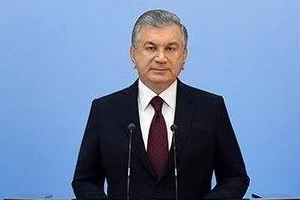 Bakhram Sotiboldiev,
Head of the Department of the Institute for Strategic and Regional Studies under the President of the Republic of Uzbekistan
In today's rapidly changing world, Uzbekistan confidently positions itself as one of the key players on the international stage. The country’s foreign policy, reinvigorated with the election of Shavkat Mirziyoyev as President in 2016, demonstrates impressive results, transforming the republic into a significant center for regional and global diplomacy. READ MORE
- December 16, 2024 08:56AM
Armenia’s Constitutional Catch-22 By Tabib Huseynov, independent policy analyst and researcher
In October 2024, the presidents of Armenia and Azerbaijan simultaneously approved a Protocol regulating the joint work of their respective border delimitation commissions. Originally signed in August, this Protocol sets the legal and procedural framework for the subsequent border delimitation process between the two South Caucasus neighbours, who have been locked in a territorial dispute for over three decades. The protocol’s enactment in both countries became possible after Armenia’s Constitutional Court issued a landmark Decision No. 1749 on 26 September 2024, confirming that the border delimitation agreement complied with Armenia’s Constitution. As border delimitation is a key issue in the post-war normalization process between Armenia and Azerbaijan, this favourable decision was widely anticipated. However, the Court’s Decision is remarkable not for its outcome, but rather its legal rationale, which traps Armenia in a legal and political Catch-22. READ MORE
- December 13, 2024 10:42AM
Implications of the US Presidential Elections for the South Caucasus By Benyamin POGHOSYAN, PhD, Chairman, Center for Political and Economic Strategic Studies
As the US presidential elections approached, pundits and politicians worldwide sought to predict the outcome and explore scenarios for US foreign policy under Kamala Harris or Donald Trump. This was unsurprising: Despite the end of the unipolar world order and significant shifts in the global balance of power, the United States remains the superpower capable of global influence. The South Caucasus was no exception, as pundits debated the potential implications of the election results for the region. The uncertainty ended on November 5, as Donald Trump secured his return to the White House in January 2025. What might the South Caucasus expect from Trump’s second presidency?
READ MORE
Uzbekistan exports its products to 115 countries
Export is a key driver of the economy, enabling the development of production, the creation of new jobs, and the growth of GDP. For this reason, every state seeks to support enterprises aiming to expand their exports to international markets. This article explores the comprehensive measures of direct support for exporters in Uzbekistan.
Export support in Uzbekistan is carried out systematically, strictly adhering to the goal set in the Uzbekistan 2030 Strategy — increasing the share of the private sector in exports to 60%.
Here are some indicative figures: from 2017 to 2023, Uzbekistan’s total exports reached $120 billion. In 2023 alone, export volumes amounted to $24 billion, marking a 64% increase compared to 2017.
READ MORE
Uzbekistan exports its products to 115 countries
Export is a key driver of the economy, enabling the development of production, the creation of new jobs, and the growth of GDP. For this reason, every state seeks to support enterprises aiming to expand their exports to international markets. This article explores the comprehensive measures of direct support for exporters in Uzbekistan.
Export support in Uzbekistan is carried out systematically, strictly adhering to the goal set in the Uzbekistan 2030 Strategy — increasing the share of the private sector in exports to 60%.
Here are some indicative figures: from 2017 to 2023, Uzbekistan’s total exports reached $120 billion. In 2023 alone, export volumes amounted to $24 billion, marking a 64% increase compared to 2017.
READ MORE
The Middle East Viewed from Eurasia: It’s All about Realpolitik  By Yeghia TASHJIAN, Beirut-based regional analyst and researcher, columnist, "The Armenian Weekly” By Yeghia TASHJIAN, Beirut-based regional analyst and researcher, columnist, "The Armenian Weekly”
In his book “The Tragedy of Great Power Politics” one of the world’s leading realist scholars John J. Mearsheimer argues that in an unbalanced multipolarity, the balance of power is so asymmetrically distributed in favour of one side, that other great powers have no choice but to come together to balance the hegemonic power. This is the only rational choice among other great powers. As such, this kind of international order is fragile and always prone to wars. Within this logic, many would assume that Eurasian powers such as Russia and China should have fully backed Iran or its non-state allies in the Middle East to defeat Israel, or at least contain US interests in the region. Interestingly, this is not the case. Moscow, Beijing, and New Delhi (another rising Eurasian power) are engaging in strategic balance and realpolitik to assess the situation, waiting for the outcome of the US presidential elections, and aiming to contain any spillover effect to their zone of influence.
READ MORE
- November 21, 2024 08:53AM
Türkiye-Russia Trade Declines Amid Western Sanctions
By Fuad Shahbazov, Baku-based independent regional security and defence analyst
Türkiye’s Statistics Department reported in July that exports to Russia had shrunk by 28 percent from the previous year due to continuous pressure from US sanctions against Russia. The value of these exports reached only $4.16 billion in the first quarter of 2024, representing a decline from a peak of $5.80 billion the previous year. Imports surged in 2021 to a peak of $27.7 billion just before the outbreak of Russia’s war in Ukraine, and have since fallen, though they still remain far above 2020 levels. Since Russia’s invasion, the West has imposed harsh economic sanctions on the country to exert pressure on the country. Since then, however, Moscow has gone to enormous effort to circumvent those sanctions and maintain international trade. In this regard, Türkiye, a long-time Russian energy importer, has become an outlet for the Russian global economy. Turkish-Russian relations have fluctuated over the course of the war, as Türkiye tries to maintain a balanced position between the West and Russia, as well as with other regional players in the Middle East. READ MORE
- November 21, 2024 08:51AM
Uzbekistan on the way to a sustainable future: environmental initiatives and international cooperation
On November 11-13, President of Uzbekistan Shavkat Mirziyoyev is taking part in the World Summit on Combating Climate Change at the 29th session of the Conference of the Parties to the UN Framework Convention on Climate Change, which will be held in Baku.
Delegations from almost 200 countries at the level of heads of state, government and ministers, representatives of international organizations, NGOs, expert, scientific and social circles are expected to participate in the conference. READ MORE
- November 12, 2024 07:25AM
What the President of Uzbekistan regularly talks about with entrepreneurs of the country
Dilafruz Khusanova,
Head of the Press Service of the Chamber of Commerce and Industry of Uzbekistan
Agriculture is one of the leading sectors of Uzbekistan’s economy.
The annual open Dialogue of President Shavkat Mirziyoyev with entrepreneurs, which has already become a tradition, once again gave impetus to new ideas and projects for representatives of all business categories. This year, discussions at the main platform in the world of Uzbek business took place on August 20 in Nukus. At the event, the Head of State announced new initiatives in five areas. READ MORE
The Tale of Two Elections: Implications for the South Caucasus Benyamin POGHOSYAN, PhD, Chairman, Center for Political and Economic Strategic Studies
As the US presidential election approaches, many are assessing the implications of a Donald Trump or Kamala Harris administration in different parts of the world. Commentators on the South Caucasus are no exception. The Biden administration established a Washington format to facilitate Armenia–Azerbaijan negotiations and took steps to further US–Armenia relations, making a decision to upgrade the status of a strategic dialogue launched in 2019 to a strategic partnership commission. The Biden administration also invested efforts in thawing relations between Armenia and Turkey, viewing this as essential for regional stability. US officials view normalising Armenia–Turkey relations as crucial for reducing Russian influence and decreasing Armenia’s dependency on Russia.
READ MORE
“Green” development of New Uzbekistan and the fight against climate change
Lola Rakhmanbaeva,
Advisor to the Minister of Ecology, Environmental Protection, and Climate Change on Information Policy- Press Secretary
Agriculture is one of the leading sectors of Uzbekistan’s economy.
As a country with unique natural resources and rich cultural heritage, Uzbekistan is increasingly aware of the need for active action in the fight against climate change. The country is taking a number of measures and initiatives aimed at achieving sustainable and green development, which plays a key role in global efforts to mitigate the effects of climate change. READ MORE
|
|




 In Progress

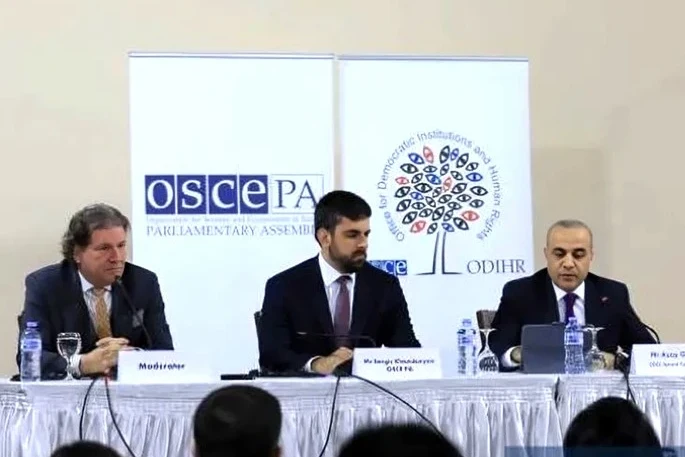 Tashkent hosted a press conference of international observer missions representing the Organization for Security and Cooperation in Europe (OSCE) structures at the October 27 elections.