
Uzbekistan on the way to a sustainable future: environmental initiatives and international cooperation 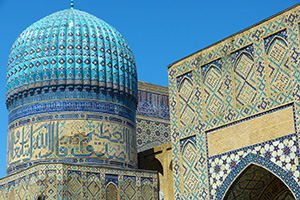 On November 11-13, President of Uzbekistan Shavkat Mirziyoyev is taking part in the World Summit on Combating Climate Change at the 29th session of the Conference of the Parties to the UN Framework Convention on Climate Change, which will be held in Baku.
Delegations from almost 200 countries at the level of heads of state, government and ministers, representatives of international organizations, NGOs, expert, scientific and social circles are expected to participate in the conference. READ MORE
- EGF Editor |
Published on EGF: 12.11.2024
| External Relations
-
What the President of Uzbekistan regularly talks about with entrepreneurs of the country
Dilafruz Khusanova,
Head of the Press Service of the Chamber of Commerce and Industry of Uzbekistan
Agriculture is one of the leading sectors of Uzbekistan’s economy.
The annual open Dialogue of President Shavkat Mirziyoyev with entrepreneurs, which has already become a tradition, once again gave impetus to new ideas and projects for representatives of all business categories. This year, discussions at the main platform in the world of Uzbek business took place on August 20 in Nukus. At the event, the Head of State announced new initiatives in five areas. READ MORE
- EGF Editor |
Published on EGF: 04.11.2024
| External Relations
-
Multiple Countries Strive to Enhance Middle Corridor Despite Challenges  By Vasif HUSEYNOV, PhD, Head of Department, AIR Center, Adjunct Lecturer, ADA and Khazar Universities, Baku By Vasif HUSEYNOV, PhD, Head of Department, AIR Center, Adjunct Lecturer, ADA and Khazar Universities, Baku
On October 3, Ashgabat, Turkmenistan hosted a high-level event in collaboration with the European Union, the Central Asian countries located along the Trans-Caspian Transport Corridor (also known as the Middle Corridor), the South Caucasus states, and Türkiye, as well as the major international financial institutions. The event resulted in the establishment of a Coordination Platform for the Middle Corridor. According to the European Union, the Coordination Platform will focus on promoting the transit corridor and implementing priority infrastructure projects while coordinating investments in the South Caucasus and Türkiye. The European Union announced plans to launch a regional transport program in 2025 to support infrastructure development and provide technical assistance for improving standards, digitalization, and interoperability across the region. The Middle Corridor is an essential route that will allow Central Asia to better access Europe without having to go through sanctioned Russia, but it still faces numerous economic, logistical, and political roadblocks in its development.
READ MORE
- EGF Editor |
Published on EGF: 31.10.2024
| External Relations
-
Azerbaijan Applies for BRICS Membership By Vasif HUSEYNOV, PhD, Head of Department, AIR Center, Adjunct Lecturer, ADA and Khazar Universities, Baku
On August 20, the Ministry of Foreign Affairs of Azerbaijan declared the country had officially applied for membership in BRICS. BRICS is an intergovernmental cooperation platform that originally comprised Brazil, Russia, India, China, and South Africa, and now includes five new members that include Saudi Arabia, Egypt, Ethiopia, Iran, and the United Arab Emirates. This announcement followed Azerbaijan’s initial declaration of its desire to join the bloc, revealed in the China-Azerbaijan joint declaration on establishing a strategic partnership. This was adopted by the two countries’ leaders on July 3 during the Shanghai Cooperation Organization (SCO) Summit in Astana, Kazakhstan. The declaration highlights Azerbaijan’s intent to join BRICS and emphasizes China’s support for this initiative. Azerbaijan’s bid has also been backed by Russia, with the Kremlin expressing support for Baku’s application on several occasions over the past two months.
READ MORE
- EGF Editor |
Published on EGF: 23.10.2024
| External Relations
-
Armenia’s Constitutional Court Dismantles One Barrier to Peace with Azerbaijan, While Erecting Others  By Tabib Huseynov, independent policy analyst and researcher By Tabib Huseynov, independent policy analyst and researcher
In a move that has left many in Armenia, Azerbaijan, and beyond scratching their heads, the Armenian Constitutional Court adopted on September 26 a landmark ruling No. 1749, greenlighting the border delimitation process with Azerbaijan. The text of the ruling (henceforth referred to as Ruling 1749 or simply, the ruling) was published three days later over the weekend, which invites questions about whether this delay was intended to minimize scrutiny as the initial news cycle on the decision faded and public attention shifted elsewhere. Some Armenian commentators hailed the ruling, claiming it invalidates Baku's criticism that Armenia's Constitution harbours territorial claims against Azerbaijan. On October 4, Armenian foreign ministry spokesperson Ani Badalyan echoed this argument, claiming the ruling proves Armenia’s Constitution contains no territorial claims. READ MORE
- EGF Editor |
Published on EGF: 08.10.2024
| External Relations
-
Important Migration Agreement Signed Between Uzbekistan and Germany 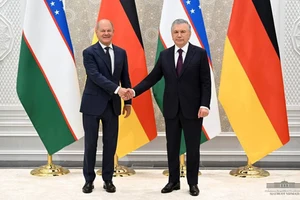 On the invitation of President of the Republic of Uzbekistan, Shavkat Mirziyoyev, Federal Chancellor of the Federal Republic of Germany Olaf Scholz arrived in Uzbekistan for an official visit on September 15. On the invitation of President of the Republic of Uzbekistan, Shavkat Mirziyoyev, Federal Chancellor of the Federal Republic of Germany Olaf Scholz arrived in Uzbekistan for an official visit on September 15.
In recent years, labor migration has emerged as a promising area of cooperation with Germany. At the same time, multifaceted and mutually beneficial relations in the field of healthcare are also developing consistently. READ MORE
- EGF Editor |
Published on EGF: 07.10.2024
| External Relations
-
From Armenia to the EU: Stay Strong on the South Caucasus  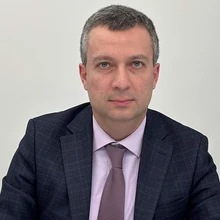 By Anahide PILIBOSSIAN, Vice President of Strategy and Development, APRI Armenia By Anahide PILIBOSSIAN, Vice President of Strategy and Development, APRI Armenia
Benyamin POGHOSYAN, PhD, Chairman, Center for Political and Economic Strategic Studies
The events of the year 2022 led the European Union to build up its foreign and security policy efforts. Its unprecedented actions in the South Caucasus since then include: The EU and Azerbaijan signed a Memorandum of Understanding on a Strategic Partnership in the Field of Energy in July 2022; in late 2022, a short-term EU civilian observer mission was established in Armenia (despite Armenia being a member of the Collective Security Treaty Organization [CSTO]), followed by a two-year mission, the EU Mission to Armenia, in February 2023; a new Partnership Agenda was announced in February 2024; Georgia received EU candidate status in December 2023; European Council President Charles Michel initiated the Brussels format to facilitate peace negotiations between Armenia and Azerbaijan.
While the EU’s intention of being a constructive neighbour and a foreign policy powerhouse in the region is commendable, regional events have stress-tested its strength, signalling the limits of its engagement.
READ MORE
- EGF Editor |
Published on EGF: 01.10.2024
| External Relations
-
The issue of the “Zangezur Corridor” is back — can Iran provide an alternative? 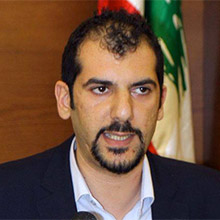 By Yeghia TASHJIAN, Beirut-based regional analyst and researcher, columnist, "The Armenian Weekly” By Yeghia TASHJIAN, Beirut-based regional analyst and researcher, columnist, "The Armenian Weekly”
On August 7, 2024, Elchin Amirbayov, President Ilham Aliyev’s senior envoy for special assignments, told Radio Free Europe/Radio Liberty that Baku had agreed to withdraw the issue of the “Zangezur Corridor” from Armenia-Azerbaijan negotiations and “refer it to a later stage.” This statement put Russia in a difficult position, as it had aimed to control the transit routes between Armenia and Azerbaijan, according to the November 10, 2020 trilateral statement signed by the heads of state of Armenia, Azerbaijan and Russia. As such, Russia attempted to revive the issue but met Iranian opposition. This article will highlight U.S. involvement in containing Russia’s influence in the South Caucasus, Russia’s objective behind bringing back the corridor issue and Tehran’s harsh stance against Moscow.
READ MORE
- EGF Editor |
Published on EGF: 13.09.2024
| External Relations
-
Putin’s Visit to Baku Stirs up Iran-Russia Tensions on Zangezur Corridor By Vasif HUSEYNOV, PhD, Head of Department, AIR Center, Adjunct Lecturer, ADA and Khazar Universities, Baku
On August 18–19, Russian President Vladimir Putin paid a two-day visit to Azerbaijan. This marked the first state visit by a Russian president to the South Caucasian republic and only the second visit in the bilateral relationship since former Azerbaijani President Heydar Aliyev’s trip to Moscow in 2002. Contrary to expectations from local observers, the visit did not yield any significant agreements or binding political and economic arrangements. A few announcements were made regarding future joint initiatives, including cooperation on food security, labour inspections, the establishment of a Russian-Azerbaijani university, and the joint production of oil tankers. An agreement was also reached to expand the partnership between Russia’s public joint-stock company (PJSC) Gazprom and the State Oil Company of the Republic of Azerbaijan (SOCAR) . Gazprom CEO Alexey Miller revealed that the two sides agreed to broaden their “multifaceted strategic partnership,” particularly concerning the International North-South Transportation Corridor (INSTC) project. He also mentioned the planned signing of a comprehensive scientific and technical cooperation program in September. While few details were disclosed, this marked their first public reference to the INSTC project, about which little is currently known. Putin’s visit to Azerbaijan demonstrates how Russia seeks to maintain its influence in the region, which could lead to neighbouring states, such as Iran and Armenia, feeling threatened.
READ MORE
- EGF Editor |
Published on EGF: 13.09.2024
| External Relations
-
UNESCO General Conference to be held in Samarkand, Uzbekistan 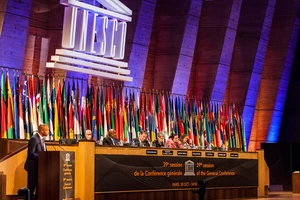 The 43rd UNESCO General Conference is scheduled to take place in Samarkand in 2025. The 43rd UNESCO General Conference is scheduled to take place in Samarkand in 2025.
This marks the first time Uzbekistan will host the biennial event. Historically, these conferences have primarily been hosted at UNESCO's headquarters in Paris since 1986. However, there have been eight exceptions, with meetings held in cities like Mexico City (1947), Beirut (1948), Florence (1950), Montevideo (1954), New Delhi (1956), Nairobi (1976), Belgrade (1980), and Sofia (1985).
READ MORE
- EGF Editor |
Published on EGF: 17.08.2024
| External Relations
-
|
|




