Environmental Challenges: The Future of Human Rights and Sustainable Solutions in a Changing World[Over] 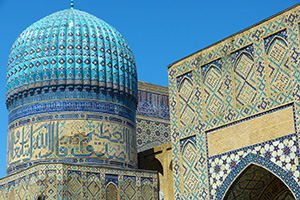 This is the name of the next topic of the IV Samarkand Forum on Human Rights, a traditional international conference to be held in our country on June 13-14, 2024. It is planned to hold three plenary meetings offline and online within the framework of the forum. This is the name of the next topic of the IV Samarkand Forum on Human Rights, a traditional international conference to be held in our country on June 13-14, 2024. It is planned to hold three plenary meetings offline and online within the framework of the forum.
The main goal of this year's Samarkand forum is to discuss issues related to the impact of climate change on human rights on a broad scale and on the basis of information analysis. In addition to gaining the necessary knowledge in this field, the participants of the international conference will have the opportunity to exchange experience and get acquainted with the best practices within the international community.
READ MORE
The South Caucasus amidst shifting geopolitics[Over]  By Vasif HUSEYNOV, PhD, Head of Department, AIR Center, Adjunct Lecturer, ADA and Khazar Universities, Baku By Vasif HUSEYNOV, PhD, Head of Department, AIR Center, Adjunct Lecturer, ADA and Khazar Universities, Baku
There is a growing consensus among some analysts that Western policies towards Russia and China have been a big disaster. Instead of preventing the creation of the Sino-Russo alliance, the West has virtually pushed Russia into the arms of China. The opposite was expected from the United States by many scholars and veteran diplomats, including Henry Kissinger. The United States will have to reach an understanding with China on a new global order to ensure stability, or the world will face a dangerous period like the one which preceded World War One, he said in 2021, two years before he passed away. Against the backdrop of the latest visit of Russia’s President Vladimir Putin to China, which is reported to be the 40th meeting between the leaders of the two countries over the past 10 years, there is enough ground to argue that Washington failed to “reach an understanding with Beijing on a new global order.
READ MORE
Gender Issues in Contemporary Uzbekistan[Over] Roxila Mardonkulovna Usmanova, Doctoral Student, Institute of Family and Gender Research, Republic of Uzbekistan
Special attention is being paid to further enhancing the status of women in the new Uzbek society and ensuring their rights as a priority value. Gender equality is recognized as a social phenomenon that permeates all aspects of the life and activities of society, encompassing politics, economics, law, ideology, culture, education, and science, shaping the dynamics between women and men. In the words of the President of the Republic of Uzbekistan, Shavkat Mirziyoev, "The stereotype formed in the minds of our people makes me think about many things. Traditionally, we perceive a woman first and foremost as a mother, a keeper of the family hearth. This is undoubtedly true. However, today not every woman should not be just an observer, she should be an active and proactive participant in the democratic changes taking place in the country." Therefore, it can be asserted without exaggeration that in recent years, increasing the political, social, and economic engagement of women in Uzbek society has emerged as a top priority of state policy, driven by the political will of the Uzbekistani leadership.
READ MORE
Human resources development and management system in new Uzbekistan[Over] The ongoing reform to enhance the democratic state governance system in New Uzbekistan is being implemented under the principle of "The state serves the people, not vice versa."
Indeed, today, social advancement is inseparable from the consolidation of the state, fostering active societal engagement, shaping positive attitudes of the state servant towards society, serving the people, ensuring individual satisfaction, promoting honesty, and establishing justice, all of which are essential in modernizing social progress. The enactment of the Law "On Public Service" represents another example of the people-oriented policy pursued by our President.
READ MORE
Border readjustment in Tavush, what’s next?[Over]  By Yeghia TASHJIAN, Beirut-based regional analyst and researcher, columnist, "The Armenian Weekly” By Yeghia TASHJIAN, Beirut-based regional analyst and researcher, columnist, "The Armenian Weekly”
On April 17, 2024, Armenia’s Prime Minister Nikol Pashinyan, at a meeting with the residents of Kirants village in the Tavush region, said that for the past 30 years, the residents have lived “in the conditions of lawlessness, and the time has come to put an end to this, to establish a rule of law” in the region. The PM added: “Our idea is for you not to say Azerbaijan is 50 meters away, but to say, wow, it is good that Azerbaijan is 50 meters away. We will trade there. We will build the economy there. Maybe we will build another checkpoint. Cars will come and go and pay the Republic of Armenia.” He later continued: “Now you can say to me: Do you 100-percent guarantee that you will do this? I will answer, I don’t guarantee 100-percent, but I know that by taking step by step, we will reach 90-percent or even more.” Azerbaijan insists that there are four bordering villages near Armenia’s Tavush and Azerbaijan’s Qazax region that must be ceded to Azerbaijan. Baku argues that these villages were taken by Armenian forces in the early 1990s.”
READ MORE
Yerevan’s ‘Crossroads for Peace’ Remains Elusive[Over] By Vasif HUSEYNOV, PhD, Head of Department, AIR Center, Adjunct Lecturer, ADA and Khazar Universities, Baku
On April 5, European Commission President Ursula von der Leyen and US Secretary of State Antony Blinken expressed support for the “Crossroads for Peace” project of Armenian Prime Minister Nikol Pashinyan during a press conference before their meeting in Brussels. The project, which was presented to the public during the Armenian premier’s address at the Fourth Silk Road Forum in Tbilisi on October 26, 2023, envisions opening new transportation routes across Armenia with the hopes of transforming the country into a regional transit hub. The project calls for the opening of connections between Azerbaijan and Türkiye via Armenian territory and aims to incorporate these links into east-west trade along the Middle Corridor. Neither Baku nor Ankara, however, has been consulted or declared any support for the initiative. Thus, Pashinyan’s project remains “on paper,” and failure to work directly with the Azerbaijan and Turkish governments may mean the idea never comes to fruition.
READ MORE
Tashkent will host the first meeting of Central Asia Regional Expert Council in Rehabilitation and Reintegration of Returnees[Over] 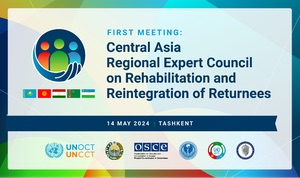 Tashkent/New York/Vienna, May 10, 2024. Tashkent/New York/Vienna, May 10, 2024.
On May 14 this year, the first meeting of Central Asia Regional Expert Council in Rehabilitation and Reintegration of Returnees from armed conflict zones will be held in Tashkent.
The Regional Expert Council is being established on the initiative of the President of Uzbekistan, Mr. Shavkat Mirziyoyev, put forward in March 2022 in Tashkent at the high-level conference “Regional cooperation of the countries of Central Asia under the Joint Action Plan for the implementation UN Global Counter-Terrorism Strategy” and supported by international partners.
READ MORE
Address by President of the Republic of Uzbekistan Shavkat Mirziyoyev at the Third Tashkent International Investment Forum[Over] 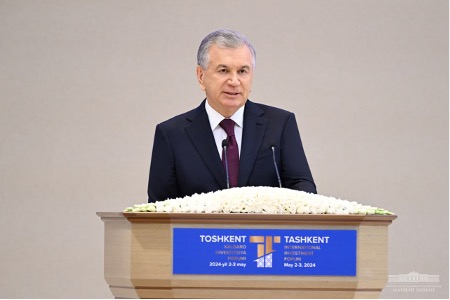 Dear participants of the forum! Dear participants of the forum!
Ladies and gentlemen!
At the outset, let me sincerely welcome you at the third Tashkent International Investment Forum.
I would like to note with pleasure that within the framework of this format, which is becoming a great annual tradition, new and reliable partners from all continents of the world are gathering in our country. Over the past three years, this Forum has provided a broad platform for enhancing collaboration, discussing pressing issues, and generating fruitful ideas and solutions to tackle the most urgent challenges.
READ MORE
The Organization of Turkic States seeks defence cooperation[Over] By Vasif HUSEYNOV, PhD, Head of Department, AIR Center, Adjunct Lecturer, ADA and Khazar Universities, Baku
Following the recent presidential elections, Azerbaijan turned its focus to the Organization of Turkic States (OTS) and its role in connecting the Turkic world, indicating that Baku does not intend to align with the West or Russia. The expansion of defence cooperation within the OTS signifies a pivotal shift in regional dynamics, with member states increasingly prioritizing mutual security and strategic alignment as well as shaping a common foreign policy agenda. The integration of Turkish defence industry companies in other member states’ defence infrastructure underscores the benefits of OTS cooperation and how the organization is emerging as a formidable force in Eurasia.
On February 14, during his inauguration speech at parliament, the re-elected President of Azerbaijan, Ilham Aliyev, outlined the country’s foreign policy priorities within the framework of regional integration projects (See EDM, February 22). He designated the Organization of the Turkic States (OTS) as the primary focus for his new term, dismissing alternative organizations without explicitly naming them (Azertag, February 14). “This is the main international organization for us because it is our family. We have no other family. Our family is the Turkic world”, he stated about the OTS.
READ MORE
Cultural Heritage of Karakalpakstan[Over] Karakalpakstan has a unique and rich cultural heritage. It includes ancient architectural and archaeological monuments, unique folklore, performing arts, ceremonies and customs, as well as traditional handicrafts.
The territory of Karakalpakstan is rich with architectural and archaeological monuments, most of which are defensive constructions, including a number of impressive fortresses along the borders of settlements. The majority of the earliest constructions date back to the IV century B.C., when Ancient Khorezm freed itself from the Achaemenid Empire.
READ MORE
Is Aliyev sincere in his peace plans?[Over] By Yeghia TASHJIAN, Beirut-based regional analyst and researcher, columnist, "The Armenian Weekly”
On January 10, 2024, Azerbaijan’s President Ilham Aliyev gave a 2.5-hour interview with local TV channels. In his interview, Aliyev not only repeated false remarks and justified the ethnic cleansing of the Armenians of Artsakh but also threatened Armenia. When it comes to delimiting and demarcating the Armenia-Azerbaijan border, he rejected the old Soviet maps proposed by Armenia, arguing, “In the 20th century, the lands of Azerbaijan were given to Armenia in parts. One day after the establishment of the Azerbaijan People’s Republic in 1918, the ancient Azerbaijani city of Erevan was handed over to Armenia. After the Sovietization in April 1920, in November, the Soviet government took the bigger part of Western Zangezur from Azerbaijan and handed it over to Armenia. By May 1969, Azerbaijani lands were given to Armenia in parts, and from an area of about 100,000 square kilometres, it dropped to 86,600 square kilometres.”
READ MORE
Azerbaijan is not de-coupling from the West[Over] By Vasif HUSEYNOV, PhD, Head of Department, AIR Center, Adjunct Lecturer, ADA and Khazar Universities, Baku
Over the past two years, since the beginning of the Russia-Ukraine conflict, Azerbaijan’s foreign and security policies have drawn varying interpretations from experts and political observers. The delicate balancing act pursued by Baku between competing global powers while safeguarding the country’s national interests and restoring its territorial integrity has appeared as an intriguing case for the studies of international relations. Amidst the evolving dynamics of regional geopolitics, Azerbaijan’s recent engagements with Western counterparts underscore its unwavering commitment to maintaining robust relations with the West. Despite the complexities of navigating relations with neighbouring powers, Azerbaijan remains steadfast in its pursuit of multilateral or, as better known in the Azerbaijani discourse, balanced approach in foreign policy.
Many experts are still debating how the Azerbaijani government succeeded to dismantle the separatist regime in Karabakh without provoking a clash with Russia, widely known to be the major protector of this regime. In November 2023, during an international conference in a European city attended by the author of this article, Armenian experts critiqued the collaboration between Azerbaijan and the Western powers (i.e., the EU and United States) in September 2023 to dismantle to the separatist regime, aiming to diminish Russia's influence in the South Caucasus. Interestingly, some of these experts now suggest that Baku has aligned with Moscow to penalize Armenia’s pro-Western government. This situation underscores the complexity of Azerbaijan's foreign policy, often susceptible to misinterpretation.
READ MORE
False expectations[Over]  By Benyamin POGHOSYAN, PhD, Chairman, Center for Political and Economic Strategic Studies By Benyamin POGHOSYAN, PhD, Chairman, Center for Political and Economic Strategic Studies
Ever since the end of the 2020 Nagorno-Karabakh war, every meeting between Armenian and Azerbaijani leaders has been portrayed as raising significant expectations of some breakthrough. In 2021, all looked to Russia, where Prime Minister Pashinyan and President Aliyev met twice in January and November. Starting from 2022, the geography of hope for a breakthrough moved to Brussels, where Pashinyan and Aliyev met in April, May, and August. Even the large-scale Azerbaijani incursion into Armenia in September 2022, less than two weeks after the August 31 trilateral summit in Brussels, did not appear to diminish the hopes that every meeting may bring Armenia and Azerbaijan closer to peace. In late September 2022, experts and policy officials started to speak about possibly signing a peace deal by the end of 2022. Even the absence of a peace agreement and the start of the blockade of Nagorno-Karabakh by Azerbaijan in December 2022 did not shake the belief in some magic after each Armenia – Azerbaijan negotiation encounter. In the first half of 2023, the center of gravity of expectations shifted towards Washington DC as Armenian and Azerbaijani foreign ministers held two rounds of negotiations in May and June. Even the disregard by Azerbaijan towards the measures of International Court of Justice on the blockade, the establishment of block post on the Lachin corridor in April, and the complete cut of Nagorno–Karabakh from the world in June 2023 somehow did not significantly decrease the hopes that Armenia–Azerbaijan negotiations would bring results soon.
READ MORE
As of January 1, 2024, 766 industrial zones have been created in Uzbekistan[Over] Ministry of Investment, Industry and Trade: In 2023, enterprises located in industrial zones manufactured products totaling 53.4 trillion soums and exported $972 million.
In 2024, 841 projects are planned to be launched in industrial zones in Uzbekistan.
In recent years, the country has been implementing a number of consistent, irreversible reforms aimed at creating an open, competitive economy, investment and industrial development, expanding foreign trade relations, and creating an attractive business environment for domestic and foreign investors.
READ MORE
- February 24, 2024 09:11AM
What Does Azerbaijan Want? [Over] By Benyamin POGHOSYAN, PhD, Chairman, Center for Political and Economic Strategic Studies
After the military takeover of Nagorno Karabakh by Azerbaijan in September 2023 and the forced displacement of Armenians, there were some hopes in Armenia and abroad that an Armenia – Azerbaijan peace agreement was within reach. These hopes were based on the assumption that Azerbaijan received everything it could dream of just a few years ago.
After September 2023, Azerbaijan controlled the entire Nagorno-Karabakh, with only a handful of Armenians remaining there. The Armenian government accepted that reality with no intention to challenge it, while the international community did nothing tangible to punish Azerbaijan or create conditions to bring Armenians back. President Ilham Aliyev proved to everyone that he was not a “golden boy” who became president just because he was the son of a prominent leader – Heydar Aliyev – and lacked basic governance skills. He succeeded where his father failed, taking control over Nagorno Karabakh and raising Azerbaijani flags in Shushi and Stepanakert.
READ MORE
- February 17, 2024 07:43AM
The Groundwork of Economic Reforms in 2024. On the situation in the economy and the tasks set[Over] 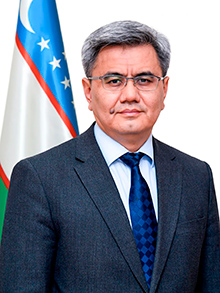 Obid Khakimov, director of the Center for Economic Research and Reforms under the Administration of the Republic of Uzbekistan
The dynamic growth of the population of Uzbekistan requires at least high outstripping economic growth rates in order to adequately meet the growing needs and improve the standard of living of people. But this requires new, more balanced and verified approaches to ensure timely achievement of the set goals.
And these new approaches to economic policy were clearly manifested in the decisions taken at the important meetings held at the beginning of the year under the chairmanship of the President of Uzbekistan Shavkat Mirziyoyev on the situation in the economy and the tasks assigned to the economic divisions for 2024.
READ MORE
- February 16, 2024 07:50AM
Uzbekistan is creating its own model for combating corruption[Over] 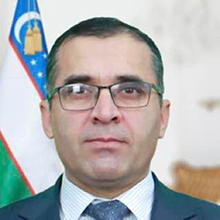 Qodir Djuraev, MP, Legislative Chamber of Oliy Majlis (national parliament) of the Republic of Uzbekistan
One of the most crucial issues in the rapidly changing world is undoubtedly corruption. The human history suggests that this phenomenon brought even the most powerful nations to the brink of collapse.
Corruption is a perilous misfortune with negative impact on the entire human race, on foundation of any state and society, economic development; it undermines rule of law and sharply weakens public confidence in government, hinders advancement of democratic institutions.
Unfortunately, this problem has not been alien Uzbekistan. Until very recently, the latter had been known as one of those countries with highest perceptions of corruption.
READ MORE
Does the EU Have any Strategy in the South Caucasus?[Over] By Yeghia TASHJIAN, Beirut-based regional analyst and researcher, columnist, "The Armenian Weekly”
From November 27-29, 2023, a delegation of the European External Action Service (EEAS) and the European Commission visited Yerevan. The EU Delegation to Armenia said the purpose of the trip was to “explore possibilities to deepen and strengthen EU-Armenia relations.” Ideas were exchanged on “how to best leverage investments to address the immediate needs and enable integration of displaced Karabakh Armenians.” They agreed to “explore areas to strengthen cooperation between the EU’s Border and Coast Guard Agency (Frontex) and Armenia” and continue dialogue on matters of security and defence, such as the EU’s promise to explore non-lethal support to the Armenian military via the European Peace Facility. The EU representatives announced their support for the “normalization of relations between Armenia and Azerbaijan based on the principles of mutual recognition of territorial integrity and inviolability of borders based on the 1991 Almaty Declaration.
READ MORE
Two years of war in Ukraine: What should the South Caucasus expect now?[Over] By Benyamin POGHOSYAN, PhD, Chairman, Center for Political and Economic Strategic Studies
In just one month, the world will mark the second anniversary of the Russian-Ukrainian war. During this period, assessments on the course and possible outcomes of the war underwent significant changes several times. At the end of February 2022, almost everyone was sure that the war would end very quickly with Russia’s victory, bringing a change of government in Ukraine, with President Volodymyr Zelensky replaced by a pro-Russian figure. Already in September 2022, after successful Ukrainian counter-offensives in the Kherson and Kharkiv regions, expectations changed dramatically. This time, many were sure of Russia’s imminent defeat.
READ MORE
Strengthening Uzbekistan's international political and economic positions in the context of chairing the Turkic States Organization[Over] 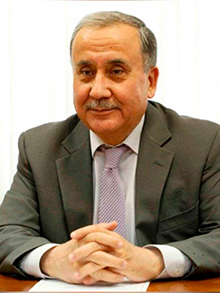 Alisher Kadirov, Head of the Department of the Institute of Strategic and Regional Studies of the Republic of Uzbekistan Alisher Kadirov, Head of the Department of the Institute of Strategic and Regional Studies of the Republic of Uzbekistan
In November of this year, Uzbekistan's chairmanship in the Turkic States Organization (OTS) concluded. It was marked by significant achievements that played a substantial role in strengthening the country's international political and economic positions. Throughout its chairmanship, Uzbekistan actively promoted initiatives aimed at enhancing Turkic cooperation, developing trade and economic ties, and expanding mutually beneficial relations with member countries of the organization.
READ MORE
Strained Relations Between Azerbaijan and the West[Over] By Vasif HUSEYNOV, PhD, Head of Department, AIR Center, Adjunct Lecturer, ADA and Khazar Universities, Baku
On November 16, Baku cancelled a meeting between the foreign ministers of Armenia and Azerbaijan scheduled to take place on November 20 in Washington. The Azerbaijani Foreign Ministry asserted that, under the current circumstances, it is not possible to proceed with US-mediated peace negotiations. The statement alluded to US Assistant Secretary of State James O’Brien’s comments during “The Future of Nagorno-Karabakh” hearing of the House Foreign Affairs Committee, Subcommittee on Europe on November 15. The hearing highlighted a growing break between Baku and Washington on how to proceed with the peace talks. Azerbaijan has called for “more regional solutions to regional problems,” while the United States and European Union hope to maintain influence over negotiations between Baku and Yerevan.
READ MORE
- December 20, 2023 16:22PM
Strategic Abstention: The ‘Axis of Resistance’ Deliberate Inaction in Gaza[Over]
 By Fuad SHAHBAZOV, Baku-based independent regional security and defence analyst By Fuad SHAHBAZOV, Baku-based independent regional security and defence analyst
Amid the escalating Gaza war, a striking absence marks the regional conflict landscape: the non-involvement of the ‘Axis of Resistance,’ including Iran and its proxies. Nearly six weeks into the war, these forces have consistently communicated their decision to remain on the sidelines. This inaction comes into sharp focus against the backdrop of Iran’s strategy to leverage non-state actors like Hezbollah and Hamas in its proxy warfare. While Hezbollah’s leader, Hassan Nasrallah, clarified their stance in a much-anticipated speech a month into the conflict, the impact of this abstention is profound. Israel, grappling with internal divisions and security vulnerabilities heightened by Hamas’s attacks, finds itself in a precarious position not seen in decades.
READ MORE
The Choice in the South Caucasus Should Not Be Either Or[Over] By Vasif HUSEYNOV, PhD, Head of Department, AIR Center, Adjunct Lecturer, ADA and Khazar Universities, Baku
On 15 November, during a hearing before the United States Congressional Committee on Foreign Affairs regarding the future of Karabakh, James O’Brien, Assistant Secretary of State for European and Eurasian Affairs, made a statement that stirred significant concern in Azerbaijan. While addressing the Armenia-Azerbaijan disputes and developments in the South Caucasus, he asserted, “A future that is built around the access of Russia and Iran as the main participants in the security of the region, the South Caucasus, is unstable and undesirable including both for the governments of Azerbaijan and Armenia. They have the opportunity to make a different decision now”. This statement comes in the wake of a series of developments indicating a shift towards a new security order in the South Caucasus.
READ MORE
Location, Location, Location! Or Maybe Not![Over] By Benyamin POGHOSYAN, PhD, Chairman, Center for Political and Economic Strategic Studies
It may appear that the primary obstacle to the signature of a peace treaty between Armenia and Azerbaijan is the different views of the sides on where to resume and finalize the process. Armenia wants to do that in Western platforms, while Azerbaijan wants to return to the Russian platform, use the 3+2 format, or have direct negotiations without any mediators. In reality, the roots of the current situation are more profound than simple geopolitical choices of venue.”
The military takeover of the self–proclaimed Nagorno Karabakh Republic by Azerbaijan has raised hopes that it may facilitate the signature of the peace agreement between Armenia and Azerbaijan. The logic behind this thinking was clear – the future of Nagorno Karabakh, and the fate of the Armenians living were the primary obstacles on the road toward peace. As all Armenians were forced to leave the region, and NKR de facto president Samvel Shahramanyan signed a decree about the dissolution of the republic by the end of 2023, it seemed that the stage was set for quick signature of the Armenia – Azerbaijan peace treaty, and then a push forward in the Armenia – Turkey normalization process.
READ MORE
Turkey Supports Azerbaijan’s Operation in Karabakh[Over]
By Fuad SHAHBAZOV, Baku-based independent regional security and defence analyst
On September 19, Azerbaijan launched an “anti-terrorist operation” in the Karabakh region against armed separatist forces. The operation followed three years of largely unproductive peace talks between Armenian and Azerbaijan following the Second Karabakh War in 2020. The clashes ended in a ceasefire after only one day due to the separatist regime’s limited military-technical capacity in resisting the well-equipped Azerbaijani Armed Forces.
Baku’s allies were quick to applaud the move. For example, Turkish President Recep Tayyip Erdogan, during a joint news conference with Azerbaijani President Ilham Aliyev, declared, “It is a matter of pride that the operation was successfully completed in a short period of time, with utmost sensitivity to the rights of civilians”. Turkey has traditionally been a staunch ally of Azerbaijan, and the recent military operation to reclaim Karabakh plays into Ankara’s regional interests, especially regarding the future development and opening of the Zangezur Corridor.
READ MORE
- November 28, 2023 07:40AM
|
|




 Archive