
Economic Implications of the Washington Declaration for Azerbaijan and Armenia
 By Aytaс Mahammadova, Energy Security Expert affiliated with the Caspian-Alpine Society By Aytaс Mahammadova, Energy Security Expert affiliated with the Caspian-Alpine Society
The Washington Declaration of August 2025 marks a turning point for the South Caucasus, unlocking unprecedented economic opportunities through peace, open borders, and the TRIPP corridor. Enhanced trade, investment, and energy cooperation promise regional integration, job creation, and sustainable growth, positioning Azerbaijan, and Armenia as key hubs in global value chains.
The historic Washington Declaration of August 8, 2025, represents a transformative moment not only for regional stability but for the economic prosperity of the entire South Caucasus region. The establishment of sustainable peace between these two nations unlocks unprecedented economic opportunities that extend far beyond the immediate benefits of ending hostilities, creating a foundation for long-term economic integration, infrastructure development, and regional cooperation that could serve as a model for conflict resolution worldwide. The economic dividends of peace are multifaceted, encompassing direct benefits from increased foreign investment, enhanced trade relationships, and the opening of previously closed borders, as well as indirect benefits from improved regional stability, and the ability to redirect resources from defence to productive economic activities. READ MORE
- EGF Editor |
Published on EGF: 07.10.2025
| Markets
-
Digitalization Strategies along the Middle Corridor: Transforming Trans-Eurasian Logistics  By Vusal GULIYEV, Policy Advisor at the Center of Analysis of International Relations and Head of Shanghai Office at AZEGLOB Consulting Group By Vusal GULIYEV, Policy Advisor at the Center of Analysis of International Relations and Head of Shanghai Office at AZEGLOB Consulting Group
With the Middle Corridor emerging as a secure and strategic land- and sea-based trade route, major stakeholders are making extensive efforts to develop the necessary infrastructure for further modernization and digitalization of such a complex multimodal trans-regional pathway. Nevertheless, government-led digital transformation strategies have enabled the political leadership of the involved states to implement advanced digital solutions, seamlessly integrating multiple services and optimizing cargo flows within the Sino-European trade network in a secure and intelligent manner. To meet international market demands and strengthen integration into the global transport network, the development of technologically advanced facilities has become a top priority in ensuring both the resilience and sustainability of the Middle Corridor. As geopolitical and economic dynamics continue to evolve dramatically, a strategic focus on digital transformation, automation, and intergovernmental coordination will become increasingly instrumental in positioning the Middle Corridor as a key pillar of trans-Eurasian trade, reinforcing its role as a secure, efficient, and future-ready trade and transportation corridor. READ MORE
- EGF Editor |
Published on EGF: 24.07.2025
| Markets
-
Azerbaijan’s Contribution to Regional Connectivity By Vusal GULIYEV, Head of Shanghai Office at AZEGLOB Consulting Group and Policy Expert at the Baku-based Topchubashov Center
Azerbaijan is transforming into a key regional hub through strategic investments in transportation infrastructure, particularly along the Middle Corridor. Expanding rail, maritime, and digital connectivity, the country enhances trade between Europe and Asia. Projects like the Baku-Tbilisi-Kars railway and Port of Baku solidify Azerbaijan’s role in global logistics and economic diversification.
Azerbaijan’s focus on improving transportation infrastructure has been central to its role in enhancing regional connectivity, especially in the broader context of linking Europe and Asia. As part of the effort to revive the historic Silk Road, significant progress has been made in expanding trade and transportation networks—particularly rail and maritime routes that facilitate intercontinental trade along the east-west corridor. This expansion is a critical aspect of Baku’s long-term socio-economic growth strategy. Azerbaijan has consistently prioritized unlocking the trade potential of the Trans-Caspian routes, investing in advanced logistics and transportation infrastructure, including rail lines, highways, and seaports, supported by both domestic and international development initiatives. READ MORE
- EGF Editor |
Published on EGF: 06.02.2025
| Markets
-
The awakening lion: the era of renewal  Hey, great Turan, land of lions! Hey, great Turan, land of lions!
What has become of you? What are these days you endure now?
Oh, glorious cradle of Genghis, Timur, Oghuz, and Attila!
Where have the esteemed seats you once held gone?..
Abdurauf Fitrat
An American politician once said of the current life and fate of the Central Asian region: ‘They are neither post-Soviet nor post-communist countries now’.
Today no specialist knowledge is needed to understand this idea, which suggests that such labels are outdated in the research community. For example, ten to fifteen years ago the political behaviour of Central Asian societies – neighbours for thousands of years – was prone to national separatism, mutual dislike and latent hostility, but today they have undergone a remarkable transformation. Ideologues and ordinary Central Asians only a couple years ago endeavoured to prove their superiority, their antiquity and, for these very reasons, their greater belonging to the historical and cultural heritage of the region. Though they still might hurl some sharp insults at each other, now they have become united neighbours.
READ MORE
- EGF Editor |
Published on EGF: 21.08.2024
| Markets
-
CERR: IMF Estimates Uzbekistan's GDP at $101.6 Billion 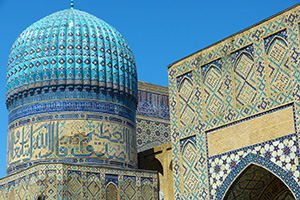 According to the IMF's assessment, the nominal GDP of the Republic of Uzbekistan in 2023 increased by 125.6 trillion sums ($10.7 billion) and amounted to 1,192.2 trillion sums ($101.6 billion). According to the IMF's assessment, the nominal GDP of the Republic of Uzbekistan in 2023 increased by 125.6 trillion sums ($10.7 billion) and amounted to 1,192.2 trillion sums ($101.6 billion).
CERR hosted a discussion among experts and academics regarding a study conducted by the Statistics Agency in collaboration with the IMF. The primary goal of this study was to assess the size of the unobserved economy in Uzbekistan and examine its impact on other macroeconomic indicators. READ MORE
- EGF Editor |
Published on EGF: 05.08.2024
| Markets
-
Uzbekistan: A Course for Continuing Intensive Reforms in Youth Policy Bekzod Jurabayev
Chief scientific researcher of the Institute of Legislation and Legal Policy under the President of the Republic of Uzbekistan, Chairman of the Council of Young Scientists of the Institute
Uzbekistan is a country of youth. According to statistical data, about 60% of Uzbekistan's population is under the age of 30. Thus, over 18 million residents of Uzbekistan are young people, and by 2040 this number could reach 25 million. This creates unique opportunities and specific challenges for the state in terms of providing education, employment, and social integration for the youth. On February 21 of this year, a Presidential Decree approved the State Program for the implementation of the "Uzbekistan - 2030" Strategy in the Year of Support for Youth and Business. It outlines a number of tasks aimed at addressing the problems faced by young people and realizing their potential.
READ MORE
- EGF Editor |
Published on EGF: 05.07.2024
| Markets
-
Uzbekistan: the fight against corruption is a continuous process Nilufar Doniyorkhodjaeva,
Head of Department Development Strategy Center,
Tashkent, Uzbekistan
Uzbekistan has been undergoing a transformational journey since it changed political leadership in 2016. The nation is implementing extensive reforms aimed at spanning anti-corruption measures, business climate enhancements, judicial reforms, improving labour conditions, administrative efficiency, protection of human rights, and good governance.
READ MORE
- EGF Editor |
Published on EGF: 22.06.2024
| Markets
-
Azerbaijan invites business to help reconstruct Nagorno-Karabakh
 By Fuad Shahbazov, Baku-based independent regional security and defence analyst By Fuad Shahbazov, Baku-based independent regional security and defence analyst
Since its victory in the Second Karabakh War with Armenia in 2020, the Azerbaijani government has begun a massive reconstruction of the former war-torn region. Azerbaijan has demonstrated a firm commitment to reconstructing Nagorno-Karabakh, which was largely neglected and left unattended for three decades. According to the Azerbaijani state media, between 2020 and 2023, the authorities have allocated AZN12 billion to Karabakh's reconstruction/rebuilding process and an additional AZN4 billion AZN in 2024. Overall, the state programme dubbed “Great Return” envisions the allocation of AZN30.5 billion from the state budget between 2022 and 2026. Considering the fact that the reconstruction is a lengthy and costly process, at the first stage, Azerbaijan prioritized the reconstruction of larger urban areas such as Aghdam, Lachin, Shusha, Fuzuli, and Zangilan in order to initiate the steady return of former Azerbaijani IDPs, making those areas economically attractive for potential local and foreign investors. READ MORE
- EGF Editor |
Published on EGF: 31.05.2024
| Markets
-
Assessment of Child Poverty in the Republic of Uzbekistan Center for Economic Research and Reforms (CERR), together with UNICEF, assessed the level of monetary child poverty in Uzbekistan. The study analyzed the impact of the social protection system on the poverty level. According to the calculations, in the absence of social payments, the child poverty rate in the country would have increased by 1.6 times.
April 1, 2024. The Center for Economic Research and Reforms (CERR), together with the United Nations Children's Fund (UNICEF) in Uzbekistan, conducted an assessment of the level of poverty among the child population, as well as an analysis of the effectiveness of the social protection system.
READ MORE
- EGF Editor |
Published on EGF: 02.04.2024
| Markets
-
Cultural Heritage of Karakalpakstan Karakalpakstan has a unique and rich cultural heritage. It includes ancient architectural and archaeological monuments, unique folklore, performing arts, ceremonies and customs, as well as traditional handicrafts.
The territory of Karakalpakstan is rich with architectural and archaeological monuments, most of which are defensive constructions, including a number of impressive fortresses along the borders of settlements. The majority of the earliest constructions date back to the IV century B.C., when Ancient Khorezm freed itself from the Achaemenid Empire.
READ MORE
- EGF Editor |
Published on EGF: 20.03.2024
| Markets
-
|
|




