
Trends and Factors Contributing to the July Border Clashes Between Azerbaijan and Armenia  By Fuad Shahbazov, Baku-based independent regional security and defence analyst
On July 12, the Azerbaijani border region of Tovuz and the Tavush region on the Armenian side became the new epicentre of clashes between the armed forces of the two states, with the involvement of heavy artillery and unmanned aerial drones. The intensive exchanges of fire resulted in the deaths of over a dozen military personnel and the destruction of local infrastructure on both sides. On July 14, Azerbaijan’s Ministry of Defense notably confirmed the deaths of Major General Polad Hashimov and Colonel Ilgar Mirzayev as a result of artillery shelling by Armenian military units. READ MORE
- EGF Editor |
Published on EGF: 22.07.2020
| Security
-
Why is Lavrov Pushing for a Karabakh Agreement?  By Benyamin Poghosyan, PhD, Chairman, Center for Political and Economic Strategic Studies
As the world mobilizes to combat the COVID - 19 it sometimes appears that the pandemic has stopped geopolitics. Many urgent topics of international relations have been put aside. However, sooner or later the world will return to normality, and the old problems will re-emerge. Coronavirus has not decreased US - China rivalry, to the contrary the Post COVID-19 world will likely be characterized by a growing confrontation between China and the US. Among the problems waiting their turn to re-emerge in the geopolitical landscape in the post-Soviet space is the Nagorno Karabakh conflict. READ MORE
- EGF Editor |
Published on EGF: 30.04.2020
| Security
-
Armenia and Azerbaijan: What’s Next After Bratislava? By Benyamin Poghosyan, PhD, Executive Director, Political Science Association of Armenia
On December 4, 2019, Armenian and Azerbaijani foreign ministers held their last meeting for this year on the margins of the OSCE Ministerial Conference in Bratislava. According to Armenian and Azerbaijani sources, the current stage of negotiations, the necessity of ceasefire consolidation and the implementation of confidence-building measures were among the key topics of discussion. The Foreign Minister of Armenia highlighted the modest achievement reached within the framework of the agreement on preparing the populations for peace, through the implementation of an exchange program for media representatives from Armenia, Artsakh and Azerbaijan. READ MORE
- EGF Editor |
Published on EGF: 10.12.2019
| Security
-
Pashinyan's New Tactic: 'Tougher in Public, Softer at the Negotiation Table' 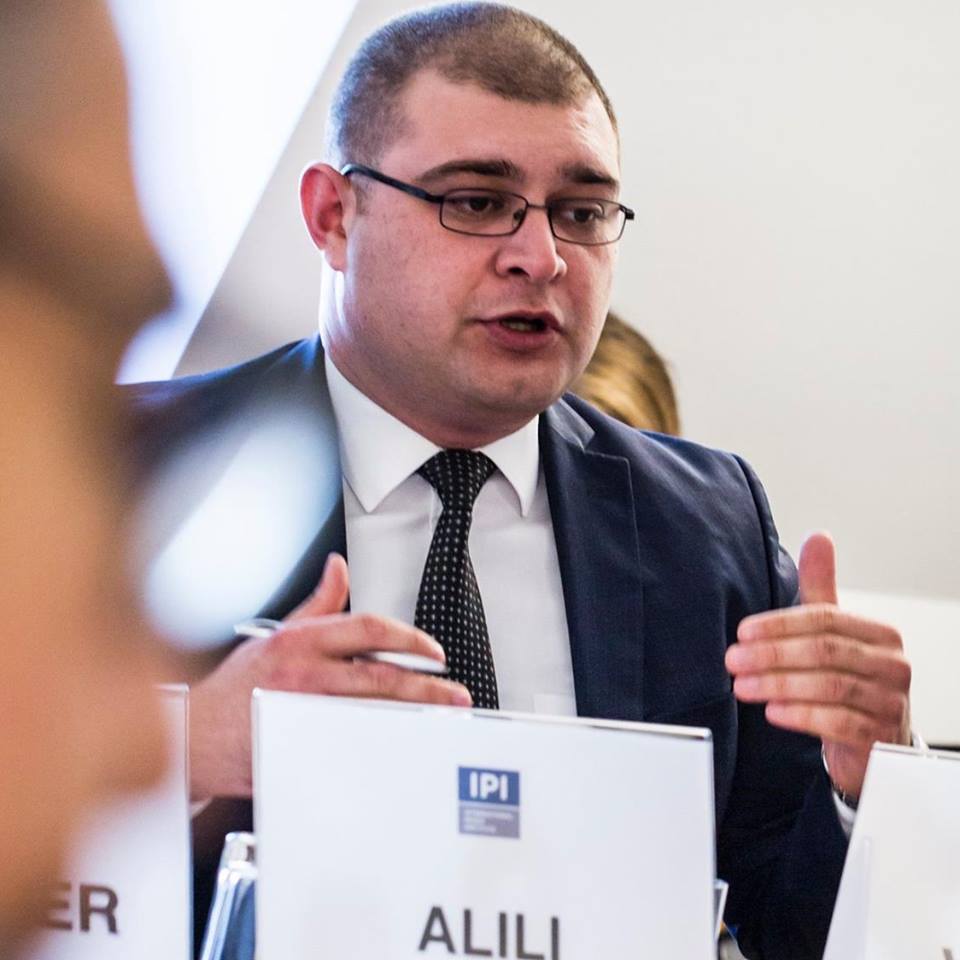 By Ahmad Alili, Head of Research, Caucasus Policy Analysis Center, Baku
The next meeting between the Ministers of Foreign Affairs of Armenia and Azerbaijan will be held in the upcoming days, most likely during the UN General Assembly in New York. This is the first meeting following Armenian Prime Minister Nikol Pashinyan's "Unification" speech on 5 August in Nagorno-Karabakh, which contained an unprecedented hardline rhetoric, hurting both 'Track1' and 'Track2' processes, which shocked Baku. Following the speech, Azerbaijani officials called for a reaction from the OSCE Minsk Group co-chairs. READ MORE
- EGF Editor |
Published on EGF: 24.09.2019
| Security
-
‘Game of Thrones Moment' for Azerbaijan in Nagorno-Karabakh
By Ahmad Alili, Head of Research, Caucasus Policy Analysis Center, Baku
In the real world, we do not have dragons, faceless men, red woman, white walkers or resurrection from the dead. Yet, the public policy challenges facing advisers in the famous Game of Thrones (GoT) TV show mirror those that political advisors to real governments face. We draw parallels to the real world in the way the show's decision-makers and advisers face the same limitations of time, resources and information bias. READ MORE
- EGF Editor |
Published on EGF: 01.07.2019
| Security
-
NATO and Georgian–American Military Relations 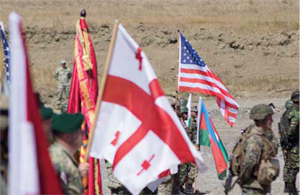 By Eugene Kogan, Tbilisi-based defence and security expert
Since the 2003 Rose Revolution, Georgia has become a staunch and dependable non-NATO ally of the United States in the South Caucasus. Georgian-American bilateral military relations have become stronger and have climaxed in November 2017. With 870 soldiers per capita, Georgia is the leading donor of troops in Afghanistan. This is highly appreciated by the United States. READ MORE
- EGF Editor |
Published on EGF: 13.06.2019
| Security
-
Non-alignment Policy as a Principle of Shaping the National Security of Azerbaijan  By professor Sadi Sadiyev Saleh, War College of the Armed Forces, Republic of Azerbaijan
The emergence of a bipolar world and the formation of two military blocks (NATO and the Warsaw Pact) after the Second World War ushered in an intense rivalry between different countries. Finding an effective grand strategy to survive between two hostile powers inevitably requires a balanced policy. In this context, the underdeveloped countries felt the need to join efforts for the common defence of their interests, to strengthen their independence and sovereignty and to express a strong commitment for peace by declaring themselves as “non-aligned” from either of the two nascent military blocks. READ MORE
- EGF Editor |
Published on EGF: 14.02.2019
| Security
-
Armenian-Azerbaijani Talks on Karabakh Appear Positive Even as Conflict Continues to Simmer Underneath  By Eduard Abrahamyan, Wider Black Sea & Central Asia regional security analyst
The foreign ministers of Armenia and Azerbaijan held four-hour-long consultations in Paris, on January 16, under the auspices of the Organization for Security and Cooperation in Europe’s (OSCE) Minsk Group. The joint statement to come out of the meeting included telling language. In particular, the two sides acknowledged the need for “concrete measures to prepare the populations for peace”. READ MORE
- EGF Editor |
Published on EGF: 14.02.2019
| Security
-
Ceasefire Violations Down as Armenia and Azerbaijan Implement South Caucasus Study Group Recommendation By EGF Editorial Staff
Since the end of October 2018, a new operative communication line (crisis hotline) has been established between Armenia and Azerbaijan, two countries that have been at war over the status of Nagorno-Karabakh (NK), a region recognized as Azerbaijani by the International Community, but inhabited by a majority Armenian population.
According to official sources from both sides, the level of military tension on the Line of Contact (LoC) between the conflicting parties has significantly decreased (from about 90 reports of ceasefire breaches/day, to about 20 reports/day). The opening of this new communication channel had been agreed several weeks before by the president of Azerbaijan, Ilham Aliyev, and the Prime-Minister of Armenia, Nikol Pashinyan, during an informal meeting held in the margins of the CIS summit in Dushanbe (Tajikistan) on 27-28 September 2018. READ MORE
- EGF Editor |
Published on EGF: 11.12.2018
| Security
-
Armenia’s Unique Geopolitical Reality: An Asset for NATO’s Stability Projection Southwards  By Vahagn AFYAN, Deputy head of Mission, Embassy of the Republic of Armenia to Poland
How can Armenia’s geopolitical context contribute to stability in its immediate vicinity and in NATO’s Southern Neighbourhood?
This paper will consider Armenia’s geopolitical location from the perspective of NATO’s Southern neighbourhood and examine its cohesion, dependability and potential contribution to NATO’s intended task of projecting stability. With regard to NATO and its relationship with Armenia, the first step is to create a better understanding of the particularities of the country and its policy. Increased knowledge of the ongoing integration processes affecting various political, economic and military aspects, as well as internal political developments, will allow a full exploration of the potential for strategic partnership between the Alliance and Armenia. READ MORE
- EGF Editor |
Published on EGF: 18.09.2018
| Security
-




