A Paradigm Based upon the Madrid Principles Is Not Acceptable for either Armenia or Karabakh  By Benyamin Poghosyan, PhD, Executive Director, Political Science Association of Armenia By Benyamin Poghosyan, PhD, Executive Director, Political Science Association of Armenia
Since the victory of the "Velvet Revolution" in Armenia, the key foreign policy issue facing the new Armenian authorities is the Karabakh conflict. The negotiation process has been stalled since the failed Kazan summit in June 2011, and the April 2016 four day war made any possible movement forward even less likely. The negotiations after April 2016 were focused on the launch of confidence building measures including the establishment of the ceasefire violations investigation mechanisms and the increase of the OSCE monitoring mission personnel. However, even these modest goals were difficult to achieve as Azerbaijan was urging for a start of "substantial" negotiations on issues of territories and status, otherwise perceiving the confidence building measures as a way to cement the current status quo. READ MORE
The Seventh Corridor of the Belt and Road Initiative By Benyamin Poghosyan, PhD, Executive Director, Political Science Association of Armenia
Since the launch of Chinese “One Belt, One Road (OBOR)” initiative in September 2013 later renamed as "Belt and Road Initiative (BRI)", the bulk of academic research has been devoted to the evaluation of the suggested land and maritime routes of this gigantic project. In recent years the main focus of the Western and especially American expert community was the link between BRI and Chinese foreign policy strategy with more emphasize of possible negative ramifications of the project for the states involved. The terms such as “debt diplomacy” or “debt trap” were disseminating more and more in both academic and political circles. READ MORE
Bolton's Caucasian Tour and Russia's Reaction  By Eduard Abrahamyan, Wider Black Sea & Central Asia regional security analyst By Eduard Abrahamyan, Wider Black Sea & Central Asia regional security analyst
On October 24-26, a U.S. State Department delegation headed by National Security Adviser Ambassador John Bolton visited the South Caucasian republics after talks in Moscow. The delegation’s visit to Azerbaijan, Armenia and Georgia was immediately dubbed a reinvigoration of U.S. policy towards the Caucasus and a pragmatic reengagement with the conflicted region. Bolton appeared to refine the evolving U.S. priorities with each country, categorizing them in accordance with political capabilities, shared interests and the roles that Georgia, Azerbaijan and Armenia respectively seek in relations with the West. The visit, however, caused an angry reaction from Moscow, especially given the issues Bolton raised in Yerevan. READ MORE
Could Vladimir Putin’s Visit to Azerbaijan Shift the Regional Balance of Power?
 By Fuad Shahbazov, Baku-based independent regional security and defence analyst By Fuad Shahbazov, Baku-based independent regional security and defence analyst
Russian President Vladimir Putin paid a surprise official visit to Azerbaijan, on September 27. The formal reason for his arrival was to hold talks with Azerbaijani President Ilham Aliyev as well as to jointly attend the Ninth Interregional Russia-Azerbaijan Forum. Local mass media in both Azerbaijan and Russia described Putin’s visit as a next significant step in improving the strategic partnership between the two countries. READ MORE
- December 11, 2018 06:35AM
China – US Relations: The Need for Talks to Overcome Misperceptions By Benyamin Poghosyan, PhD, Executive Director, Political Science Association of Armenia
As experts and politicians all over the world seek to grasp the key contours of emerging world order, sometimes dubbed the Post-Post-Cold War Era, there are few things agreed upon by the vast majority of them. Only one issue is clear: US – China relations will define the course of the 21st century. Will the US be able to accommodate the rise of China, keeping its role as a top global power? Will China be ready to be a part of the Western-created world order? Or will it try to do that, simultaneously amending it to Beijing’s goal to establish China as a centered global order? READ MORE
Emerging Global Order: Implications for the Regional Geopolitics By Benyamin Poghosyan, PhD, Executive Director, Political Science Association of Armenia
The current phase of the international relations can be best characterized by one word – transition. The Post-cold war order is rapidly disappearing creating strategic ambiguity for all actors. The U.S. hegemony is over or close to over despite the fact that militarily Washington will be far from the reach for several decades to come. However, growing national debt, looming crisis in social security and Medicare systems, uncontrolled migration, growing populism, and partisan fighting does not bode well for the future U.S. dominance. READ MORE
- November 26, 2018 20:36PM
Tensions Rising In & Around Iran By Benyamin Poghosyan, PhD, Executive Director, Political Science Association of Armenia
President Trump’s decision to pull out from the Iranian nuclear deal has significantly increased tensions in and around Iran. The return of “regime change” policy will have profound implications on Iran and the Middle East. The Iranian economy is in steep decline with the sharp devaluation of the Iranian Rial and large-scale protest rallies in different regions. The rising prices of consumer products, shortages of water and problems related with mismanagement are fuelling the protests. READ MORE
Is America Changing the European Power Play?  By George Vlad Niculescu, Head of Research, the European Geopolitical Forum
When at the NATO summit in Brussels, on 25 May 2017, president Donald Trump didn’t say that one sentence committing America to continue standing by article 5 of the NATO Charter, he raised eyebrows across Europe. At that time, everyone remembered that candidate Donald Trump raised serious suspicions that his presidency might lead to the end of the West, as we knew it. Nevertheless, everyone who has ever believed in the strength of the Trans-Atlantic link and in the soft power of the Euro-Atlantic values secretly hoped that the end of Pax Americana in Europe wasn’t that close. READ MORE
Pashinyan's timely visit to Georgia By Benyamin Poghosyan, PhD, Executive Director, Political Science Association of Armenia
Armenian-Georgian relations are friendly, regardless of some tensions under the surface. During his visit to Georgia, prime-minister Nikol Pashinyan should focus on pragmatic issues related to transport corridors.
Georgia plays a key role in Armenian foreign policy. Given the absence of relations with Azerbaijan and Turkey Georgia is one of only two gateways for Armenia to connect with the world. Approximately 70 percent of Armenian foreign trade passes through Georgia. The country is the only channel for Armenian business to reach both Russia - a critical market for Armenian exports, and Europe - another key spot for Armenian business especially after 2017 November signature of Comprehensive and Enhanced Partnership Agreement with the EU. READ MORE
Deciphering Russia’s Messages in the Post-Soviet Space By Benyamin Poghosyan, PhD, Executive Director, Political Science Association of Armenia
Since the Russia – Georgia war in 2008 one of the key geopolitical features of the post–Soviet space has been the Russian effort to reinstall its influence over former Soviet republics and diminish the role of the Euro-Atlantic community. The 2008 war, the 2014 Crimea crisis, and the ongoing conflict in Eastern Ukraine are examples of Russian use of hard power to pursue geopolitical interests in the region. However, one of the key tools in the Russian arsenal to regain its dominant position within the post–Soviet world is the effective use of propaganda and information campaigns against the Euro-Atlantic institutions. READ MORE
Russian–Turkish Rapprochement: Implications for the South Caucasus By Benyamin Poghosyan, PhD, Executive Director, Political Science Association of Armenia
Russia - Turkish relations are going through tremendous transformations. Just two and half years ago, Turkey was a target of harsh Russian criticism, with Moscow accusing Ankara of supporting the Islamic State, assisting various other terrorist groups deployed in Syria, and oil smuggling. However, since summer 2016, bilateral relations have improved significantly. Syria is a stark example of that thaw, seeing Russia tacitly supporting the Turkish incursion into Northern Syria in summer 2016 as well as turning a blind eye to the Turkish offensive in Afrin. READ MORE
Raising Tensions Around Iran: Should Armenia be Concerned? By Benyamin Poghosyan, PhD, Executive Director, Political Science Association of Armenia
In recent months Iran has been facing both internal and external challenges. The wave of demonstrations shook up the Islamic Republic in late December – early January 2017-2018. The expert community still has contradicting views for the main reasons of the protest movement: internal struggle between conservatives and reformists, outside meddling with main arrows targeting the US, Israel and Saudi Arabia as potential sponsors, spontaneous movement based on economic hardships and rampant corruption. READ MORE
The Current State and the Prospects of Armenia - Turkey Relations  By Benyamin Poghosyan, PhD, Executive Director, Political Science Association of Armenia By Benyamin Poghosyan, PhD, Executive Director, Political Science Association of Armenia
Since gaining independence in 1991 Armenia has faced tough challenges in building relations with two of its four neighbors – Azerbaijan and Turkey. Relations with Azerbaijan were mainly influenced by Karabakh conflict. Armenia was supporting Nagorno Karabakh Armenians to defend themselves against Azerbaijani aggression. The end of hostilities in 1994 and the signature of a ceasefire agreement did not bring up peace, and negotiations are still underway, for the last 23 years, to find a mutually accepted settlement. READ MORE
The Russian Hug is Eternal By By Benyamin Poghosyan, PhD, Executive Director, Political Science Association of Armenia
Russian understanding of geopolitics believes in the decisive role of hard power and military might as a key component of both domestic and foreign policy. Russian-led integration projects, aim to include as many post-soviet states as possible, and once in never let them go out.
In recent years one of the main issues in post-Soviet geopolitics is the competition between Russian and EU promoted integration projects. The Eastern Partnership promoted by the EU offers closer ties with Europe through Association Agreements and the establishment of Free Trade Areas, though with no guarantees of membership into the EU. The Russian-led Eurasian Economic Union promotes integration between former Soviet Union states. READ MORE
A new crisis in US-Iran relations is unwelcome in the South Caucasus By Benyamin Poghosyan, PhD, Executive Director, Political Science Association of Armenia
President Trump's decertification of the Iran deal will put in jeopardy a number of regional projects.
One of the key events shaping the geopolitics of the Middle East in the coming days most probably will be the US President Donald Trump's decision to decertify Iran nuclear deal (formally called the Joint Comprehensive Plan of Action - JCPOA), signed in 2015. President Trump has been a vocal opponent of the deal since he entered the Presidential race, and continued his tough stance on Iran after his election. The latest vivid example of this approach was President Trump's speech at the 72 Session of the UN General Assembly in September. READ MORE
Fall-out from Trump's Middle East Policy in the South Caucasus? By Benyamin Poghosyan, PhD, Executive Director, Political Science Association of Armenia
Trump's hard line approach towards Iran may derail ambitious plans to develop North-South trade and transport corridors in the South Caucasus.
On May 20, 2017, US President Donald Trump arrived in Saudi Arabia on his first stop of his week-long international trip. The new US President chose the Saudi visit as a focal point for presenting key pillars of his Middle East policy. Delivering a speech to the Arab - Islamic - American Summit, President Trump stressed the significance of the fight against terrorism and the important role regional states have to play in that struggle. Another key point of his speech was tough criticism directed against Iran. READ MORE
Is US–Russia Rapprochement Still Possible?
By Benyamin Poghosyan, PhD, Executive Director, Political Science Association of Armenia
The perspectives of the US – Russia relations under the Trump Administration is one of the key foreign policy issues hotly debated in political and expert circles both in the US, Russia and elsewhere. The steep deterioration of bilateral relations since the start of the third Presidential term of Vladimir Putin brought back into the scene almost forgotten terminology of “Cold War”, “containment”, “great power rivalry”. READ MORE
Turkey will reconcile with Syria
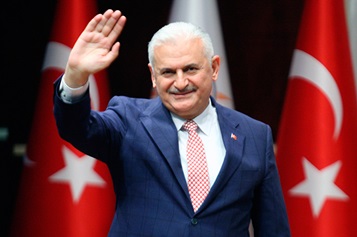
Prime Minister Binali Yildirim said that Turkey is heading to restore relations with Damascus. "We will expand our circle of friends. We have already begun to do so. We normalized our relations with Israel and Russia, and now, I am sure, we will do the same with Syria. We need it to be done", - said Yildirim, speaking on Turkish television. READ MORE
Turkey-Armenia Relations after Turkey’s Elections  Armen Grigoryan, Armen Grigoryan,
EGF Guest Contributor
The outcome of Turkey’s recent parliamentary elections may partly reduce tensions in relations with Armenia, stopping the mounting hostile rhetoric of recent months. A normalization of bilateral relations should not be expected at this stage, but the trend of increasing cooperation in the humanitarian area, and in culture, tourism, and the media in recent years will likely continue. At the same time, some policies may need READ MORE
This article was first published by the "Central Asia-Caucasus Analyst, Central Asia-Caucasus Institute & Silk Road Studies Program Joint Center" which holds the copyright for it.
Russia Seeks Increased Control of Karabakh Resolution After Clashes Between Armenia and Azerbaijan*
Armen Grigoryan,
EGF Guest Contributor
After the recent clashes between Armenian and Azerbaijani forces, Russia’s leadership attempts to act more decisively in order to compromise the OSCE Minsk Group mediation efforts and to compel Armenia and Azerbaijan to accept Russia’s special role in the region. Russia’s proximity and strong influence over political elites and societies gives it an advantage over other Minsk Group co-chairs – the U.S. and France. However, the lack of security guarantees and economic perspectives may induce Armenia to start reviewing its attitudes concerning relations with different international actors and regional integration frameworks. READ MORE
This article was first published by the "Central Asia-Caucasus Analyst, Central Asia-Caucasus Institute & Silk Road Studies Program Joint Center" which holds the copyright for it.”
- November 25, 2014 20:55PM
Armenia's Increasing Dependence on Russia*
By Armen Grigoryan,
EGF Guest Contributor
Armenia’s Russia-imposed self-isolation from the democratic international community continues and threatens to have economic and social consequences for the country. Russia is increasing its pressure in the South Caucasus, raising the specter of regional destabilization. While Russia already controls the most important sectors of Armenia’s economy, it seems set to reinforce its interests in the country so as to ensure that a fully dependent, loyal Armenia can constitute a tool for the projection of Russia’s political and military influence in the region. Russia’s overt attempt to fulfill its expansionist ambitions endangers the sovereignty of its neighbors, as well as regional stability and energy security. READ MORE
* This article was first published by the "Central Asia-Caucasus Analyst, Central Asia-Caucasus Institute & Silk Road Studies Program Joint Center" which holds the copyright for it.”
- September 4, 2014 09:01AM
Exploring the Role of Economic Initiatives as Peace Building Tools in the Nagorno-Karabakh Context A highly successful roundtable discussion on Exploring the Role of Economic Initiatives as Peace Building Tools in the Nagorno-Karabakh Context took place on the 27th of March, 2014, at the European Parliament. The event was organized by the European Geopolitical Forum and international NGO partners, and was attended by more than 40 experts from the South Caucasus region and Brussels-based think tanks and international organizations who engaged in discussion in a constructive, informal ‘atmosphere of exchange’. The roundtable focused constructive energies on discussing a common future in an economically integrated South Caucasus, as a way to build mutual trust aimed at helping to overcome the current stalemate within the political and security negotiations.
As part of its work, EGF recently published a study entitled “A Pragmatic Review of Nagorno-Karabakh Conflict Resolution: Could Economic Incentives Help Break the Deadlock?”. While this research was well received by stakeholders monitoring developments on Nagorno-Karabakh, the study concluded that economic incentives, on their own, could not substitute for a political settlement to the conflict itself. We were subsequently invited by Armenian, Azerbaijani and international stakeholders to expand on the above-mentioned research. Consequently, in 2014, EGF has deepened its existing research on ‘economic incentives as peace building tools in the unresolved conflict over Nagorno-Karabakh’, and has planned to publish a new study towards the end of the year. This research will include extensive outreach activity consisting of consultation rounds with stakeholders and presentation of the research findings.
The roundtable discussion on the 27th of March was the first outreach event, and it comprised three main interactive discussion sessions. Each session was initiated by a few ‘discussion openers’, and followed by fully interactive dialogue under the Chatham House Rule. Participants agreed that this roundtable should not be a one-of event, but it should lead to further dialogue on economic issues among experts and businesses, while opening a new section of Track 2 efforts for conflict resolution. For the programme, pictures of the event, and biographies of speakers and participants from the region, please click here. A more detailed follow-up report is forthcoming.
A Russian-American-Syrian Triangle: The Syrian Chemical Weapons and American-Russian Relations  By Professor Andrei Kreutz,
EGF Adviser on Trans-Atlantic Security
During the last few weeks, the Syrian-American-Russian triangle directly or indirectly involving all Syria’s neighbors and a number of other nations, has become one of the major focuses of the political commentaries. The Russian initiative to help disarm Syria from its chemical weapons and Putin’s article which was published in the New York Times on September 11, 2013 apparently contributed decisively to prevent a new American military intervention in the Middle East, and brought Russia and its leader world-wide public attention, unknown since the collapse of the Soviet Union. According to the well-known American political analyst George Friedman, for the first time since the early 1990s, the Russian Foreign Minister Lavrov was able to sit with US State Secretary Kerry as an equal.
READ MORE
Armenia's choice of the Eurasian Union: A stunning end to its European integration?  George Vlad Niculescu,
Head of Research, The European Geopolitical Forum
The announcement at the beginning of September 2013, in Moscow, by President Serzh Sargsyan of Armenia's decision to join the Russia-led Eurasian Customs Union (ECU) apparently took many by surprise. Firstly, because in July 2013 Armenia concluded a lengthy four years negotiation on essential agreements, meant to upgrade its ties with the European Union (EU), which would be incompatible with joining the ECU. Secondly, because until recently (i.e. the run-up to the Vilnius Eastern Partnership summit to be held this fall) enlargement didn't seem a top priority for the ECU, the focus being more on making the customs union mechanisms effectively work for the existing membership. READ MORE
- September 27, 2013 10:54AM
Political Advisory Briefing: Egypt 
By Claudia Nocente,
Research Associate Global Security
February 2013
Key points:
- Egypt’s new administration between international praise and domestic unrest
- Morsi assumes pharaonic powers in an attempt to rid Egypt of Mubarak judges
- The felool take another shot in Egyptian politics
- The generals remain silent
- The Egyptian economy sinks. READ MORE
- February 12, 2013 14:21PM
|
|




 In Progress
