By Fuad SHAHBAZOV, Baku-based independent regional security and defence analyst
Tensions between Azerbaijan and Iran have grown rather raw recently in the wake of Baku’s inauguration of its first-ever embassy in Israel. Of course, diplomatic relations between the neighbours have steadily become more and more inflamed and embittered for several years now, with Iran concerned at the declining influence in the South Caucasus it has suffered since the second Karabakh war between Azerbaijan, urged on by Turkey, and Armenia in late 2020. And with a normalisation of diplomatic ties between Tehran and Baku unlikely in the near future, the big question remains unanswered: Is it possible that the tensions could escalate into a large-scale regional conflict?
The war of words between the two countries was aggravated in October 2022 when Iran's Islamic Revolutionary Guard Corps (IRGC) conducted large-scale military drills on its border with Azerbaijan. Baku opted to refrain from responding to the exercises with comments that might antagonise Tehran. However, the situation became even more explosive when, in late January, an Iranian citizen armed with a rifle burst into the Azerbaijani embassy in Tehran and killed the building’s security chief and injured two of his colleagues. READ MORE
EGF Editor |
Опубликовано на EGF: 15.04.2023
| Security
By Yeghia TASHJIAN, Beirut-based regional analyst and researcher, columnist, "The Armenian Weekly”
2023 marks the centennial of the establishment of the Republic of Turkey, when the Turkish Grand National Assembly led by Mustafa Kemal Atatürk proclaimed the establishment of the republic and the abolishment of the Caliphate that ruled Ottoman Turks for six centuries. For decades, the Kemalists and military-backed governments ruled Türkiye with a secular iron hand. It wasn’t until 2002, when the conservative Justice and Development Party (AKP) came to power that Kemalists’ monopoly on power was challenged, ending decades of unstable coalition governments. AKP’s early years were relatively peaceful, as the country experienced fast economic growth and continued openness to the West. However, as the authorities began facing domestic and regional challenges, illiberal democracy started to consolidate itself in Türkiye. In 2013, protests erupted in opposition to building a shopping mall in Istanbul’s Gezi Park. The government violently cracked down on the movement and began limiting civil liberties and curtailing press freedoms. Moreover, a failed coup attempt in 2016 consolidated authoritarianism in the country.
READ MORE
EGF Editor |
Опубликовано на EGF: 15.04.2023
| External Relations
By Vusal GULIYEV, Visiting Research Fellow at the Asian Studies Center of Boğaziçi University
Located at a key geopolitical and geo-economic point in the Silk Road region, Azerbaijan has been a main initiator in the development of technologically advanced and economically viable trans-border logistics and transit services. This is largely due to Baku’s embrace of a wide spectrum of digitalization and innovation initiatives within the broad-based connectivity framework of the Middle Corridor Initiative (MCI) and other similar such projects. This IDD analytical policy brief will examine various aspects of this important topic as it relates to MCI.
Seizing new opportunities in the digital era whilst developing better measures to boost the digital economy and trade with embedded innovation and emerging technologies has become one of Azerbaijan’s top priorities in the past few years. In the wake of significant government-backed digital transformation efforts, special attention is now being placed on enhancing the variety of logistics services on offer, building cutting-edge infrastructure, and upgrading domestic communication systems.
READ MORE
EGF Editor |
Опубликовано на EGF: 15.04.2023
| External Relations
By Alan WHITEHORN, Professor Emeritus in Political Science, The Royal Military College of Canada
As we contemplate our current era of ongoing pandemics and wars, it is useful to utilize a comparative framework. In a geopolitical strategic analysis of the 2020 Karabakh war and that of the ongoing 2022-2023 war in Ukraine, we have witnessed the continuing importance of the technological revolution in warfare. Newspaper headlines around the world have proclaimed the pivotal use of drones and satellite-based intelligence for targeting in both cases. In the 2020 war between Azerbaijan and Armenia over Nagorno-Karabakh and its surrounding territories, the extensive and critical use of Turkish and Israeli-made drones by Azerbaijan led to a swift and dramatic change in the military and geopolitical landscape in the South Caucasus. The widespread impact of drones was somewhat of a surprise to the Armenian armed forces. READ MORE
By Eugene KOGAN, Tbilisi-based defence and security expert
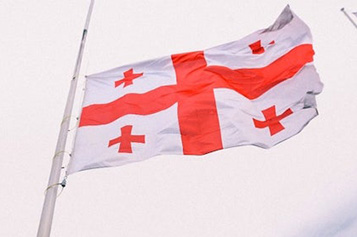
Georgia borders Armenia, Azerbaijan, Russia, and Turkey. It remains a transit hub for oil and gas pipelines originating in Azerbaijan and a road hub for goods coming from Iran via Armenia to the European Union (EU), from Armenia and travelling to Russia, and from Turkey and travelling to Russia and Azerbaijan. As a result, changes that are taking place in the Caucasus due to the Russian war against Ukraine are directly affecting Georgia. Russia as a gatekeeper in the South Caucasus is less able to defend its interests in the region and that results in the ongoing skirmishes between Armenia and Azerbaijan, Iranian military exercises on the border with Azerbaijan, and reciprocal Azerbaijani-Turkish exercises. Thus far, Georgia has kept itself out of the conflict and has even tried to play the role of mediator in the conflict between Armenia and Azerbaijan, but to no avail, since Georgia is not considered a powerful enough conflict mediator. READ MORE
EGF Editor |
Опубликовано на EGF: 06.04.2023
| External Relations
By Benyamin POGHOSYAN, PhD, Chairman, Center for Political and Economic Strategic Studies
The 2007-2008 world financial crisis triggered discussions about the inevitable decline of the post-Cold War unipolar order, marked by absolute US hegemony. The Arab Spring, the 2014 Ukraine crisis, the Syrian civil war, and the botched US withdrawal from Afghanistan in 2021 contributed to the ongoing debate about the relative decline of the US and the rise of other powers. The growing influence of non-Western institutions, such as the association of Brazil, Russia, India, China and South Africa (BRICS) and the Shanghai Cooperation Organization (SCO), attempts to abandon the US dollar in bilateral trade, and the establishment of alternative international financial institutions, such as the New Development Bank of BRICS and the Asian Infrastructure Investment Bank, seemed to shatter the undisputed leadership of Western political and financial institutions and the role of the US dollar as the only global reserve currency. The growing economic and military strength of China, the more assertive foreign policy of Russia, and India’s balanced foreign policy seeking to pursue cooperative relations with the West and Russia were signs of the changing nature of international relations. READ MORE
By Fuad SHAHBAZOV, Baku-based independent regional security and defence analyst
Russia’s invasion of Ukraine launched in early 2022 has fundamentally changed the international security architecture that had existed for many years, but it has also caused global political and economic cataclysms. Although Russian forces made significant gains thanks to heavy artillery fire, including missile strikes on cities all over Ukraine in the first weeks of combat, Ukrainian defenders quickly rebuffed attempts by consolidating its military power, exercising diplomatic connections, and launching counterattacks at Russian positions. The failures of continuous artillery and missile strikes in the following months prompted Russia to make some changes in its military tactics. As a result, Russia was forced to seek help from its traditional allies China and Iran through unofficial channels. Although China has refrained from overtly providing military support to Russia in order not to further complicate relations with Western countries, particularly with the United States, Iran began supplying locally produced long-range attack (suicide) drones to Russia. READ MORE
EGF Editor |
Опубликовано на EGF: 06.04.2023
| Security
By Nika CHITADZE, PhD, Director of the Center for International Studies, Tbilisi
As it is known, Russian President Vladimir Putin announced that Moscow and Minsk agreed to deploy tactical nuclear weapons on the territory of Belarus. The construction of a special warehouse is already underway and will be completed by July 1 of this year. Therefore, it can be said that Putin's blackmailing strategy has entered the next acute phase, and it is theoretically possible that such steps will sooner or later push the world toward a nuclear confrontation. It should be noted that after the dissemination of information about the placement of nuclear weapons in Belarus, the US Department of Defence issued an emergency statement. It says that "the Pentagon sees no indication that Russia is preparing to use nuclear weapons." On the other hand, as Vladimir Putin told the Russian government media, ten Su-25 aircraft capable of carrying tactical nuclear weapons are already stationed on the territory of Belarus. In addition, according to him, Russia has given Belarus the "Iskander" missile system, which can also launch missiles equipped with a nuclear warhead.
READ MORE
EGF Editor |
Опубликовано на EGF: 06.04.2023
| Security
By Nika CHITADZE, PhD, Director of the Center for International Studies, Tbilisi
At the beginning of March 2023, the Parliament of Georgia discussed and supported by the first hearing (with 76 votes) two draft laws regarding the “agents of foreign influence”. The discussion took place against the background of fierce protests both inside and outside the Parliament building. The bills were submitted by the political party “People’s Power”, which is a satellite of the Georgian Dream ruling party. Initially, the draft law “On transparency of foreign influence” was registered in the Parliament. To “ensure transparency”, the new law required the registration of non-entrepreneurial (non-commercial) legal entities and media means which received more than 20% of their income from abroad as “agents of foreign influence”.
READ MORE
EGF Editor |
Опубликовано на EGF: 24.03.2023
| External Relations
By Yeghia TASHJIAN, Beirut-based regional analyst and researcher, columnist, "The Armenian Weekly”
Armenians in Lebanon are a deeply institutionalized and politicized community. Given its transnational nature, the community is affected by international, regional, and local developments. For this reason, the political parties and the community leadership analyse local events and position themselves in the Lebanese political space based on local, regional, and sometimes pan-Armenian calculations or interests. Hence the community, like other transnational ethno-religious groups, absorbs from its surroundings and reacts accordingly to preserve itself from security threats. […] This policy brief will also raise a few recommendations regarding new strategies and the need to adopt a vision for the future of the community amid the wave of uncertainties surrounding Lebanon.
READ MORE
EGF Editor |
Опубликовано на EGF: 24.03.2023
| External Relations
Dr. Marat Terterov, Co-founder of the EGF, and Dr. George Vlad Niculescu, Head of Research, contributed to a newly published volume on: “Building Resilience against Human Security Threats and Risks: From Best Practices to Strategies” The volume was produced by the National Defence Academy of Austria in collaboration with the PfP Consortium of Defence Academies and Security Studies Institutes. It brought up multi-disciplinary arguments explaining how education fostered resilience by equipping people with the knowledge and skills to navigate risks and adapt to new challenges. This Handbook addressed risks and threats associated with climate change, energy, demographic, food, water, medical and financial security, human trafficking, cyber security, hybrid threats, psychological manipulation, violence in the digital domain, ethnic violence in unresolved conflicts, economic fragmentation, and trade disruptions in the South Caucasus and beyond. Regional cooperation is essential for building resilience against human security risks and threats, since effectively addressing many of them, including conflicts, environmental crises, pandemics, and transnational crime, require collective action that transcends national borders. READ MORE
EGF Affiliated Expert Yeghia TASHJIAN has recently co-authored a Policy Brief on “Lebanon’s Foreign Policy: Challenges and Recommendations”. The Brief called for a shift toward positive neutrality and pro-active diplomacy, with concrete reforms to strengthen Lebanon’s diplomatic role and global standing. The authors wondered in a conclusive way: “Can Lebanon reclaim its place on the international stage?” READ MORE
EGF Affiliated Expert Dr. Shanthie Mariet D’SOUZA has contributed a new opinion piece to “The DIPLOMAT” on “Lessons in Peace Building and Conflict Resolution from Fergana”. She concluded that “In an era marked by global turbulence, rising geopolitical tensions, and deepening distrust between nations, the Fergana Valley has the potential to be a model for building interstate relations, collective identity and regional connectivity.”READ MORE
EGF Affiliated Expert Benyamin POGHOSYAN appeared in a new episode of the GROONG Podcast where he discussed: the current status in the Ukraine war, latest developments in US-Russia relations; Armenian domestic politics; Armenia-Azerbaijan border demarcation and the issue of enclaves; issues in recent Armenia-Azerbaijan civil society dialogue in Yerevan. WATCH HERE
Between 07-10 November 2024, Dr Marat TERTEROV and Dr George Vlad NICULESCU participated in the 28th workshop of the Regional Stability in the South Caucasus Study Group of the PfP Consortium of Defence Academies and Security Studies Institutes on “Connectivity Risks and Opportunities in the South Caucasus”, held in Reichenau a/d Rax (Austria). Please click here for the programme and agenda outline, here for George’s speaking points, here for the policy recommendations, and here for the proceedings of the workshop
Between 10-13 April 2025, Dr George Vlad NICULESCU participated in the 29th workshop of the Regional Stability in the South Caucasus Study Group of the PfP Consortium of Defence Academies and Security Studies Institutes on “Emerging Technologies in Conflict Prevention: Leveraging Technology for Peacebuilding in the South Caucasus”, held in Istanbul (Turkey). Please click here for the programme and agenda outline, and here for George’s speaking points.
On June 3, 2025, Dr. George Vlad Niculescu gave a short brief on the outcomes and potential implications of Romania’s 2025 presidential elections to the “Neighbourhoods” Working Group of the Institute of European Studies de l’Université UCLouvain, site de Saint-Louis-Brussels. Read here his briefing.








 By Fuad SHAHBAZOV, Baku-based independent regional security and defence analyst
 By Yeghia TASHJIAN, Beirut-based regional analyst and researcher, columnist, "The Armenian Weekly”
 By Vusal GULIYEV, Visiting Research Fellow at the Asian Studies Center of Boğaziçi University
 By Alan WHITEHORN, Professor Emeritus in Political Science, The Royal Military College of Canada
 By Eugene KOGAN, Tbilisi-based defence and security expert
  By Benyamin POGHOSYAN, PhD, Chairman, Center for Political and Economic Strategic Studies
  By Nika CHITADZE, PhD, Director of the Center for International Studies, Tbilisi