By Benyamin Poghosyan, PhD, Chairman, Center for Political and Economic Strategic Studies
After the collapse of the Soviet Union the newly independent successor states faced numerous challenges: economic collapse, ethnic conflicts, and a rapid introduction of market reforms which ushered in large scale poverty as well as a quick enrichment of very small portion of the population. At the same time, there was a constant flow of Western experts and consultants who were embedded in almost all state institutions. In the first decade of independence there was a vague but widespread perception that the ultimate destination of former Soviet republics would be membership of the Euro-Atlantic institutions - EU and NATO. READ MORE
EGF Editor |
Опубликовано на EGF: 03.07.2020
| External Relations
By Benyamin Poghosyan, PhD, Chairman, Center for Political and Economic Strategic Studies
In November 2020 Americans will again go to the polls to elect the President of the United States. Upcoming elections could be one of the most polarized political events in decades. The American society is deeply divided between pro and anti-Trump camps. The economic crisis triggered by the COVID-19 and rising social and racial tensions will contribute to the fierce election campaign. Many Americans make their choice based on the economic situation at home are not interested in foreign policy. READ MORE
EGF Editor |
Опубликовано на EGF: 21.06.2020
| External Relations
By Benyamin Poghosyan, PhD, Chairman, Center for Political and Economic Strategic Studies
The COVID – 19 pandemic triggered a fierce debate among experts of international relations on the key features of the post COVID-19 world. There are several predictions and assessments – the end of globalization, the enhanced role of nation states, and a shift in global supply chains. It’s too early and difficult to assess what the world will look like decades from now, however, almost all experts have agreed on one thing; there will be no return to the 1990s and the beginning of the 2000s, when the US enjoyed absolute power and unconstrained possibilities. READ MORE
EGF Editor |
Опубликовано на EGF: 11.06.2020
| External Relations
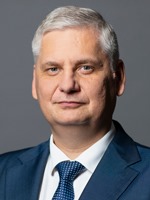
By Sergey Markedonov, Leading Researcher, MGIMO Institute
Future historians will definitely christen the year 2020 as the worldwide onset of coronavirus. It seems like tons of research articles and expert reports on the impact of the pandemic on the global economy and international political processes have been published. However, it is quite obvious that with the focus having been shifted towards the global perspective, the processes taking place in individual countries and regions appear to be falling out of sight. In the meantime, all of the conclusions drawn about the comprehensive implications of COVID-19 will remain somewhat schematic and generic without due consideration of their nuances and peculiarities. READ MORE
EGF Editor |
Опубликовано на EGF: 04.06.2020
| External Relations
By Benyamin Poghosyan, PhD, Chairman, Center for Political and Economic Strategic Studies
Despite the COVID-19 outbreak, Russia has made recently fresh efforts to push forward the phased approach solution in Nagorno Karabakh. This solution is based on the so-called “Madrid principles and six basic elements” first publicized by the Russian, US, and French Presidents’ July 2009 statement. However, the phased approach solution traces back to late 1997 when apparent push by OSCE Co-Chair states to reach an agreement resulted in the resignation of the first President of Armenia. After 6 years break, this logic again appeared to have dominated the settlement process since 2004. Six elements envisage the withdrawal of Nagorno Karabakh Republic’s forces from more than 50 percent of its territory, deployment of peacekeeping forces, and the final determination of Karabakh status by legally binding expression of will. READ MORE
EGF Editor |
Опубликовано на EGF: 02.06.2020
| Security
By Fuad Shahbazov, Baku-based independent regional security and defence analyst
On March 1, 2020, India outperformed Russia and Poland in a US$ 40 million defense deal with Armenia to supply it with four domestically made SWATHI counter-battery radars. The system is developed by India’s Defence Research and Development Organization (DRDO) and manufactured by Bharat Electronics Limited (BEL). It provides accurate information on enemy artillery firing positions weapons up to 75 kilometers away. The decision came amid India’s growing efforts to boost its national “Make in India” brand in the defense industry sector, which could make new inroads into European, Middle Eastern and Asian defense markets. However, the new Indian – Armenian defense deal could undermine Delhi’s relations with Russia on the one hand, and Azerbaijan, Turkey and Pakistan on the other. READ MORE
By Benyamin Poghosyan, PhD, Chairman, Center for Political and Economic Strategic Studies
The April 21, 2020 statements of Russian foreign Minister Lavrov brought back Nagorno Karabakh issue to the forefront of expert discussions. However, Russian foreign minister did not reveal something special or unexpected. He just reiterated what pundits following the conflict settlement process had already known. Since May 2018 negotiations have been based on a phased approach. It envisaged the return of some territories to Azerbaijan and indefinite postponement of the determination of the Nagorno Karabakh final status. READ MORE
EGF Editor |
Опубликовано на EGF: 28.05.2020
| Security
By Benyamin Poghosyan, PhD, Chairman, Center for Political and Economic Strategic Studies
Relations with Iran have always been high on Armenia's foreign policy agenda. Given the closed borders with Azerbaijan and Georgia, Iran is one of only two gateways to the world for Armenia. Friendly relations with this neighboring Muslim state play a significant role in Armenian efforts to counter Azerbaijan in its attempts to depict the Karabakh conflict as a religious one and thus garner the Muslim world's support against Armenia. READ MORE
EGF Editor |
Опубликовано на EGF: 19.05.2020
| External Relations
By Benyamin Poghosyan, PhD, Chairman, Center for Political and Economic Strategic Studies
Despite the worldwide standstill brought by the COVID–19 pandemic, conflict resolutions remain among the key priorities of the international community. This is true for the Nagorno Karabakh conflict too. Without going deep into history it’s worthy to recall the key milestones of the conflict. The Nagorno Karabakh Autonomous Region declared its intention to leave Soviet Azerbaijan and join Soviet Armenia in February 1988. In the final days of the Soviet Union, Nagorno Karabakh organized a referendum and declared its independence. Almost immediately Azerbaijan launched a military attack against Nagorno Karabakh seeking to crash the newly established republic. READ MORE
EGF Editor |
Опубликовано на EGF: 12.05.2020
| Security
By Benyamin Poghosyan, PhD, Chairman, Center for Political and Economic Strategic Studies
As the world mobilizes to combat the COVID - 19 it sometimes appears that the pandemic has stopped geopolitics. Many urgent topics of international relations have been put aside. However, sooner or later the world will return to normality, and the old problems will re-emerge. Coronavirus has not decreased US - China rivalry, to the contrary the Post COVID-19 world will likely be characterized by a growing confrontation between China and the US. Among the problems waiting their turn to re-emerge in the geopolitical landscape in the post-Soviet space is the Nagorno Karabakh conflict. READ MORE
EGF Editor |
Опубликовано на EGF: 30.04.2020
| Security
Dr. Marat Terterov, Co-founder of the EGF, and Dr. George Vlad Niculescu, Head of Research, contributed to a newly published volume on: “Building Resilience against Human Security Threats and Risks: From Best Practices to Strategies” The volume was produced by the National Defence Academy of Austria in collaboration with the PfP Consortium of Defence Academies and Security Studies Institutes. It brought up multi-disciplinary arguments explaining how education fostered resilience by equipping people with the knowledge and skills to navigate risks and adapt to new challenges. This Handbook addressed risks and threats associated with climate change, energy, demographic, food, water, medical and financial security, human trafficking, cyber security, hybrid threats, psychological manipulation, violence in the digital domain, ethnic violence in unresolved conflicts, economic fragmentation, and trade disruptions in the South Caucasus and beyond. Regional cooperation is essential for building resilience against human security risks and threats, since effectively addressing many of them, including conflicts, environmental crises, pandemics, and transnational crime, require collective action that transcends national borders. READ MORE
EGF Affiliated Expert Yeghia TASHJIAN has recently co-authored a Policy Brief on “Lebanon’s Foreign Policy: Challenges and Recommendations”. The Brief called for a shift toward positive neutrality and pro-active diplomacy, with concrete reforms to strengthen Lebanon’s diplomatic role and global standing. The authors wondered in a conclusive way: “Can Lebanon reclaim its place on the international stage?” READ MORE
EGF Affiliated Expert Dr. Shanthie Mariet D’SOUZA has contributed a new opinion piece to “The DIPLOMAT” on “Lessons in Peace Building and Conflict Resolution from Fergana”. She concluded that “In an era marked by global turbulence, rising geopolitical tensions, and deepening distrust between nations, the Fergana Valley has the potential to be a model for building interstate relations, collective identity and regional connectivity.”READ MORE
EGF Affiliated Expert Benyamin POGHOSYAN appeared in a new episode of the GROONG Podcast where he discussed: the current status in the Ukraine war, latest developments in US-Russia relations; Armenian domestic politics; Armenia-Azerbaijan border demarcation and the issue of enclaves; issues in recent Armenia-Azerbaijan civil society dialogue in Yerevan. WATCH HERE
Between 07-10 November 2024, Dr Marat TERTEROV and Dr George Vlad NICULESCU participated in the 28th workshop of the Regional Stability in the South Caucasus Study Group of the PfP Consortium of Defence Academies and Security Studies Institutes on “Connectivity Risks and Opportunities in the South Caucasus”, held in Reichenau a/d Rax (Austria). Please click here for the programme and agenda outline, here for George’s speaking points, here for the policy recommendations, and here for the proceedings of the workshop
Between 10-13 April 2025, Dr George Vlad NICULESCU participated in the 29th workshop of the Regional Stability in the South Caucasus Study Group of the PfP Consortium of Defence Academies and Security Studies Institutes on “Emerging Technologies in Conflict Prevention: Leveraging Technology for Peacebuilding in the South Caucasus”, held in Istanbul (Turkey). Please click here for the programme and agenda outline, and here for George’s speaking points.
On June 3, 2025, Dr. George Vlad Niculescu gave a short brief on the outcomes and potential implications of Romania’s 2025 presidential elections to the “Neighbourhoods” Working Group of the Institute of European Studies de l’Université UCLouvain, site de Saint-Louis-Brussels. Read here his briefing.








 By Benyamin Poghosyan, PhD, Chairman, Center for Political and Economic Strategic Studies
 By Sergey Markedonov, Leading Researcher, MGIMO Institute
 By Fuad Shahbazov, Baku-based independent regional security and defence analyst