By Benyamin Poghosyan, PhD, Executive Director, Political Science Association of Armenia
China's growing involvement in the South Caucasus may provide Armenia a much needed flexibility in its foreign policy.
On August 9, 2017 work started on the construction of China's new Embassy building in Yerevan. Armenian Foreign Minister Edward Nalbandian, Yerevan's Mayor Taron Markarian, and visiting Chinese Assistant Foreign Minister Li Huilai participated in the ground-breaking ceremony of the 40,000-square-meter embassy compound that should be completed by the end of 2019. READ MORE
By Benyamin Poghosyan, PhD, Executive Director, Political Science Association of Armenia
Armenian and Azerbaijani societies continue to prepare for war despite the prospect of a presidential summit in the autumn. The best-case scenario is a continuation of low intensity conflict along the line of contact.
On July 11, 2017, the Armenian and Azerbaijani foreign ministers met in Brussels for another round of negotiations on the settlement of the Karabakh conflict. According to the available information no breakthrough has been reached. READ MORE
EGF Editor |
Опубликовано на EGF: 29.07.2017
| Security
By Fuad Shahbazov, Expert-advisor, Center for Strategic Studies under the President of the Azerbaijan Republic
Baku hosted the first joint gathering of the heads of the railway administrations of Iran, Azerbaijan, Georgia, Ukraine and Poland, on June 19. The meeting was dedicated to the newly-launched “South-West Transport Corridor,” which links into the broader Trans-Caspian International Route project launched in 2016. READ MORE
By Benyamin Poghosyan, PhD, Executive Director, Political Science Association of Armenia
Russia effectively uses the complicated geopolitical situation of Armenia to strengthen its grip on Yerevan, and uses its alliance with Armenia as an efficient tool to further its position in the South Caucasus.
Alliance with Russia is the cornerstone of Armenian foreign and security policy. Armenia is a member of the Collective Security Treaty Organization, the Russia-led military block comprising six former Soviet republics. A Russian military base is deployed in Armenia, and will be there at least until 2044. Armenia has a joint air defense system with Russia, and in 2016 the two countries formed a joint military force. READ MORE
By Benyamin Poghosyan, PhD, Executive Director, Political Science Association of Armenia
Chances that Armenia will change its mind again about its relations with the EU are low, but this can still happen if Russia's relations with the west deteriorate further.
On March 21, 2017, Armenia and the EU initialed a new Comprehensive and Enhanced Partnership Agreement. This achievement was perceived as a critical step forward in fostering bilateral relations following a period of bitter disappointment in both Brussels and among the pro-European Armenians after the abrupt decision by Armenia, in September 2013, to withdraw from its negotiated Association Agreement with the EU, while choosing to join instead the Russia led Eurasian Economic Union - EAEU. READ MORE
EGF Editor |
Опубликовано на EGF: 04.07.2017
| External Relations
By Eugene Kogan, Tbilisi-based defence and security expert
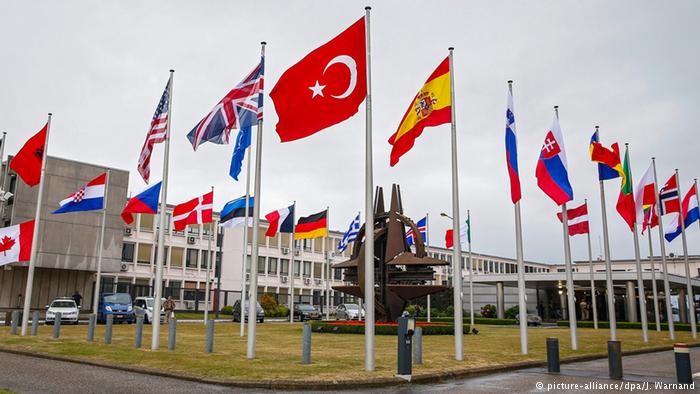
It should be remembered that Turkey’s relations with NATO were not as smooth as perhaps some experts wished to think, even before the failed coup on 15 July 2016. For instance, back in November 2009 the AKP government was adamant that despite Turkish soldiers’ participation in the ISAF mission they were not combat troops. Turkey's position at the time irked allies in NATO and the US in particular, and it has not changed since then. READ MORE
EGF Editro |
Опубликовано на EGF: 24.06.2017
| Security
By Benyamin Poghosyan, PhD, Executive Director, Political Science Association of Armenia
In recent months, Turkey has been facing increasing difficulties with key NATO member states. The United States' growing reliance on Syrian Kurdish forces in Syria as a key force capable of effectively fighting Islamic State and US President Donald Trump's decision to arm Kurdish YPG units placed additional strains on bilateral US-Turkey relations, which have been sharply deteriorating since the July 2016 military coup and with Turkey's unsuccessful efforts to organize Fethullah Gulen's extradition from the US. READ MORE
EGF Editor |
Опубликовано на EGF: 17.06.2017
| Security
By Benyamin Poghosyan, PhD, Executive Director, Political Science Association of Armenia
Trump's hard line approach towards Iran may derail ambitious plans to develop North-South trade and transport corridors in the South Caucasus.
On May 20, 2017, US President Donald Trump arrived in Saudi Arabia on his first stop of his week-long international trip. The new US President chose the Saudi visit as a focal point for presenting key pillars of his Middle East policy. Delivering a speech to the Arab - Islamic - American Summit, President Trump stressed the significance of the fight against terrorism and the important role regional states have to play in that struggle. Another key point of his speech was tough criticism directed against Iran. READ MORE
EGF Editor |
Опубликовано на EGF: 07.06.2017
| External Relations
By Benyamin Poghosyan, PhD, Executive Director, Political Science Association of Armenia
On 14-15 May 2017, 29 world leaders, including Russian President Vladimir Putin and Turkish President Erdogan, gathered in Beijing for the international forum of the "Belt and Road" initiative. The Forum was the biggest event since the launch of the 'One belt one Road' initiative put forward by Chinese President Xi Jinping in 2013. China invited countries and regions to jointly build the Silk Road Economic Belt and the 21st Century Maritime Silk Road with at least five routes of economic cooperation. READ MORE
EGF Editor |
Опубликовано на EGF: 22.05.2017
| External Relations
By Benyamin Poghosyan, PhD, Executive Director, Political Science Association of Armenia
An Armenian general is now at the helm of the CSTO military alliance. This may prove to be a double edged sword for Armenia.
The South Caucasus is one of the battlefields in the current Russia-West confrontation. As a part of the former Soviet space, the region is perceived by Russia as an area of its legitimate "special interests." For the West, including the United States, NATO and the EU, the view of the region is defined by its role as a key transit route for Caspian energy resources to reach Europe circumventing Russia, and as an important gateway to exert influence in the nearby Middle East. Regional geopolitical competition is further complicated by the onset of Iran and Turkey. READ MORE
EGF Editor |
Опубликовано на EGF: 08.05.2017
| Security
Dr. Marat Terterov, Co-founder of the EGF, and Dr. George Vlad Niculescu, Head of Research, contributed to a newly published volume on: “Building Resilience against Human Security Threats and Risks: From Best Practices to Strategies” The volume was produced by the National Defence Academy of Austria in collaboration with the PfP Consortium of Defence Academies and Security Studies Institutes. It brought up multi-disciplinary arguments explaining how education fostered resilience by equipping people with the knowledge and skills to navigate risks and adapt to new challenges. This Handbook addressed risks and threats associated with climate change, energy, demographic, food, water, medical and financial security, human trafficking, cyber security, hybrid threats, psychological manipulation, violence in the digital domain, ethnic violence in unresolved conflicts, economic fragmentation, and trade disruptions in the South Caucasus and beyond. Regional cooperation is essential for building resilience against human security risks and threats, since effectively addressing many of them, including conflicts, environmental crises, pandemics, and transnational crime, require collective action that transcends national borders. READ MORE
EGF Affiliated Expert Yeghia TASHJIAN has recently co-authored a Policy Brief on “Lebanon’s Foreign Policy: Challenges and Recommendations”. The Brief called for a shift toward positive neutrality and pro-active diplomacy, with concrete reforms to strengthen Lebanon’s diplomatic role and global standing. The authors wondered in a conclusive way: “Can Lebanon reclaim its place on the international stage?” READ MORE
EGF Affiliated Expert Dr. Shanthie Mariet D’SOUZA has contributed a new opinion piece to “The DIPLOMAT” on “Lessons in Peace Building and Conflict Resolution from Fergana”. She concluded that “In an era marked by global turbulence, rising geopolitical tensions, and deepening distrust between nations, the Fergana Valley has the potential to be a model for building interstate relations, collective identity and regional connectivity.”READ MORE
EGF Affiliated Expert Benyamin POGHOSYAN appeared in a new episode of the GROONG Podcast where he discussed: the current status in the Ukraine war, latest developments in US-Russia relations; Armenian domestic politics; Armenia-Azerbaijan border demarcation and the issue of enclaves; issues in recent Armenia-Azerbaijan civil society dialogue in Yerevan. WATCH HERE
Between 07-10 November 2024, Dr Marat TERTEROV and Dr George Vlad NICULESCU participated in the 28th workshop of the Regional Stability in the South Caucasus Study Group of the PfP Consortium of Defence Academies and Security Studies Institutes on “Connectivity Risks and Opportunities in the South Caucasus”, held in Reichenau a/d Rax (Austria). Please click here for the programme and agenda outline, here for George’s speaking points, here for the policy recommendations, and here for the proceedings of the workshop
Between 10-13 April 2025, Dr George Vlad NICULESCU participated in the 29th workshop of the Regional Stability in the South Caucasus Study Group of the PfP Consortium of Defence Academies and Security Studies Institutes on “Emerging Technologies in Conflict Prevention: Leveraging Technology for Peacebuilding in the South Caucasus”, held in Istanbul (Turkey). Please click here for the programme and agenda outline, and here for George’s speaking points.
On June 3, 2025, Dr. George Vlad Niculescu gave a short brief on the outcomes and potential implications of Romania’s 2025 presidential elections to the “Neighbourhoods” Working Group of the Institute of European Studies de l’Université UCLouvain, site de Saint-Louis-Brussels. Read here his briefing.








 By Benyamin Poghosyan, PhD, Executive Director, Political Science Association of Armenia
 By Fuad Shahbazov, Expert-advisor, Center for Strategic Studies under the President of the Azerbaijan Republic
 By Eugene Kogan, Tbilisi-based defence and security expert